
Samuel Fritz
Czech traveller, cartographer, Christian missionary and Roman Catholic priest
About Samuel Fritz
Lived 1654 – 1728 (aged 73). Samuel Fritz was a cartographer, missionary, teacher, catholic priest and catholic theologian, known for Amazon River.
Samuel Fritz SJ (9 April 1654 – 20 March 1725, 1728 or 1730) He was effective and respected, and helpful to the Viceroyalty of Peru in its boundary dispute with the State of Brazil.
Between 1686 and 1715, he founded thirty-eight missions along the length of the Amazon River, in the country between the Rio Napo and Rio Negro, that were called the Omagua Missions.
Fritz detailed his early missionary activity among the Omagua people in a set of personal diaries written between 1689 and 1723. Lengthy passages from these diaries were compiled and interspersed with commentary by an anonymous author in the time between Fritz's death and 1738, when they appear in the collection of Pablo Maroni.
Early life Fritz was born at Trautenau, Bohemia. After studying for a year at the Charles University in Prague, he entered the Society of Jesus as a novice in 1673, and studied mathematics, geodesy and surveying. He taught for several years at the Jesuit seminaries in Uherské Hradiště and Březnice, eventually becoming deputy rector at Brno where he also conducted the student orchestra. He was ordained as a priest on 4 February 1683. In September 1684 he was sent to Quito as a missionary, arriving in Cartagena, Colombia and journeying overland. In 1686 he was assigned to work among the Indians of the Upper Marañon.
Work with the Omagua people Omagua Indians, by Antonio Zeno Shindler, Fritz established himself among the Omaguas (Omayas or Cambebas) and within a few years had developed his own Omagua catechism in the Omagua language. The Omagua people had requested protection from Portuguese slavers who had begun raiding their communities by the 1680s. When Fritz arrived in their territory in 1686, the Omagua inhabited the islands in the middle of the Amazon River, in a region stretching approximately from the confluence of the Amazon and Napo River to the Juruá River. Towards the end of his first year among the Omaguas, he began a lengthy journey downriver to visit all thirty-eight existing villages, spending two months at each one. He renamed them using the names of patron saints, constructed several rudimentary chapels and baptized mainly children because he found most adults to be insufficiently indoctrinated, as well as "reluctant to give up entirely certain heathen abuses." At the conclusion of this journey, which lasted about three years, he conducted a baptismal ceremony over the entire tribe before returning to San Joaquín de Omaguas. He later concentrated indigenous peoples from different communities into so-called "Jesuit reductions." He also preached intermittently to the Yurimagua, the Aisuare, the Ibanoma and the Ticunas.
Charting the Amazon At the request of the Real Audiencia of Quito he began in 1687 to delineate the disputed missionary territory on the Upper Marañon between Peru and Quito. In 1689 he undertook, in a primitive pirogue, a daring journey of over 6,000 kilometers down the Amazon to Pará, where he went for medical treatment, #tag:ref|Camila Loureiro Dias notes that historians have cast doubt on Fritz's stated motive for his journey, as a sick man could hardly have embarked on such an ambitious voyage into hostile territory, and completed a detailed map of the river in the process. Dias believes that he wanted to produce a map as a means of engaging the attention of the Spanish government so as to obtain support for his missionary activities. In fact, the Portuguese were concerned that Spanish missions on the Upper Solimões River would lead indigenous communities to support Spain against Portugal. Fritz made use of this time to prepare a map of the river. Upon arriving in Lima in 1692, he created a larger version of this map to submit to the printer. Difficulties in reproducing this map prevented it from being printed, and a slightly altered version was finally published at Quito in 1707,
Fritz himself felt strongly that his map was far more accurate than other contemporary maps of the Amazon, writing:
"I created this map for a better understanding and general lesson about the great Amazon, or Marañón, with great effort and great work... Although many other maps have appeared today, I want, without touching anyone, to say that none of these maps is accurate because either the measurement on this great river was not attentive or was not done at all, or it was written from the writings of various authors."
A slightly modified French version was published in 1717 in Paris under the title Cours du fleuve Maragnon autrement dit des Amazones par le P. Samuel Fritz missionaire de la Compagnie de Jésus. In 1726 the map was reproduced in the German-language Jesuit publication Der Neue Welt-Bott. (Augsburg, 1726, I), In 1745 Charles Marie de La Condamine included it in his Relation abrégée d'un voyage fait dans l'intérieur de l'Amérique Méridionale (Paris, 1745), together with a revised chart based on Fritz's map, for comparative study. Among other changes, Condamine added the connection of the Amazon to the Orinoco Basin, which had been discovered following Fritz's death.
One prominent error in the map is the inclusion of Lake Parime, of which Fritz knew only through hearsay, and which had been sought unsuccessfully since Sir Walter Raleigh had surmised its existence in 1595. Later explorers concluded that the lake was a myth.
Indigenous beliefs about Fritz In 1692, upon his return from being held prisoner by the Portuguese, Fritz discovered that an Omagua cult had grown up around claims that he possessed supernatural powers related to curing, rites of passage, and the movement of rivers, and a belief that Fritz himself was immortal. During his absence, in June 1690, a massive earthquake occurred, which was attributed by the Indians to the anger of their deities at Fritz's imprisonment. Following a solar eclipse in June 1695, an Aisuari chief sent gifts to Fritz with a message begging him not to extinguish the sun. Payoreva was arrested, flogged and imprisoned by the Spanish in Borja, however he escaped and returned to San Joaquin de los Omaguas in February 1702 to persuade the Omagua people to leave the influence of the missionaries, and most of the population left to establish new settlements along the Juruá River. The Portuguese Carmelites met with Fritz again several times, negotiating for the rights to unrestricted control over the various tribes.
The last entry in his diary is dated November 1723. He died some time between 1725 and 1730 (the date is disputed) in a mission village of the Jivaro Indians, attended by a priest named Wilhelm de Tres.
Legacy In 1870, Johann Eduard Wappäus (1813–1879) wrote of Fritz:
"The great respect justly shown at that time by European scientists for the geographical work of the Jesuits led to the admission into their ranks of Father Fritz by acclamation."
His Amazon map was reprinted in Madrid in 1892, on the occasion of the fourth centenary of the discovery of America. There was another reprint in the Recueil de voyages et de documents pour servir a l'histoire de la géographie. Three of his letters are incorporated in the "N. Welt-Bott" (Augsburg, 1726), III, nos. 24, 25; José Joaquín Borda, Historia de la Compañía de Jesus en la Nueva Granada, Poissy. Imprenta de S. Lejay & C* 1872, Vol. I, 72 Chantre y Herrera, Hist. de las Misiones de la C. d. J. en el Marañon Español (Madrid, 1901), VI, ix, 296. Teodoro Wolf, Geografia y Geologia del Ecuador (Leipzig, 1892), 566; Antonio de Ulloa, Relacion historica del viage a la America Meridional hecho de orden de S. Mag. para medir algunos grados de meridiano terrestre y venir por ellos en conocimiento de la verdadera figura y magnitud de la tierra, con otras observaciones astronomicas y phisicas, Jorge Juan, ed. Antonio Marin, Madrid, 1748, I, vi, c. 5. Johann Christoph Adelung, Mithridates oder allgemeine Sprachenkunde: mit dem Vater Unser als Sprachprobe in beynahe fünfhundert Sprachen und Mundarten., (Berlin, 1806), III, ii, 611. "The linguistic abilities of Samuel Fritz."
Don’t just read it —
keep it.
Full-length biographies made to live with: read them, listen on the way to work, watch them tonight.
- E-book
- Audio
- Video
Instant download · yours to keep · every purchase keeps this site free
Important facts
People in Samuel Fritz's life
Named in this biography and alive at the same time
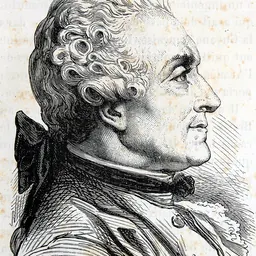


Related people
Same field, nearest in time
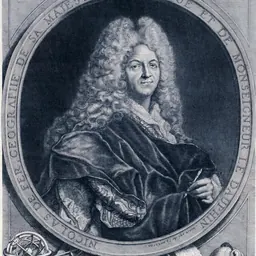



Contemporaries
People whose lives overlapped Samuel Fritz's



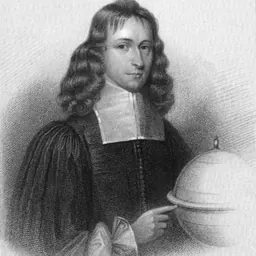
Frequently asked questions
Who was Samuel Fritz?
Czech traveller, cartographer, Christian missionary and Roman Catholic priest
When was Samuel Fritz born?
Samuel Fritz was born on 9 April 1654 in Trutnov.
When did Samuel Fritz die?
Samuel Fritz died on 20 March 1728 in Jeberos, Amazon basin.
What was Samuel Fritz's occupation?
Samuel Fritz was a cartographer, missionary, teacher, catholic priest and catholic theologian.
What was Samuel Fritz known for?
Samuel Fritz was known for Amazon River.
Sources & further reading
Cite this page
APA: Biography.guide. (2026). Samuel Fritz. https://biography.guide/samuel-fritz/
MLA: "Samuel Fritz." Biography.guide, https://biography.guide/samuel-fritz/.
Chicago: "Samuel Fritz." Biography.guide. https://biography.guide/samuel-fritz/.
Data last updated: 2026-09-20 · Spot an error? Report a correction.
Page generated 2026-09-27 05:13 UTC