
About Bernard Picart
Lived 1673 – 1733 (aged 59). Bernard Picart was a French copper engraver, printmaker, etcher, draftsperson, mezzotinter and xylographer.
Bernard Picart or Picard (11 June 1673 – 8 May 1733), was a French draughtsman, engraver, and book illustrator in Amsterdam, who showed an interest in cultural and religious habits.
Life
Picart was born in rue Saint-Jacques, Paris as son of Etienne Picart, a famous engraver. In 1689, he studied drawing and architecture at the Académie royale de peinture et de sculpture. He was taught by Charles le Brun, along with Benoît Audran the Elder, Sébastien Leclerc and Antoine Coypel. In 1696 he wintered in Antwerp, where he was well received. He stayed in Amsterdam for more than a year and had commissions before returning to France at the end of 1698. He took over his father's workshop. From 1702 on, he was editor of playwrights written by himself or the other members of Nil volentibus arduum. There Picart, Marchand and Charles Levier belonged to a "radical Huguenot coterie", who studied the works of John Locke, which promoted the separation of church and state. They joined the Walloon church but were influenced by Jean Claude and Pierre Bayle who both fled to the Dutch Republic in earlier years. Picart accepted a commission to draw prints for the Bible. Levinus Vincent became his uncle, a Mennonite who owned a cabinet of curiosities in Haarlem. Picart moved in with his father-in-law and designed several book frontispieces. Picart lived across the Old Lutheran Church but also close to a Mennonite Church. In May 1713 the couple had male twins, who both died within a few weeks; he portrayed them both. Picart became a citizen, joined the guild and published a book about his teacher Charles Le Brun. The website of the Rijksmuseum in Amsterdam has more than 2,000 works online by Bernard Picart.
Works The Circumcision of the Portuguese Jews and the Redemption of the Firstborn,1722, in the collection of the Jewish Museum of Switzerland.
Most of his work was book-illustrations, for which he collaborated with local artists like Gerard Hoet and Arnold Houbraken. The illustrations were used in various publications including the Figures de la Bible (1720) and the Taferelen der voornaamste geschiedenissen van het Oude en Nieuwe Testament (1728). The latter was a picture bible comprising 214 large engravings of which Gilliam van der Gouwen had engraved 41. From 1720 Picart collaborated on the Cérémonies with the son of a Protestant minister , with a commitment to religious toleration. Jonathan I. Israel calls Cérémonies "an immense effort to record the religious rituals and beliefs of the world in all their diversity as objectively and authentically as possible". Although Picart had never left Europe, he relied on accounts by those who had and had access to a collection of Indian sculpture. The original French edition of Cérémonies comprises ten volumes of text and 266 engravings.
"Cérémonies" engravings One of six copper plate engravings by Bernard Picart depicting Florida Indians (of 30 engravings total). Volume One of "Cérémonies et Coutumes Religieuses de tous les Peuples du Monde" (Private Collection, St. Augustine Beach)
Vol. 1 – 30 engravings (1727) Vol. 2 – 33 engravings (1727) Vol. 3 – 19 engravings (1728) Vol. 4 – 14 engravings (1729) Vol. 5 – 26 engravings (1736) Vol. 6 – 45 engravings (1738) Vol. 7 – 58 engravings Vol. 8 – 5 engravings Vol. 9 – 24 engravings Vol. 10 – 12 engravings
The Temple of the Muses A celebration of the birth of a child (left). The child's first bath (right). 1726
This was an illustrated book of Ovid's Metamorphoses more popular fables published in 1733 in Dutch (Tempel der zanggodinnen, vertoond in LX heerlijke kunststukken, behelzende alle de voornaemste geschiedenissen van de Fabel-Oudheid), in 1738 in English (The Temple of the Muses, or, the principal histories of fabulous antiquity), and in 1742 in French (Le Temple des Muses, orné de LX tableaux où sont représentés les événemens les plus remarquables de l'antiquité fabuleuse), by Zacharias Chatelain. The engravings had captions in French, English, German, and Dutch. The artists involved were Michel de Marolles, Bernard Picart, Jacques Favereau, Abraham van Diepenbeeck, and Cornelis Bloemaert. A facsimile of the Dutch version was published in 1968.
Don’t just read it —
keep it.
Full-length biographies made to live with: read them, listen on the way to work, watch them tonight.
- E-book
- Audio
- Video
Instant download · yours to keep · every purchase keeps this site free
Important facts
People in Bernard Picart's life
Named in this biography and alive at the same time
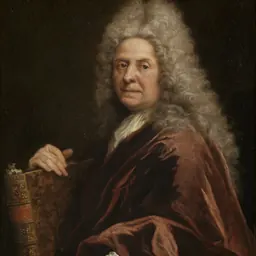
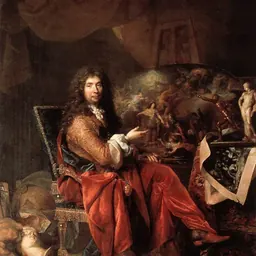

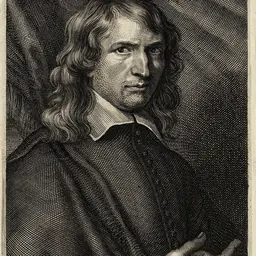
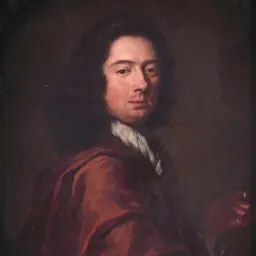

Related people
Same field, nearest in time


Contemporaries
People whose lives overlapped Bernard Picart's




Frequently asked questions
Who was Bernard Picart?
French engraver (1673-1733)
When was Bernard Picart born?
Bernard Picart was born on 11 June 1673 in Paris.
When did Bernard Picart die?
Bernard Picart died on 8 May 1733 in Amsterdam.
What was Bernard Picart's occupation?
Bernard Picart was a copper engraver, printmaker, etcher, draftsperson, mezzotinter and xylographer.
What nationality was Bernard Picart?
Bernard Picart was French.
Sources & further reading
Cite this page
APA: Biography.guide. (2026). Bernard Picart. https://biography.guide/bernard-picart/
MLA: "Bernard Picart." Biography.guide, https://biography.guide/bernard-picart/.
Chicago: "Bernard Picart." Biography.guide. https://biography.guide/bernard-picart/.
Data last updated: 2026-09-20 · Spot an error? Report a correction.
Page generated 2026-09-27 05:22 UTC