
About John Pastore
Lived 1907 – 2000 (aged 93). John Pastore was an American politician and lawyer.
John Orlando Pastore (March 17, 1907 – July 15, 2000) was an American lawyer and politician. A member of the Democratic Party, he served as a United States senator from Rhode Island from 1950 to 1976 and as the 61st governor of Rhode Island from 1945 to 1950. He was the first Italian American elected to the Senate.
Early life and education John Pastore was born in the Federal Hill neighborhood of Providence, Rhode Island. His father, a tailor who had moved from Potenza to the United States in 1899, died when John was nine, and his mother went to work as a seamstress to support the family. She married her late husband's brother, Salvatore, who also ran a tailoring business. In 1927, he enrolled in an evening law course given by Northeastern University at YMCA in Providence. He then established a law office in the basement of his family's home, but attracted few clients due to the Great Depression.
In 1946, Pastore was elected to a full term as governor after defeating his Republican opponent, John G. Murphy, by a margin of 54% to 46%.
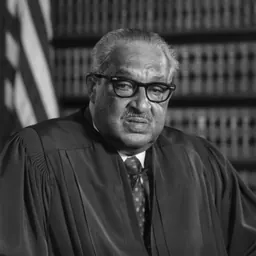
Pastore voted in favor of the Civil Rights Act of 1957, the Civil Rights Act of 1960, the 24th Amendment to the U.S. Constitution, the Civil Rights Act of 1964, the Voting Rights Act of 1965, the Medicare program, the Civil Rights Act of 1968, and the confirmation of Thurgood Marshall to the U.S. Supreme Court.
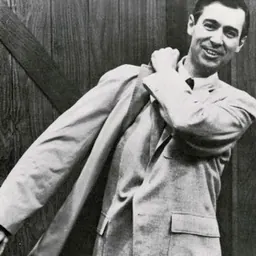
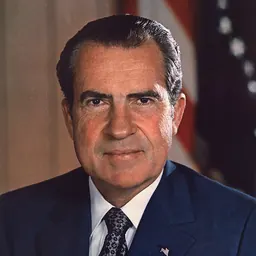
Fred Rogers testifies before the Senate Subcommittee on Communications, chaired by Pastore, on May 1, 1969. Pastore served as the chairman of United States Senate Subcommittee on Communications. He is well remembered for taking part in a 1969 hearing involving a $20 million grant for the funding of PBS and the Corporation for Public Broadcasting proposed by former President Lyndon B. Johnson. President Richard Nixon wanted to cut the proposed funding to $10 million due to the demands of the Vietnam War. Fred Rogers, host of Mister Rogers' Neighborhood, appeared before the committee to argue for the full $20 million. In about six minutes of testimony, Rogers spoke of the need for social and emotional education that public television provided. Pastore was not familiar with Rogers' work, and was sometimes described as gruff and impatient, but he told Rogers that the testimony had given him goose bumps, and after Rogers recited the lyrics to "What Do You Do with the Mad that You Feel?", one of the songs from his show, Pastore declared: "I think it's wonderful. I think it's wonderful. Looks like you just earned the $20 million." The following year's appropriation increased PBS funding from $9 million to $22 million.
Pastore was mocked on The Smothers Brothers' final Comedy Hour, in a show scheduled for April 13, 1969, unaired due to network cancellation. In the show, Pastore was offered a ‘Flying Fickle Finger of Fate’ award. Tommy Smothers averred, “I have someone that’s very deserving I’d like to do it to,” because “[Pastore] says that everything is filth and gore on television,” and noting Pastore had said a French actress “shouldn’t be allowed on television” after wearing a low-cut evening gown on the Merv Griffin show.
In 1971, Pastore was one of twenty-five Senators to co-sponsor the Health Security Act, a bill that advocated health coverage for every person living in America through a government-run health insurance program.
In 1976, Pastore did not seek re-election, and retired from the Senate. In retirement, he served on the board of directors of Providence-based Columbus National Bank until its merger with Hospital Trust Bank in the late 1980s.
Personal life Pastore and his wife Elena had three children and seven grandchildren. He lived in Cranston, Rhode Island, until his death due to kidney failure on July 15, 2000.
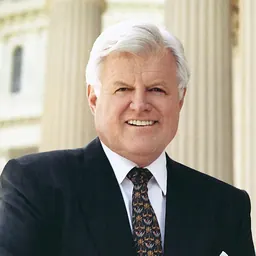
His keynote speech at the 1964 Democratic National Convention has been called "The Speech Heard Round the World". The late Ted Kennedy eulogized: "My brother Jack had thought the world of him...John had a great heart." Pastore's private funeral service was held shortly after his death in 2000, in Cranston, Rhode Island.
The University of Rhode Island's Pastore Hall, completed in 1953, is named for Pastore. The building was initially home to the university's Department of Chemistry.
Don’t just read it —
keep it.
Full-length biographies made to live with: read them, listen on the way to work, watch them tonight.
- E-book
- Audio
- Video
Instant download · yours to keep · every purchase keeps this site free
Important facts
People in John Pastore's life
Named in this biography and alive at the same time




Related people
Same field, nearest in time





Contemporaries
People whose lives overlapped John Pastore's



Frequently asked questions
Who was John Pastore?
American lawyer and politician (1907–2000)
When was John Pastore born?
John Pastore was born on 17 March 1907 in Providence.
When did John Pastore die?
John Pastore died on 15 July 2000 in Cranston.
What was John Pastore's occupation?
John Pastore was a politician and lawyer.
What nationality was John Pastore?
John Pastore was American.
Sources & further reading
Cite this page
APA: Biography.guide. (2026). John Pastore. https://biography.guide/john-pastore/
MLA: "John Pastore." Biography.guide, https://biography.guide/john-pastore/.
Chicago: "John Pastore." Biography.guide. https://biography.guide/john-pastore/.
Data last updated: 2026-09-20 · Spot an error? Report a correction.
Page generated 2026-09-27 05:22 UTC