
About John Marrant
Lived 1755 – 1791 (aged 35). John Marrant was an American preacher, writer and missionary.
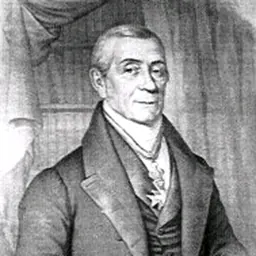
John Marrant (June 15, 1755 – April 15, 1791) was an American Methodist preacher and missionary and one of the first black preachers in North America.
Born free in New York City, he moved as a child with his family to Charleston, South Carolina. His father died when he was young, and he and his mother also lived in Florida and Georgia. After escaping to the Cherokee, with whom he lived for two years, he allied with the British during the American Revolutionary War and resettled afterward in London. There he became involved with the Countess of Huntingdon's Connexion and ordained as a preacher.
Marrant was supported to travel in 1785 as a preacher and missionary to Nova Scotia, where he founded a Methodist church in Birchtown. He married there before settling in Boston, Massachusetts. In 1790 he returned to London. He wrote a memoir about his life, published in 1785 in London as A Narrative of the Lord's Wonderful Dealings with John Marrant, a black; also published were a 1789 sermon, and a journal in 1790 covering the previous five years of his life.
Early life
Marrant was born free in New York City on June 15, 1755, the second youngest child in his family; he had two older sisters and an older brother, and a younger sister. He continued in school until the age of 11, learning to read and write. and social gatherings. It was about this time that his family became concerned about some bizarre behavior by Marrant. They treated him as if he was mentally unstable.
Marrant lived with the Cherokee for two years during which he had visited with other tribes of the area, He converted a number of Native Americans and is thought to have been an influence in creating lasting bonds between black and Cherokee people. and conducted missionary work with slaves until the start of the American Revolution. Although some owners objected, others allowed slaves to become Christianized.
American Revolutionary War During the American Revolutionary War, Marrant was impressed into the Royal Navy, serving as a musician for more than six years before being discharged in 1782. The Black Loyalists were interested in learning about Christianity. Marrant's brother sent him a letter asking for him to come to Nova Scotia. It is more likely that Melia was the slave of John Mayrant, a slave owner, of Santee, South Carolina, or his son, John Mayrant, who served as a lieutenant in the South Carolina Navy and was also a slave owner. There is no evidence that the author, John Marrant, ever owned slaves.
He lived at Birchtown, Nova Scotia, the largest new black community, where he founded a Huntingdonian church. and returned with her to Boston. In a letter to Marrant, Margaret Blucke (wife of Stephen Blucke), asked about Marrant's children. He may have been previously married or adopted children. A boy was known to travel with him. That child's name is not mentioned in the Journal, but he may have been Anthony Elliot from Birchtown, who was an assistant.
Marrant traveled to London in 1789 or 1790, where the journal of the previous five years was published. He preached in chapels in London, including the Whitechapel area. He died on April 15, 1791, in Islington and was buried at the chapel graveyard on Church Street.
Legacy Marrant did not live a long life, but he influenced black people in the United States and Canada, including the Black Loyalists who settled in Sierra Leone in Africa in 1792. He inspired future generations through his narrative. He shared a message of perseverance and faith. Marrant did not live a long life, but he influenced Black communities in the United States and Canada, including the Black Loyalists who settled in Sierra Leone in Africa in 1792. He inspired future generations through his narrative, which was among the earliest spiritual autobiographies by a person of African descent in North America. His Narrative of the Lord’s Wonderful Dealings with John Marrant, A Black offered a powerful testimony of faith, survival, and identity, blending evangelical Christianity with personal experiences of racial oppression and resilience. Marrant’s ministry helped lay the foundation for a distinctly Black Christian tradition that emphasized liberation, community solidarity, and spiritual empowerment. As one of the first Black preachers to speak publicly to both Black and white audiences, he broke racial barriers in religious life. His life and work also helped to foster a transatlantic sense of Black identity and purpose, connecting the struggles of African-descended people across the Americas and Africa. Though he died young, Marrant's voice continued to echo through the abolitionist movement and the rise of African American literature and religious thought.
Don’t just read it —
keep it.
Full-length biographies made to live with: read them, listen on the way to work, watch them tonight.
- E-book
- Audio
- Video
Instant download · yours to keep · every purchase keeps this site free
Important facts
Related people
Same field, nearest in time

Contemporaries
People whose lives overlapped John Marrant's






Frequently asked questions
Who was John Marrant?
American preacher (1755-1791)
When was John Marrant born?
John Marrant was born on 15 June 1755 in New York City.
When did John Marrant die?
John Marrant died on 15 April 1791 in London.
What was John Marrant's occupation?
John Marrant was a preacher, writer and missionary.
What nationality was John Marrant?
John Marrant was American.
Sources & further reading
Cite this page
APA: Biography.guide. (2026). John Marrant. https://biography.guide/john-marrant/
MLA: "John Marrant." Biography.guide, https://biography.guide/john-marrant/.
Chicago: "John Marrant." Biography.guide. https://biography.guide/john-marrant/.
Data last updated: 2026-09-20 · Spot an error? Report a correction.
Page generated 2026-09-27 05:19 UTC