
About Barton W. Stone
Lived 1772 – 1844 (aged 71). Barton W. Stone was an American preacher and theologian, known for Restoration Movement.
Barton Warren Stone (December 24, 1772 – November 9, 1844) was an American evangelist during the early 19th-century Second Great Awakening in the United States. First ordained a Presbyterian minister, he and four other ministers of the Washington Presbytery resigned after arguments about doctrine and enforcement of policy by the Kentucky Synod. This was in 1803 after Stone had helped lead the Cane Ridge Revival, a several-day communion season attended by nearly 20,000 persons.
Stone and the others briefly founded the Springfield Presbytery, which they dissolved the following year, resigning from the Presbyterian Church altogether. They formed what they called the Christian Church, based on Christian scriptures rather than a creed. He later became allied with Alexander Campbell, a former Presbyterian minister who was also creating an independent sect, sometimes allied with Baptists, and formed the Restoration Movement. Stone's followers were first called "New Lights" and "Stoneites". Later, he and Campbell brought the groups together, which relied solely on the Christian Bible.
Several church groups have historical roots in Stone's efforts. The three main groups are the Churches of Christ, the Christian Church (Disciples of Christ), and the independent Christian churches and churches of Christ. Additionally, there are the International Churches of Christ, the International Christian Church, the Churches of Christ in Australia, the Churches of Christ in Europe, and the Evangelical Christian Church in Canada.
Early life and education Stone was born to John and Mary Warren Stone near Port Tobacco on December 24, 1772. His immediate family was upper-middle class, with connections to Maryland's upper class of planters. Barton was not himself religious as a young man: he found the competing claims of the Episcopalians, Baptists, and Methodists confusing, and was much more interested in politics. He was unable to accept the Calvinist doctrines of total depravity, unconditional election, and predestination.
The Cane Ridge Revival of 1801 was "set up as a traditional Presbyterian 'sacramental occasion'," similar to the one Stone attended earlier that year in Logan County—later called the Revival of 1800. Like its predecessor, the Cane Ridge Revival continued for two to three days. It attracted an estimated 20,000 people, and Stone was one of eighteen Presbyterian ministers, along with a number of Baptist and Methodist preachers, who preached to the participants. Elements traditional to this form Christian revivalism included the "large number of ministers, the action sermon, the tables, the tent, the successive servings" of communion—all part of the evangelical Presbyterian tradition and "communion season" known in Scotland.
In 1803, Stone and four other ministers formed the Springfield Presbytery after disagreeing with the Kentucky Synod's decision to censure a minister for deviating from the Westminster Confession of Faith. By 1804, the Springfield Presbytery had attracted 15 congregations in Ohio and Kentucky. It is estimated that the Christian Church numbered about 12,000 by 1830. The three groups "declared themselves one" by 1810.
In 1819, Stone moved with his family to Georgetown, Kentucky, where he had been hired as principal of the Rittenhouse Academy, This was formalized at the High Street Meeting House in Lexington, Kentucky, with a handshake between Barton W. Stone and John Smith. and Stone the Christian Messenger since 1826. They intended to bring their followers together under Jesus with their publications.
When the Christians and Disciples united in 1832, only a minority of Christians from the Smith/Jones and O'Kelly movements participated. His body was buried on his farm in Morgan County, Illinois. When the farm was sold, descendants had his remains reinterred at Antioch Christian Church, east of Jacksonville. In 1847, his remains were moved again and reinterred at Cane Ridge, Kentucky.
Stone outlined his views on the Trinity in a publication entitled An Address to the Christian Churches in Kentucky, Tennessee & Ohio on Several Important Doctrines of Religion.
The doctrine of Trinity has long been a subject of endless controversy among theologists. I have thought the contest a war of words, while the combatants believed the same thing; seeing they all maintain the divine unity. On this doctrine many things are said, which are dark, unintelligible, unscriptural, and too mysterious for comprehension. Many of these expressions we have rejected; and for this reason we are charged with denying the doctrine itself. I shall state the doctrine, as generally stated and defended by our brethren, who oppose us, and give my reasons why I cannot receive it.
It is commonly stated, that there are three persons in one God, of one substance, power and eternity. To me it is evident that they, who maintain this proposition, do not—cannot believe, that these three persons are three distinct spirits, beings or Gods, each possessed of the personal properties of intelligence, will and power; for this would not only contradict the scriptures, but also those sections of their creeds just quoted, which declare that there is but one only living and true God, without parts. They must understand the term persons in God, not in the proper and common sense of the word person; but in such a qualified sense as to exclude the notion of three distinct spirits or beings. What this qualified sense should be, has long puzzled divines; and in no proposition are they more divided. The cause of this perplexity is obvious, because no idea of it is to be found in revelation, nor reason. Revelation no where declares that there are three persons of the same substance in the one only God; and it is universally acknowledged to be above reason.—Imagination has been set afloat, taking different courses in different men, and wandering through the unknown fields of eternity, infinity and incomprehensibility. Their labors have been great; but after all their vast excursions, they have ended in mystery. ...
The doctrine, that there are three persons in one God, is principally founded on I John 5, 7. "There are three that bear record in heaven, the Father, the Word and the Holy Ghost, and these three are one." From reading the context, it is plain, that the matter testified of, is that Jesus is the son of God. The Father testified this, when he spake from heaven, "This is my beloved Son, hear ye him." The Word or Son, testified the same by the many wonders he performed when incarnate. This also the Holy Ghost witnessed by the many miracles wrought thro' the apostles. These three are one. They are one, or agree in their testimony; as, in the next verse, the three witnesses on earth agree in one. To say these three are one God, would contradict the original; for the word hen, translated one, is in the neuter gender, and cannot agree with the word God. ... Now as all believers are not one substance nor one being; and as they are all one, even as the Father and Son are one; we must then conclude, that the Father and Son are not one substance, nor one being. This is farther evident from John 10, 30, "I and my Father are (hen) one," says Jesus. Yet in the same Evangelist he said, "My Father is greater than I." John 14, 28. If they were one substance, or one being, there could be no comparison; as one cannot be greater or less than itself. The fact is, all believers are one in spirit, purpose, and mind—and this is the oneness which our Lord prayed they might have--this was the oneness of Paul and Apollos.—This appears to me to be the oneness of the Father and the Son.
... That the scriptures speak of the Father, Son and Holy Spirit, is believed and admitted by christians of every name; and that these three are one in some sense, I think, none will deny. My view of this oneness I have expressed a few pages back. If they are one in any other sense, I shall rejoice to know it.
Legacy and honors In 1847, a monument was erected in Stone's honor at his gravesite in Cane Ridge, Kentucky Barton College (formerly Atlantic Christian College) in Wilson, North Carolina was named in his honor.
Don’t just read it —
keep it.
Full-length biographies made to live with: read them, listen on the way to work, watch them tonight.
- E-book
- Audio
- Video
Instant download · yours to keep · every purchase keeps this site free
Important facts
People in Barton W. Stone's life
Named in this biography and alive at the same time
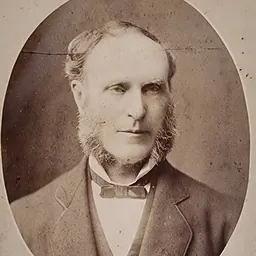

Related people
Same field, nearest in time
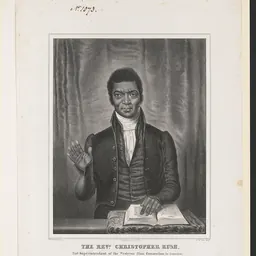
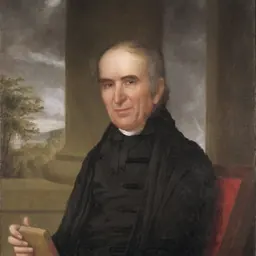

Contemporaries
People whose lives overlapped Barton W. Stone's




Frequently asked questions
Who was Barton W. Stone?
American evangelist (1772–1844)
When was Barton W. Stone born?
Barton W. Stone was born on 24 December 1772 in Maryland.
When did Barton W. Stone die?
Barton W. Stone died on 9 November 1844 in Hannibal.
What was Barton W. Stone's occupation?
Barton W. Stone was a preacher and theologian.
What was Barton W. Stone known for?
Barton W. Stone was known for Restoration Movement.
What nationality was Barton W. Stone?
Barton W. Stone was American.
Sources & further reading
Cite this page
APA: Biography.guide. (2026). Barton W. Stone. https://biography.guide/barton-w-stone/
MLA: "Barton W. Stone." Biography.guide, https://biography.guide/barton-w-stone/.
Chicago: "Barton W. Stone." Biography.guide. https://biography.guide/barton-w-stone/.
Data last updated: 2026-09-22 · Spot an error? Report a correction.
Page generated 2026-09-27 05:18 UTC