
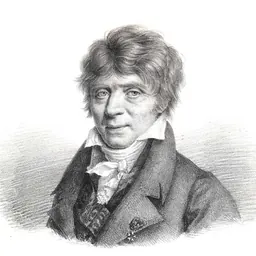
George Augustus Robinson
Chief Protector of Aborigines in Port Phillip District, now Victoria, Australia
About George Augustus Robinson
Lived 1791 – 1866 (aged 75). George Augustus Robinson was a British preacher and protector of Aborigines, known for Protector of Aborigines.
George Augustus Robinson (22 March 1791 – 18 October 1866) was an English-born builder and self-trained preacher who was employed by the British colonial authorities to conciliate the Indigenous Australians of Van Diemen's Land and the Port Phillip District to the process of British colonization.
In 1830, Robinson, with the guidance of Aboriginal Tasmanians such as Truganini and Woureddy, led what became known as "the friendly mission" around Van Diemen’s Land, which was organised to establish contact with the surviving Indigenous clans during the Black War. The mission later evolved into a series of further expeditions to round up these survivors and place them into enforced exile at the Wybalenna Aboriginal Establishment on Flinders Island. From 1835 to 1839, Robinson became the superintendent of this facility, where his mismanagement resulted in the deaths of many of those exiled.
He was appointed Chief Protector of Aborigines by the Aboriginal Protection Board in Port Phillip District, New South Wales in 1839, a position he held until 1849. His documentation of his many travels around what is now the state of Victoria are still a uniquely significant source of historical and cultural information about the Indigenous people of this region and their destruction by British colonists.
Early life Robinson was born on 22 March 1791 in London, England, to William Robinson, a construction worker, and Susannah Robinson (née Perry). He followed his father into the building trade, married Maria Amelia Evans on 28 February 1814, and had five children over the next ten years. He worked as a bricklayer at the Chatham Dockyard and had some involvement with the construction of martello towers along England's coast. Robinson then became a builder in London manufacturing bricks and tiles.
Robinson was also informed of Governor Arthur's decree that a £5 bounty was to be awarded for every native captured. His mission subsequently took on a new priority where personal financial gain became a priority. Robinson used a Pairelehoinner youth named Tunnerminnerwait to gather some of the local people, who he shipped to Launceston to claim the bounty.
At Launceston, the settlers were preparing for the climax of the Black War. Called the Black Line, it was a 2,200 man strong chain of armed colonists and soldiers to sweep the settled areas looking to kill or trap any Aboriginal people they found. Robinson was allowed to continue his mission to the north-east, away from the direction of the Black Line.
Robinson's group arrived at Cape Portland in October 1830 having rescued several Indigenous women from the slavery of the local sealers, and been joined by the respected warrior Mannalargenna and his small remnant clan. They were informed of the failure of the Black Line to capture or kill many Aboriginal people and it was decided by the government to use the nearby Bass Strait Islands as a place of enforced exile for those Indigenous Tasmanians collected by Robinson.
Chief Protector of Aborigines in Port Phillip District
Robinson was keen to remove himself of responsibility at Wybalenna and in 1839 accepted the position of Protector of Aborigines in the newly colonised Port Phillip District in present-day Victoria. Robinson took his family and seventeen Aboriginal Tasmanians from Wybalenna with him as servants.
In 1841 and 1842, Robinson traveled to western Victoria with Tunnerminnerwait where he investigated and reported on the Convincing Ground massacre that had occurred in 1833 or 1834. In 1841 he investigated a gunshot incident, and whilst travelling came across the aboriginal aquaculture site of Lake Condah, recording its dimensions.
His journals are regarded as amongst the most important documents on the early years of European settlement in Victoria. They offer significant observations on Koorie culture, early Melbourne personalities, the landscape and settler society.
Later life The Port Phillip Protectorate was abolished on 31 December 1849, with Robinson receiving a pension. He returned to England in 1852 and the following year married Rose Pyne, with whom he had another five children. The couple spent five years living in Europe, mostly in Paris and Rome. In 1859 they settled in Bath, England, where Robinson died on 18 October 1866 at the age of 75.
Robinson in contemporary culture
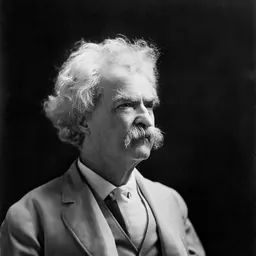
Semi-fictional accounts of Robinson's travels are included in Matthew Kneale's book English Passengers and in T. C. Boyle's short story "The Extinction Tales", and Robinson is a major character in Richard Flanagan's 2008 novel Wanting. There is a reference to Robinson in the book The Lost Diamonds of Killiecrankie by Gary Crew and Peter Gouldthorpe, and in Following the Equator, by Mark Twain. Robert Drewes' 'Savage Crows' also incorporates the work of Robinson into the plot. See also Mudrooroo's critical portrayal of Robinson in Doctor Wooreddy's Prescription for Enduring the Ending of the World, Master of the Ghost Dreaming and his Vampire Trilogy: The Undying, Underground and The Promised Land. Additionally, Cassandra Pybus' 2020 biography of Truganini, entitled Truganini: Journey Through the Apocalypse provides a detailed account of Robinson's personal relationship with Truganini and the traumatic psychological and cultural shifts experienced by Aboriginal Tasmanians.
Tasmanian artist Julie Gough referenced Robinson and his work in her 2019 exhibition Tense Past at Tasmania Museum & Art Gallery.
Robinson and museum collections During Robinson's time in Tasmania and Victoria, he collected a large number of objects and artworks from the Aboriginal communities there. He also collected human skulls Joseph Barnard Davis acquired many from Robinson's widow in the 1860s, and it may be through his activities that objects subsequently found their way into other collections, for example at the British Museum. Leeds Discovery Centre has two spears he collected. The Pitt Rivers Museum in Oxford holds nineteen objects relating to Robinson's time abroad. The collection at Pitt Rivers includes several paintings and prints describing individual people from Aboriginal communities, including: Truggernana, Jenny, and Fanny, amongst others.
Archival materials The George Augustus Robinson papers collection held at the Mitchell Library, Sydney consists of 72 volumes organized into 7 series. Brian Plomley arranged the collection from 1961–1962. The collection was microfilmed from 1971–1998. The collection contains journals, letters, vocabularies, drawings, photographs, and other types of materials. In 1939, the Magg Brothers in London purchased the collection for the Mitchell Library from the estate of Albert Robinson, the son of George Augustus Robinson. They were held in the National Library of Wales at Aberystwyth from 1939-1947 and were transferred to the Mitchell Library in Sydney in 1947.
Below are some vocabularies of Tasmanian Aborigines (i.e., word lists of Tasmanian languages) from the George Augustus Robinson papers collection held at the State Library of New South Wales:
George Augustus Robinson papers, 1818-1924 Series 5: George Augustus Robinson, Aboriginal vocabularies, 1830-1866 File 1: George Augustus Robinson, Aboriginal vocabularies, Tasmania, 1830-1840, 1866 (call number: A 7085) Item 1: George Augustus Robinson, Aboriginal vocabulary of the natives of Eastern Tasmania, 1830-1831 (contains: Aboriginal vocabulary of the natives of Eastern Tasmania, Oct. 1830; Aboriginal vocabulary of Tasmania, 1831) Item 2: George Augustus Robinson, Aboriginal vocabulary of Northern Tasmania, 1830-1831 Item 3: George Augustus Robinson, vocabulary of Tasmanian Aborigines, 1832 Item 4: George Augustus Robinson, vocabulary of words spoken by the Aboriginal natives who formerly inhabited the Island of Van Diemen's Land, June 1840 Item 5: George Augustus Robinson, vocabulary of Tasmanian Aborigines Item 6: George Augustus Robinson, Aboriginal vocabulary of the natives of various tribes in Tasmania, 1838
Item 6 contains the following vocabularies, all of which are written in the hand of Charles Robinson, the son of George Augustus Robinson: Vocabulary of the Tasmanian Aboriginal Natives Big River language [Tasmanian Aboriginal vocabulary] Tasmanian Aboriginal vocabulary Aboriginal vocabulary for parts of the body in Ben Lomond, Big River, and Port Sorell native languages, Jan. 1838 Port Sorell Aboriginal vocabulary Ben Lomond Aboriginal vocabulary West Coast Aboriginal vocabulary Tarmurie (?) [or Larmuric?] Aboriginal vocabulary
Don’t just read it —
keep it.
Full-length biographies made to live with: read them, listen on the way to work, watch them tonight.
- E-book
- Audio
- Video
Instant download · yours to keep · every purchase keeps this site free
Important facts
People in George Augustus Robinson's life
Named in this biography and alive at the same time





Related people
Same field, nearest in time



Contemporaries
People whose lives overlapped George Augustus Robinson's


Frequently asked questions
Who was George Augustus Robinson?
Chief Protector of Aborigines in Port Phillip District, now Victoria, Australia
When was George Augustus Robinson born?
George Augustus Robinson was born on 22 March 1791 in London.
When did George Augustus Robinson die?
George Augustus Robinson died on 18 October 1866 in Bath.
What was George Augustus Robinson's occupation?
George Augustus Robinson was a preacher and protector of Aborigines.
What was George Augustus Robinson known for?
George Augustus Robinson was known for Protector of Aborigines.
What nationality was George Augustus Robinson?
George Augustus Robinson was British.
Sources & further reading
· Wikipedia: George Augustus Robinson
· DBpedia: George Augustus Robinson
Cite this page
APA: Biography.guide. (2026). George Augustus Robinson. https://biography.guide/george-augustus-robinson/
MLA: "George Augustus Robinson." Biography.guide, https://biography.guide/george-augustus-robinson/.
Chicago: "George Augustus Robinson." Biography.guide. https://biography.guide/george-augustus-robinson/.
Data last updated: 2026-09-24 · Spot an error? Report a correction.
Page generated 2026-09-27 05:06 UTC