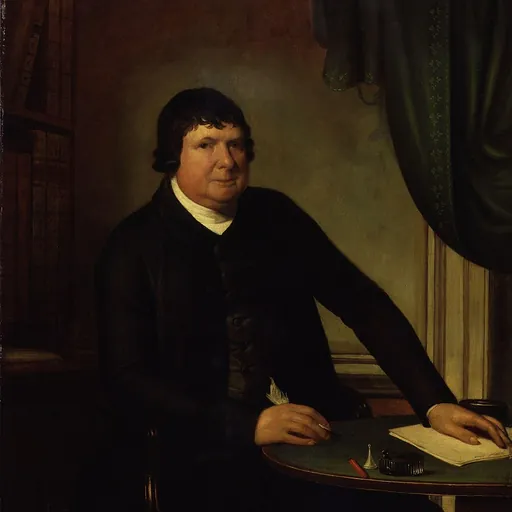
About William Huntington
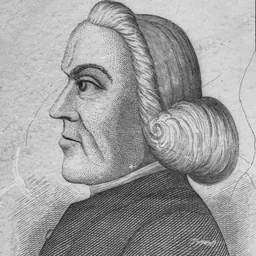
Lived 1745 – 1813 (aged 68). William Huntington was a British preacher, theologian and wikt:coalheaver.
William Huntington S.S. (2 February 1745 – 1 July 1813) was an English preacher and coalheaver. He is said to have preached that "moral law" is unnecessary, a theological view known as Antinomianism. Huntington was a strict Calvinist who believed some were predestined to be saved and some were not. He founded or opened chapels throughout England, many of which survive including Bethlehem Chapel, Richmond upon Thames. He had an unsuccessful romance with Susannah Fever, from which a child was born. He left the Kent area and changed his name. Now William Huntington he was free from his financial obligation, but not his conscience. He was the son of a farmworker and he undertook work that was unskilled or semi-skilled, such as driving hearses and coaches, gardening and heaving coal. He also spent some time as a tramp. By the 1780s, Huntington preached at a large circuit of chapels across Surrey, Sussex and London: and of Five Ash Down Independent Chapel, founded in 1773 in East Sussex. His ongoing poverty, exacerbated by the loss of his coalheaving job, forced him to walk long distances every week. He controversially claimed that Divine Providence alleviated his poverty at this time by occasionally supplying money, food and a horse. Huntington has been identified as the "most egregious" proponent of Antinomianism.
Huntington's "Broken Cistern" gives his views about Antinomianism: "I will not say that the authors of this book are Antinomians, but this I will say, that the book contains the worst Antinomianism that I ever read, and is a vile and damnable harangue, both against the law, the gospel, and the grace of God. Against the law, because it declares, the law has ceased to exist, and is done away, as a covenant of works. Against the gospel, because it is no rule of right or wrong. And against the grace of God, by declaring that the new man is taken captive by sin." This quotation, from Huntington's sermon "Moses Unveiled in the Face of Christ", is another example of Huntington's views on Antinomianism. "A real Antinomian, in the sight of God, is one who 'holds the truth in unrighteousness', who has gospel notions in his head, but no grace in his heart. He is one that makes a profession of Christ Jesus, but was never purged by his blood, renewed by his Spirit, nor saved by his power. With him carnal ease passes for gospel peace, a natural assent of the mind for faith, insensibility for liberty, and daring presumption for the grace of assurance. He is alive without the law, the sentence of the 'moral law' having never been sent home to him. The 'law of faith' was never sealed on him, the 'law of truth' was never received by him, nor the 'law of liberty' proclaimed to him. He was never arraigned at, nor taken from, the 'throne of judgement'. He was never justified at the 'throne of grace', nor acquitted at the 'bar of equity'. The tremendous attribute of righteousness was never seen or felt by him. The righteousness of the law was never fulfilled by him, the righteousness of faith was never imputed to him, nor the fruits of righteousness brought forth by him. He is an enemy to the power of God, to the experience of the just, and to every minister of the Spirit, and is in union with none but hypocrites, whose uniting ties are 'the gall of bitterness and the bonds of iniquity'. He is one that often changes his opinion, but was never changed in heart. He turns to many sects and parties, but never turns to God. In word he is false to Satan, in heart he is false to God, false to Satan by uttering truth, and false to God by a false profession. He is a false reprover in the world, and in the household of faith a false brother. He is a child of Satan in the congregation of dissemblers, and a bastard in the congregation of the righteous. By mouth he contends for a covenant that cannot save him, and in heart he hates the covenant that can. His head is at Mount Calvary, his heart and soul at Mount Sinai. he is a Pharisee at Horeb, and a hypocrite in Zion. He is a transgressor of the law of works, and a rebel to the law of faith, a sinner by the ministry of the letter, and an unbeliever by the ministry of the Spirit. As a wicked servant, he is cursed by the eternal law, and, as an infidel, he is damned by the everlasting gospel. And this is a real Antinomian in the sight of God.”
During his time in London, Huntington's reputation grew, and he opened chapels elsewhere. In 1805 he was invited to be the preacher at a new chapel in Lewes in Sussex. Jireh Chapel had been founded by Jenkin Jenkins, who had left his previous church in the town after a dispute with the congregation. Huntington, who had already added "S.S." to his own name to indicate that he was a sinner who was saved, and which is still extant as of 2009—and another chapel in Bristol the following year.
Huntington died in 1813, after which various preachers served the chapel, but following the death of Huntington's former assistant Rev'd Algar Lock in 1835, the non-conformist services ceased. The building was reopened as an Episcopal (Anglican) chapel, becoming the district church of St. Bartholomew in 1860. The church was destroyed during the bombing of London in the Second World War.
Writings Huntington was a prolific writer and publisher of religious tracts, polemics, sermons and other pieces. His works and letters continued to be published after his death. The Kingdom of Heaven Taken by Prayer (1784) Epistles of Faith (Part 1, 1785) God the Guardian of the Poor and the Bank of Faith (Part 1, 1785) Living Testimonies (Part 1, 1794) The Naked Bow, or, A Visible Display of the Judgments of God on the Enemies of Truth (1794) Light Shining in Darkness (1796) Epistles of Faith (Part 2, 1797) Correspondence between Noctua Aurita and Philomela (1799) God the Guardian of the Poor and the Bank of Faith (Part 2, 1802) Living Testimonies (Part 2, 1806) The substance of the last or farewell sermon of the late Reverend William Huntington, SS (1813, posthumous) The Sinner Saved: a memoir of the Rev. William Huntington (1813, posthumous) Gleanings of the Vintage (1814, two volumes, posthumous) Posthumous Letters (1815, three volumes, posthumous) Posthumous Letters (1822, posthumous)
Don’t just read it —
keep it.
Full-length biographies made to live with: read them, listen on the way to work, watch them tonight.
- E-book
- Audio
- Video
Instant download · yours to keep · every purchase keeps this site free
Important facts
Related people
Same field, nearest in time

Contemporaries
People whose lives overlapped William Huntington's






Frequently asked questions
Who was William Huntington?
English Calvinist preacher (1745-1813)
When was William Huntington born?
William Huntington was born on 2 February 1745 in Cranbrook.
When did William Huntington die?
William Huntington died on 1 July 1813 in Royal Tunbridge Wells.
What was William Huntington's occupation?
William Huntington was a preacher, theologian and wikt:coalheaver.
What nationality was William Huntington?
William Huntington was British.
Sources & further reading
· Wikipedia: William Huntington
· DBpedia: William Huntington (preacher)
Cite this page
APA: Biography.guide. (2026). William Huntington. https://biography.guide/william-huntington/
MLA: "William Huntington." Biography.guide, https://biography.guide/william-huntington/.
Chicago: "William Huntington." Biography.guide. https://biography.guide/william-huntington/.
Data last updated: 2026-09-23 · Spot an error? Report a correction.
Portrait: Wikimedia Commons · author & licence
Page generated 2026-09-27 05:05 UTC