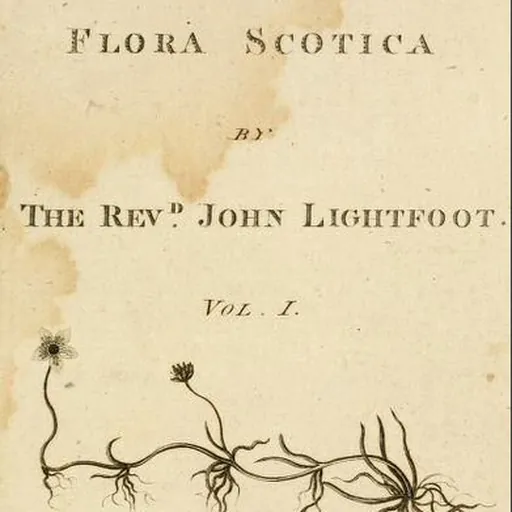
About John Lightfoot
Lived 1735 – 1788 (aged 52). John Lightfoot was a British botanist, zoologist, priest, scientific collector and biologist.
The Reverend John Lightfoot (9 December 1735 – 20 February 1788) was an English parson-naturalist, spending much of his free time as a conchologist and botanist. He was a systematic and effective curator of the private museum of Margaret Bentinck, Duchess of Portland. He is best known for his Flora Scotica which pioneered the scientific study of the plants and fungi of Scotland. He was elected a Fellow of the Royal Society for his scientific work.
Life and work
Lightfoot was born in Newent, Gloucestershire. His father Stephen Lightfoot was a yeoman farmer. He was educated at Pembroke College, Oxford. He gained a BA in 1756 and an MA in 1766. He was elected as a Fellow of the Royal Society in 1785.
The Roman cameo glass "Portland Vase" from about AD 25 is the most famous object in the collection that Lightfoot curated. Lightfoot was Rector of Gotham, and the chaplain and librarian for Margaret Bentinck, Duchess of Portland. He was also curate of Colnbrook, Buckinghamshire and then of Uxbridge, Middlesex, a position he held for the rest of his life. leading ultimately to a detailed and accurate inventory and description of her private "Portland Museum", published as an auction catalogue after her death. Among the collection that Lightfoot had curated was the ancient "Portland Vase" now named after her family. Apart from Banks and Solander, Lightfoot also knew many of the other founders of the Linnaean Society, including William Hudson, James Dickson, James Edward Smith, Gilbert White, John Sibthorpe and James Bolton; Part of his plant collection survives at the Royal Botanic Gardens, Kew. but none is named after John Lightfoot.
Epinephelus lightfooti Fowler, 1907: synonym of Alphestes afer (Bloch, 1793) commemorated Benjamin H. Lightfoot who collected fishes in late 1800s in Caribbean. The following were named after Robert M. Lightfoot of the South African Museum (Cape Town): Terebra lightfooti E. A. Smith, 1899: synonym of Euterebra lightfooti (E. A. Smith, 1899) Zafrona lightfooti (E. A. Smith, 1901) (and synonyms Anachis lightfooti, Columbella lightfooti)
Don’t just read it —
keep it.
Full-length biographies made to live with: read them, listen on the way to work, watch them tonight.
- E-book
- Audio
- Video
Instant download · yours to keep · every purchase keeps this site free
Important facts
People in John Lightfoot's life
Named in this biography and alive at the same time
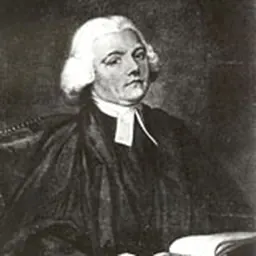



Related people
Same field, nearest in time






Contemporaries
People whose lives overlapped John Lightfoot's



Frequently asked questions
Who was John Lightfoot?
Priest, conchologist and botanist (1735-1788)
When was John Lightfoot born?
John Lightfoot was born on 9 December 1735 in Newent.
When did John Lightfoot die?
John Lightfoot died on 20 February 1788 in London.
What was John Lightfoot's occupation?
John Lightfoot was a botanist, zoologist, priest, scientific collector and biologist.
What nationality was John Lightfoot?
John Lightfoot was British.
Sources & further reading
· DBpedia: John Lightfoot (biologist)
Cite this page
APA: Biography.guide. (2026). John Lightfoot. https://biography.guide/john-lightfoot-botanist/
MLA: "John Lightfoot." Biography.guide, https://biography.guide/john-lightfoot-botanist/.
Chicago: "John Lightfoot." Biography.guide. https://biography.guide/john-lightfoot-botanist/.
Data last updated: 2026-09-21 · Spot an error? Report a correction.
Portrait: Wikimedia Commons · author & licence
Page generated 2026-09-27 05:00 UTC