
About John Hayward
Lived 1808 – 1891 (aged 82–83). John Hayward was a British architect.
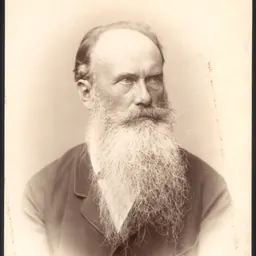
John Hayward (1807–1891) was a Gothic Revival architect based in Exeter, Devon, who gained the reputation as "the senior architect in the west of England".
Biography John Hayward was born in London on 26 September 1807, the son of a 'house and ornament painter', John Pearson Hayward and Frances Barry and a nephew of Sir Charles Barry, the designer of the Palace of Westminster, with whom he served as pupil.
He was an accomplished painter and draughtsman; by 1826, he was exhibiting at the Royal Academy and, by 1834, he had left Barry and set up practice in Cathedral Yard, Exeter, Devon.
Hayward was official architect of The Exeter Diocesan Architectural Society, which meant that all new designs for the churches in the Exeter Diocese passed through him for approval, and a member of Cambridge Camden Society, later The Ecclesiological Society.
So popular was his work on local churches that St Andrew's, Exwick was described by The Ecclesiologist in July 1842, as the "best specimen of modern church we have yet seen."
This accolade soon led to further work; in Scotland, Lady Cecil Chetwynd-Talbot, the Marchioness of Lothian, commissioned Hayward to design St John's Church, Jedburgh in 1844, and in Oxfordshire he designed St. James' Church in Little Milton, Oxfordshire, to which he added the west tower in 1861.
But probably his most famous design was for The Royal Albert Memorial Museum, Exeter. which opened in 1868 as a practical memorial to Prince Albert, and is the largest museum in the city.
Whilst many of his designs were for religious use, he also designed schools and worked on other buildings, including The Hall, Pembroke College, Oxford, (1844) which Nikolaus Pevsner described as "the most ambitious of all halls except Wolsey's" at Christ Church College, and Exeter Prison on New North Road, Exeter, which was based upon the plans of the new model prison at Pentonville.
Hayward died on 7 May 1891. His son, Pearson Barry Hayward, worked under him, but died before his father in 1888; their practice was known as Messrs Hayward & Son.
Work Work, including restoration, undertaken by John Hayward and his practice includes:
In Cornwall
All Saints, Herodsfoot All Saints, Tuckingmill, Camborne Holy Trinity, Carnmenellis St Cleder, St Clether
In Devon
St Andrew, Exwick St Mary, Bickleigh St Mary, Bicton St Michael, Sowton St Mark, Dawlish St David, Exeter St Mary Arches, Exeter St Andrew, Halberton St Gregory, Harpford St John the Baptist, Holcombe Burnell St Thomas of Canterbury, Kingswear St Mary Magdalene, Monkton St Michael, Mumsbury St Michael, Beer St Mary, Appledore, Northam St Mary, Rockbeare St Mary, Whimple St Mary the Virgin, Woolfardisworthy, Mid Devon St Swithun, Sandford St Peter, Uplowman St Thomas the Apostle, Exeter St John The Evangelist, Tipton St John Holy Trinity, Ilfracombe St Philip and St James, Ilfracombe Paschoe House, Crediton All Saints, Okehampton St Bridget, Bridestowe Holy Trinity, Buckfastleigh Holy Trinity, Burrington St Eustachius' Church, Tavistock St Peter, Twitchen St Mary, Uffculme Crediton Parish Church St Michael and All Angels, Alphington St Luke's College, Exeter University The Exeter Diocesan Training School, now part of St. Luke's Campus All Hallows on the Wall, Exeter (since demolished) Queen Elizabeth School, Crediton Hele's School, Exeter The New Buildings, Blundell's School, Tiverton Blundell's School chapel, Tiverton The High School for Girls, Exeter. Renamed in 1912 as The Maynard School. All Saints chapel, Bradfield, Uffculme The Board School, Dawlish Holcombe Court, Holcombe Rogus The Halford Wing, Royal Devon & Exeter Hospital, Southernhay, Exeter, Devon Ashbury House, Ashbury, Devon (since demolished). St Ouen, St Ouen Victoria College, St Helier Natwest Bank, Library Place, St Helier
Elsewhere
St Michael, Milverton, Somerset St Peter, Walgrave, Northamptonshire St James, Little Milton, Oxfordshire St. John, Jedburgh, Scottish Borders
Don’t just read it —
keep it.
Full-length biographies made to live with: read them, listen on the way to work, watch them tonight.
- E-book
- Audio
- Video
Instant download · yours to keep · every purchase keeps this site free
Important facts
People in John Hayward's life
Named in this biography and alive at the same time




Related people
Same field, nearest in time



Contemporaries
People whose lives overlapped John Hayward's





Frequently asked questions
Who was John Hayward?
British architect
When was John Hayward born?
John Hayward was born in 1808.
When did John Hayward die?
John Hayward died in 1891.
What was John Hayward's occupation?
John Hayward was an architect.
What nationality was John Hayward?
John Hayward was British.
Sources & further reading
· DBpedia: John Hayward (architect)
Cite this page
APA: Biography.guide. (2026). John Hayward. https://biography.guide/john-hayward-architect/
MLA: "John Hayward." Biography.guide, https://biography.guide/john-hayward-architect/.
Chicago: "John Hayward." Biography.guide. https://biography.guide/john-hayward-architect/.
Data last updated: 2026-09-20 · Spot an error? Report a correction.
Page generated 2026-09-27 05:12 UTC