
About John Faber Junior
Lived 1684 – 1756 (aged 71–72). John Faber Junior was a Dutch printmaker, painter, copper engraver, miniature painter, reproductions engraver and mezzotinter.
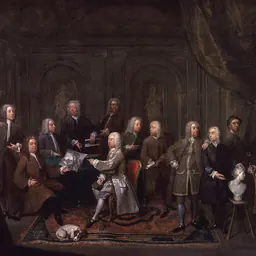
"Benn's Club", with Robert Alsop; William Benn; John Blashford.
John Faber the Younger (1684 – 2 May 1756) was a Dutch portrait engraver active in London.
Life
Faber was born in The Hague, the son of the artist John Faber the Elder, and learned mezzotint and drawing from his father after the family's move to London. He then enrolled at the St Martin's Lane Academy.
In later life Faber resided at the Golden Head in Bloomsbury Square, London, where he died of gout on 2 May 1756. From the inscription on a masonic portrait of Frederick, Prince of Wales, it appears that Faber was a Freemason himself. According to Horace Walpole, his widow, of whom there is an engraving by Faber from a portrait by Thomas Hudson, remarried a lawyer of the name of Smith.
Works Faber concentrated on mezzotints and was prolific. He was commissioned by Sir Godfrey Kneller and Peter Lely to reproduce their works (the 48-image Kit-Kat Club for the former).
Among his early works were portraits of Charles I of England (1717), Charles XII of Sweden (1718), Sir George Byng (1718), Eustace Budgell (1720), and others. Faber presents the transitional period from Kneller to that of Joshua Reynolds and Thomas Gainsborough. More than 400 of his portraits survive.
His works include a whole-length of Jane Collier, and one of Father Couplet (from a picture by Kneller at Windsor); also the portraits of Charles II in his robes of state (after Lely), Ignatius Loyola (after Titian), Don Jose Carreras (after Kneller), and the six aldermen known as "Benn's Club" (after Hudson). He published sets of engravings, among the best known being The Beauties of Hampton Court, The Five Philosophers of England, and The Members of the Kit-Cat Club: the Kit-Cat Club at one time held its meetings in Fountain Court, The Strand, London, where Faber also lived. Faber was engaged on the engravings from 1731 to 1735, and in the latter year they were published by him and Jacob Tonson.
Faber occasionally produced other types of subject, such as The Taking of Namur (after Jan Wyck), St Peter (after Anthony van Dyck), Salvator Mundi (after Robert Browne), and domestic subjects after Philip Mercier.
Rural Life after Mercier
Kit Cat Club Portraits
Don’t just read it —
keep it.
Full-length biographies made to live with: read them, listen on the way to work, watch them tonight.
- E-book
- Audio
- Video
Instant download · yours to keep · every purchase keeps this site free
Important facts
more
Johan Faber (II), John (II) Faber, Faber frater, Faber junior, Johan (de Jonge) Faber, Johan Faber (II)People in John Faber Junior's life
Named in this biography and alive at the same time



Related people
Same field, nearest in time
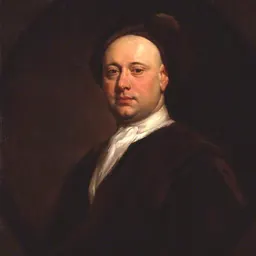


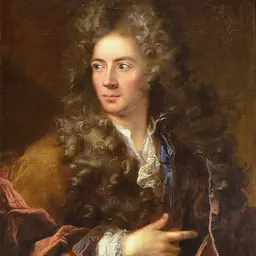
Contemporaries
People whose lives overlapped John Faber Junior's
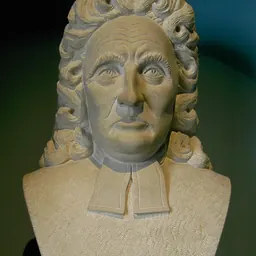


Frequently asked questions
Who was John Faber Junior?
Dutch-English engraver (1684-1756)
When was John Faber Junior born?
John Faber Junior was born in 1684 in The Hague.
When did John Faber Junior die?
John Faber Junior died on 2 May 1756 in London.
What was John Faber Junior's occupation?
John Faber Junior was a printmaker, painter, copper engraver, miniature painter, reproductions engraver and mezzotinter.
What nationality was John Faber Junior?
John Faber Junior was Dutch.
Sources & further reading
· Wikipedia: John Faber Junior
· DBpedia: John Faber the Younger
Cite this page
APA: Biography.guide. (2026). John Faber Junior. https://biography.guide/john-faber-junior/
MLA: "John Faber Junior." Biography.guide, https://biography.guide/john-faber-junior/.
Chicago: "John Faber Junior." Biography.guide. https://biography.guide/john-faber-junior/.
Data last updated: 2026-09-20 · Spot an error? Report a correction.
Page generated 2026-09-27 04:59 UTC