
Thomas Gainsborough
English portrait and landscape painter
About Thomas Gainsborough
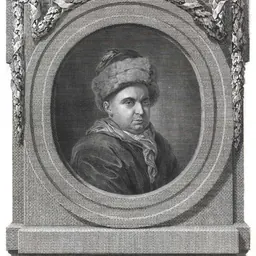
Lived 1727 – 1788 (aged 61). Thomas Gainsborough was a British painter, draftsperson, portraitist, landscape painter, architectural drafter and printmaker.
Thomas Gainsborough (; 14 May 1727 (baptised) – 2 August 1788) was an English painter, draughtsman and printmaker who specialised in portrait and landscape painting. Along with his rival Sir Joshua Reynolds, he was one of the most important British artists of the 18th century. He painted quickly, and the works of his maturity are characterised by a light palette and easy strokes. Despite being a prolific portrait painter, Gainsborough gained greater satisfaction from his landscapes. He is credited (with Richard Wilson) as the originator of the 18th-century British landscape school. Gainsborough was a founding member of the Royal Academy.
Early life
Gainsborough was born in Sudbury, Suffolk, the youngest son of John Gainsborough, a weaver and maker of woollen goods, and his wife Mary, sister of the Reverend Humphry Burroughs. One of Gainsborough's brothers, Humphrey, is said to have invented the method of condensing steam in a separate vessel, which was of great service to James Watt; another brother, John, was known as Scheming Jack because of his passion for designing curiosities.
The artist spent his childhood at what is now Gainsborough's House, on Gainsborough Street, Sudbury. He later resided there following the death of his father in 1748 and before his move to Ipswich. The building is now a house-museum dedicated to his life and art.
As a boy he demonstrated impressive drawing and painting skills. At the age of ten he was painting heads and small landscapes, including a miniature self-portrait. Gainsborough left home in 1740 to study art in London, where he trained under engraver Hubert Gravelot While still in Suffolk, Gainsborough painted a portrait of The Rev. John Chafy Playing the Violoncello in a Landscape (c. 1750–1752; Tate Gallery, London).
In 1752, he and his family, now including two daughters, Mary ("Molly", 1750–1826) and Margaret ("Peggy", 1751–1820), moved to Ipswich. Commissions for portraits increased, but his clients included mainly local merchants and squires. He had to borrow against his wife's annuity. now in the permanent collection of the National Portrait Gallery, London.
Bath
The Blue Boy (1770). Huntington Library, San Marino, California In 1759, Gainsborough and his family moved to Bath, living at number 17 The Circus. There, he studied portraits by van Dyck and was eventually able to attract a fashionable clientele. Beginning with the Exhibition of 1761 he sent work to the annual exhibition of the Society of Artists of Great Britain (of which he was one of the earliest members) at Spring Gardens in London. From 1769 he submitted works to the Royal Academy's annual exhibitions. The exhibitions helped him enhance his reputation, and he was invited to become a founding member of the Royal Academy in 1769. His relationship with the academy was not an easy one and he stopped exhibiting his paintings in 1773.
Despite Gainsborough's increasing popularity and success in painting portraits for fashionable society, he expressed frustration during his Bath period at the demands of such work and that it prevented him from pursuing his preferred artistic interests. In a letter to a friend in the 1760s Gainsborough wrote: "I'm sick of Portraits and wish very much to take my Viol da Gamba and walk off to some sweet Village where I can paint Landskips [landscapes] and enjoy the fag End of Life in quietness and ease". Of the men he had to deal with as patrons and admirers, and their pretensions, he wrote:... damn Gentlemen, there is not such a set of Enemies to a real artist in the world as they are, if not kept at a proper distance. They think ... that they reward your merit by their Company & notice; but I ... know that they have but one part worth looking at, and that is their Purse; their Hearts are seldom near enough the right place to get a sight of it. Gainsborough was so keen a viol da gamba player that he had at this stage five of the instruments, three made by Henry Jaye and two by Barak Norman.
London
In 1774, Gainsborough and his family moved to London to live in Schomberg House, Pall Mall. A commemorative blue plaque was put on the house in 1951. In 1777, he again began to exhibit his paintings at the Royal Academy, including portraits of contemporary celebrities, such as the Duke and Duchess of Cumberland. Exhibitions of his work continued for the next six years. About this time, Gainsborough began experimenting with printmaking using the then-novel techniques of aquatint and soft-ground etching. Portrait of Anne, Countess of Chesterfield (1777–78), J. Paul Getty Museum. His later pictures are characterised by a light palette and easy strokes.
During the 1770s and 1780s Gainsborough developed a type of portrait in which he integrated the sitter into the landscape. An example of this is his portrait of Frances Browne, Mrs John Douglas (1746–1811) which can be seen at Waddesdon Manor. The sitter has withdrawn to a secluded and overgrown corner of a garden to read a letter, her pose recalling the traditional representation of Melancholy. Gainsborough emphasised the relationship between Mrs Douglas and her environment by painting the clouds behind her and the drapery billowing across her lap with similar silvery violet tones and fluid brushstrokes. This portrait was included in his first private exhibition at Schomberg House in 1784.
In 1776, Gainsborough painted a portrait of Johann Christian Bach, the youngest son of Johann Sebastian Bach. Bach's former teacher Padre Martini of Bologna, Italy, was assembling a collection of portraits of musicians, and Bach asked Gainsborough to paint his portrait as part of this collection. Gainsborough did not particularly enjoy reading but letters written to his friends were penned in such an exceptional conversational manner that the style could not be equalled. As a letter writer Henry Bate-Dudley said of him "a selection of his letters would offer the world as much originality and beauty as is ever traced in his paintings".
In the 1780s, Gainsborough used a device he called a "Showbox" to compose landscapes and display them backlit on glass. The original box is on display in the Victoria and Albert Museum with a reproduction transparency.
He died of cancer on 2 August 1788 at the age of 61. According to his daughter Peggy, his last words were "van Dyck". He is interred in the churchyard St Anne's Church, Kew, Surrey, (located on Kew Green). It was his express wish to be buried near his friend Joshua Kirby. Later his wife and nephew Gainsborough Dupont were interred with him. Coincidentally Johan Zoffany and Franz Bauer are also buried in the graveyard. In 2011, an appeal was given to pay the costs of restoration of his tomb, and the tomb was restored in 2012. A street in Kew, Gainsborough Road, is named after him.
Technique
Gainsborough's only known assistant was his nephew, Gainsborough Dupont.
Gainsborough's works became popular with collectors from the 1850s on, after Lionel de Rothschild began buying his portraits. The rapid rise in the value of pictures by Gainsborough and also by Reynolds in the mid 19th century was partly because the Rothschild family, including Ferdinand de Rothschild began collecting them.
In 2011, Gainsborough's portrait of Miss Read (Mrs Frances Villebois) was sold by Michael Pearson, 4th Viscount Cowdray, for a record price of £6.54M, at Christie's in London. She was a matrilineal descendant of Cecily Neville, Duchess of York.
Popular culture In the steampunk alternate history novel The Two Georges by Richard Dreyfuss and Harry Turtledove, the eponymous fictional Gainsborough painting serves as the macguffin. Gainsborough's portrait The Blue Boy is shown in the 1988 comedy movie The Naked Gun: From the Files of Police Squad! in the office of the antagonist, Vincent Ludwig. Gainsborough's The Blue Boy is also referenced in a 1995 episode of Keeping Up Appearances with Hyacinth Bucket stating at country house estate sale that she was "looking for something like Gainsborough's Blue Boy...only cheaper...". In the Star Trek: The Next Generation episode Hollow Pursuits (1990), Wesley Crusher dresses up as The Blue Boy. Cecil Beaton's play Gainsborough's Girls is set in London in 1774 when the painter moved his family to the capital. Previously unpublished, it received its first performance in Sudbury, Suffolk in 2019, followed by a short run at the Tower Theatre, London. Simon Edge's comic novel A Right Royal Face-Off focuses on Gainsborough's relationship with King George III and his family, and his rivalry with Joshua Reynolds. Stanley Kubrick was inspired by Gainsborough's paintings, amongst other artists of the 18th century, in creating the look and mannerisms for his 1975 film Barry Lyndon. Gainsborough's portrait The Morning Walk (Portrait of Mr and Mrs William Hallett) is clearly visible over actor Daniel Craig's shoulder during a scene in the 2012 James Bond film Skyfall set in the National Gallery. Gainsborough (played by Cecil Kellaway) performs a vital role in the 1945 film Kitty; saving the eponymous heroine from prison sets the plot, based on Pygmalion, in motion. Gainsborough's portrait The Gravenor Family was cut and pasted into the sleeve of the 1983 Electric Light Orchestra album Secret Messages. Gainsborough's portrait Cornard Wood, near Sudbury, Suffolk is referenced in the first season of the 2024 Netflix show The Gentlemen. The CSS extended color Gainsboro (hex value #DCDCDC) is attributed to Gainsborough's use of similar light tones.
Gallery
Don’t just read it —
keep it.
Full-length biographies made to live with: read them, listen on the way to work, watch them tonight.
- E-book
- Audio
- Video
Instant download · yours to keep · every purchase keeps this site free
Important facts
more
Thomas Gainsboro, &c. Gainsborough, T. Gainsbro, th. gainsborough, Gainsbro', Gainsborough, Gainsboroagh, Thomas Gainsbro, Gainsborouh, Gainsbrough, Gainsboro, T Gainsborough RA, Tomas Geĭnzbŭro, Gainsbury, Thomas Gainsborough RA, Tomas Geĭnsboro, thos. gainsboroughPeople in Thomas Gainsborough's life
Named in this biography and alive at the same time



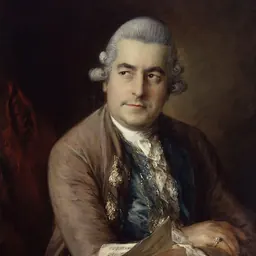
Related people
Same field, nearest in time

Contemporaries
People whose lives overlapped Thomas Gainsborough's





Frequently asked questions
Who was Thomas Gainsborough?
English portrait and landscape painter (1727-1788)
When was Thomas Gainsborough born?
Thomas Gainsborough was born on 14 May 1727 in Sudbury.
When did Thomas Gainsborough die?
Thomas Gainsborough died on 2 August 1788 in London.
What was Thomas Gainsborough's occupation?
Thomas Gainsborough was a painter, draftsperson, portraitist, landscape painter, architectural drafter and printmaker.
What nationality was Thomas Gainsborough?
Thomas Gainsborough was British.
Sources & further reading
· Wikipedia: Thomas Gainsborough
· DBpedia: Thomas Gainsborough
Cite this page
APA: Biography.guide. (2026). Thomas Gainsborough. https://biography.guide/thomas-gainsborough/
MLA: "Thomas Gainsborough." Biography.guide, https://biography.guide/thomas-gainsborough/.
Chicago: "Thomas Gainsborough." Biography.guide. https://biography.guide/thomas-gainsborough/.
Data last updated: 2026-09-20 · Spot an error? Report a correction.
Page generated 2026-09-27 05:24 UTC