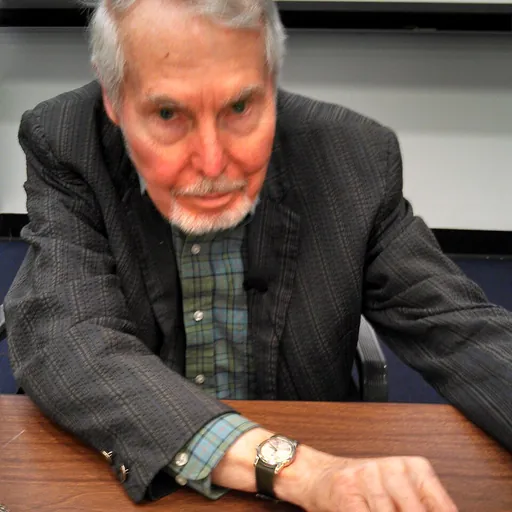
John David Jackson
American theoretical physicist and textbook author
About John David Jackson
Lived 1925 – 2016 (aged 91). John David Jackson was an American mathematician, physicist, nuclear physicist, non-fiction writer and university teacher.
John David Jackson (January 19, 1925 – May 20, 2016) was a Canadian–American theoretical physicist. He was a professor at the University of California, Berkeley and a faculty senior scientist emeritus at Lawrence Berkeley National Laboratory.
Jackson was a member of the National Academy of Sciences and was well known for his work in nuclear and particle physics,
Early life and education Born in London, Ontario, Canada, Jackson attended the University of Western Ontario, receiving a B.Sc. in honors physics and mathematics in 1946. He went on to graduate study at MIT, where he worked under Victor Weisskopf, completing his Ph.D. thesis in 1949.
Academic career Jackson held academic appointments successively at McGill University, thanks to Philip Russell Wallace, a prominent Canadian theoretical physicist, (January 1950 – 1957); then the University of Illinois at Urbana–Champaign (1957–1967); and finally the University of California, Berkeley (1967–1995). At McGill, he was Assistant and Associate Professor of Mathematics; at Illinois and Berkeley, he was in the Physics Departments. At the latter, he held appointments on campus and at the Lawrence Berkeley National Laboratory. After retiring from teaching in 1993, he continued to be active at LBNL. He also published an early paper on the theoretical foundation for the then recently discovered muon-catalyzed fusion of hydrogen isotopes.
Illinois (1957–1967) and CERN (1963–64) While at the University of Illinois (1957–1967) Jackson initially continued work on weak interactions as well as strange particle interactions at low energy with Wyld and others. On sabbatical leave at CERN in 1963–64, he collaborated with Kurt Gottfried on production and decay of unstable resonances in high-energy hadronic collisions. They introduced the use of the density matrix to connect production mechanisms to the decay patterns and described the influence of competing processes ("absorption") on the reactions.
During this period Jackson lectured at three summer schools—on dispersion relations at the first Scottish Universities Summer School in Physics, 1960; on weak interactions at the Brandeis Summer Institute, 1962; and on particle and polarization decay distributions at the Summer School of Theoretical Physics, Les Houches, 1965. the second, a small book on mathematics for quantum mechanics (1962) and the third, also in 1962, the first edition of his text on classical electrodynamics. The book is notorious for the difficulty of its problems, and its tendency to treat non-obvious conclusions as self-evident. Jackson's high standards and admonitory vocabulary are the subject of an amusing memorial volume by his son Ian Jackson.
Berkeley Moving to Berkeley in 1967, Jackson taught on campus, both introductory courses for physicists and engineers and graduate courses in particle physics and quantum mechanics. His lecture notes from the latter have been made into book. He did his research at LBNL and served in administrative positions at both the campus (Chair, University of California, Berkeley (UCB) Physics Department, 1978–1981) and the lab (Head, LBNL Physics Division, January 1982 – June 1984). In the formative years of the ill-fated Superconducting Super Collider (SSC) project, he served as deputy director of operations of the SSC Central Design Group. In 1973–74 he ran the nascent theory group at Fermilab and co-edited the proceedings of the 1973 "Rochester" Conference.
Retirement years Jackson retired from teaching in May 1995, but retained his connection with LBNL. In the 1990s and beyond his time was increasingly devoted to semi-historical talks and publications on a variety of topics, with a foray into refuting suggestions that cancer may be caused by environmental radiation stemming from ubiquitous electronics use. This includes a continuing series of papers in the American Journal of Physics on diverse topics in electromagnetism, including rebuttals of mistaken ideas. History of physics publications include the historical roots of gauge invariance, examples of the misattribution of discoveries in physics, and the editing of a sequel to R. T. Birge's history of the Berkeley Physics Department.
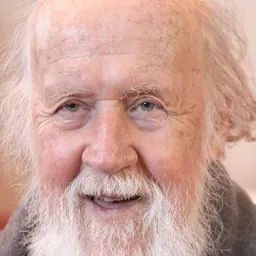
Students His students include Hubert Reeves Robert N. Cahn (LBNL), Richard D. Field and Chris Quigg.
Memberships and honors Jackson was a Fellow of the American Physical Society (elected in 1961), a Member of the American Academy of Arts and Sciences, and a Member of the National Academy of Sciences (elected in 1990). In 1956, he was awarded a Guggenheim Fellowship. In 1989, he received an Honorary D. Sc. from his alma mater, the University of Western Ontario. In 2009, in recognition of his own contributions to classroom teaching and his textbook, the American Association of Physics Teachers created the "J. D. Jackson Award for Excellence in Graduate Education", with the first award in February 2010 to Eugene D. Commins.
Books Jackson JD, Classical Electrodynamics, 3rd ed, Wiley, 1999. Jackson JD, Mathematics for Quantum Mechanics: An Introductory Survey of Operators, Eigenvalues, and Linear Vector Spaces, Dover, 2006. Jackson JD, The Physics of Elementary Particles, Princeton University, 1958. Jackson JD, Cahn RN, A Course in Quantum Mechanics, Wiley, 2024.
Don’t just read it —
keep it.
Full-length biographies made to live with: read them, listen on the way to work, watch them tonight.
- E-book
- Audio
- Video
Instant download · yours to keep · every purchase keeps this site free
Important facts
People in John David Jackson's life
Named in this biography and alive at the same time





Related people
Same field, nearest in time

Contemporaries
People whose lives overlapped John David Jackson's



Frequently asked questions
Who was John David Jackson?
American theoretical physicist and textbook author (1925–2016)
When was John David Jackson born?
John David Jackson was born on 19 January 1925 in London.
When did John David Jackson die?
John David Jackson died on 20 May 2016 in Lansing.
What was John David Jackson's occupation?
John David Jackson was a mathematician, physicist, nuclear physicist, non-fiction writer and university teacher.
What nationality was John David Jackson?
John David Jackson was American.
Sources & further reading
· Wikipedia: John David Jackson
· DBpedia: John David Jackson (physicist)
Cite this page
APA: Biography.guide. (2026). John David Jackson. https://biography.guide/john-david-jackson/
MLA: "John David Jackson." Biography.guide, https://biography.guide/john-david-jackson/.
Chicago: "John David Jackson." Biography.guide. https://biography.guide/john-david-jackson/.
Data last updated: 2026-09-22 · Spot an error? Report a correction.
Portrait: Wikimedia Commons · author & licence
Page generated 2026-09-27 05:02 UTC