
About John Chavis
Lived 1763 – 1838 (aged 74–75). John Chavis was a missionary, religious leader and preacher.
John Chavis (c. 1763–June 15, 1838 ) was a free Black educator and Presbyterian minister in the American South during the early 19th century. Born in Oxford, North Carolina, he was the first African American known to attend college in the U.S. and he fought for the Continental Army during the American Revolutionary War. Chavis studied with John Witherspoon at the College of New Jersey (presently Princeton University) and finished his studies at Liberty Hall Academy (presently Washington and Lee University) in Virginia, where he was licensed to preach. Later, while working in Raleigh, North Carolina, he established a private school that was highly regarded and attended by both White and Black students (although on differing schedules).
Early life The exact date of Chavis' birth is not known. It is believed that he was born in either 1762 or 1763 in Virginia. One source claims he was born on October 18, 1763, but with no evidence given.
Information about Chavis's early life is scant as well, with few records to document it. It is believed that he may have been the 'John Chavis' who was employed as an indentured servant by a Halifax, Virginia lawyer named James Milner. A 1773 inventory of Milner's estate does list an "indentured servant named John Chavis." Since Milner possessed a large library, it is possible that Chavis received some schooling during his period of service.
Military service Chavis served as a soldier during the American Revolutionary War. He enlisted in December 1778 and served in the 5th Virginia Regiment for three years. Captain Mayo Carrington of the regiment wrote in a bounty warrant dated March 1783 that Chavis had "faithfully fulfilled [his duties] and is thereby entitled to all immunities granted to three year soldiers."
A 1789 tax list of Mecklenburg County, Virginia, shows that he was listed as a free Black man owning one horse. He had married a woman named Sarah Frances Anderson, and they had one son, Anderson Chavis. In 1789, he was employed by Robert Greenwood's estate as tutor to Greenwood's orphans.
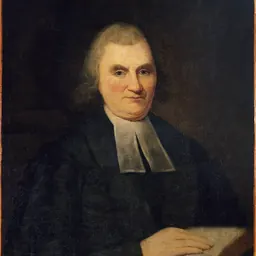
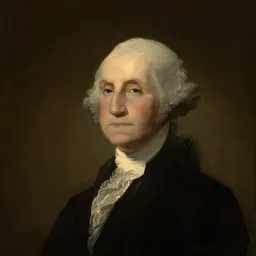
Education In the 1790s, Chavis lived in Princeton, New Jersey, where he took private classes under John Witherspoon to prepare for entering the Presbyterian ministry. Based on recorded minutes of the meeting of the trustees of the College of New Jersey (later to become Princeton University) dated September 26, 1792, Reverend John Blair recommended that "Mr. Todd Henry, a Virginian, and John Chavis, a free Black man of that state... be received" on the school's Leslie Fund. After Witherspoon's death in 1794, Chavis transferred to Liberty Hall Academy in Virginia. The following year, George Washington donated 100 shares of James River Company Stock to the school, after which the school's name was changed to Washington Academy (now Washington and Lee University) to commemorate Washington's gift.
Ministry On November 19, 1800, Chavis completed with high honors a rigorous theological examination that began on June 11, 1800, in Virginia. On this date, he was also granted a license to preach by the Presbytery of Lexington, Virginia, becoming the first African American to receive an official license to preach from the Presbyterian Church in the United States. Six months later, with high character recommendations from the Presbytery of Lexington, Chavis was transferred to work under the Hanover Presbytery.
In April 1802, Chavis had applied for freeman's papers and received them from the Rockbridge County, Virginia, Court. It was recorded that "said [John] Chavis has been known to the Court for several years ... and that he has always ... been considered as a freeman, and they believe him to be such, and that he has always while in the county conducted himself in a decent orderly and respectable manner, and also that he has been a student at Washington Accademy [sic] where they believe he whent [sic] through a regular course of accademical [sic] studies."
Between 1801 and 1807, Chavis served as a circuit-riding missionary for the General Assembly of the Presbyterian Church, preaching to enslaved and free Blacks in the states of Maryland, Virginia, and North Carolina. Some records indicate he also preached to Whites during his missionary tours. Although not called by a parish, he continued to preach to Black and White congregations in Granville, Orange, and Wake counties. . Before his death, Rev. Chavis left the Orange Presbytery and joined the Roanoke Presbytery. The presbytery voted to provide payments of $40 a year to his widow after his death until 1842 . At that time, Chavis's widow told the presbytery that her family could take care of her and her children.
Death Chavis died in June 1838 in circumstances that remain unclear. According to his biographer, Helen Chavis Othow, the oral tradition suggests that Chavis was killed by Whites who did not want him educating Blacks. Local legend says that Chavis was beaten to death in his home. In 1986 Othow founded the John Chavis Historical Society. One of its goals was to locate Chavis' gravesite.
Dr. George Clayton Shaw wrote the first biography about Chavis, published in 1931. He wrote that Chavis was buried at Walnut Hall, the plantation of Senator Willie Person Mangum, Chavis' former student. After numerous searches for the gravesite, in 1988 members of the John Chavis Historical Society found the old cemetery. The group appealed to the state archaeologist to investigate the site, but this has not occurred as of 2013. The Old Cemetery was added to the map of Hill Forest (the former Mangum plantation) by Michael Hill, historian of the North Carolina Archives.
Legacy
Chavis is the subject of historical markers in both North Carolina and Virginia .
Chavis Heights apartments and John Chavis Memorial Park in Raleigh, North Carolina, are named after him, as are an academic building, on-campus student residence, and boardroom at Washington and Lee University. Several schools are, as well, including John Chavis Middle School in Cherryville, North Carolina.
Don’t just read it —
keep it.
Full-length biographies made to live with: read them, listen on the way to work, watch them tonight.
- E-book
- Audio
- Video
Instant download · yours to keep · every purchase keeps this site free
Important facts
People in John Chavis's life
Named in this biography and alive at the same time


Related people
Same field, nearest in time


Contemporaries
People whose lives overlapped John Chavis's




Frequently asked questions
Who was John Chavis?
American minister
When was John Chavis born?
John Chavis was born in 1763.
When did John Chavis die?
John Chavis died in 1838.
What was John Chavis's occupation?
John Chavis was a missionary, religious leader and preacher.
Sources & further reading
Cite this page
APA: Biography.guide. (2026). John Chavis. https://biography.guide/john-chavis/
MLA: "John Chavis." Biography.guide, https://biography.guide/john-chavis/.
Chicago: "John Chavis." Biography.guide. https://biography.guide/john-chavis/.
Data last updated: 2026-09-20 · Spot an error? Report a correction.
Page generated 2026-09-27 05:15 UTC