
About John Browning
Lived 1831 – 1925 (aged 93–94). John Browning was a British astronomer, known for Scientific instrument.
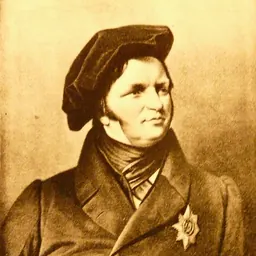
John Browning (c. 1831 – 14 December 1925) was an English inventor and manufacturer of precision scientific instruments in the 19th and early 20th centuries. He hailed from a long line of English instrument makers and transformed the family business from one dealing in nautical instruments to one specialising in scientific instruments. Browning was particularly well known for his advances in the fields of spectroscopy, astronomy, and optometry.
Background
John Browning was born around 1831 in Kent, England, the city recorded variously as Bexley or Welling. His father, William Spencer Browning, was a maker of nautical instruments. It has been speculated that his shop inspired that of the character Solomon Gills, the ship's instrument maker, in the 1848 novel Dombey and Son by Charles Dickens. John Browning hailed from a long line of English instrument makers. His great-grandfather was instrument maker John Browning, brother of Samuel Browning, of the firms Spencer & Browning and Spencer, Browning & Rust, manufacturers of navigational instruments. Several sources indicate that John Browning's great-grandson John Browning resided in Sevenoaks, Kent.
Choice of profession
John Browning initially intended to follow the medical profession, and entered Guy's Hospital, a teaching hospital and the location of a school of medicine. Despite having passed the required examinations, however, he abandoned his plans due to ill health. Instead, he apprenticed with his father, William Spencer Browning. When John Browning came of age, he joined his father in the family business. However, he decided to change the nature of the business, due to increasing competition in the making of nautical instruments. Instead, he elected to pursue the design and manufacture of scientific instruments. The factory was at 111 Minories, London for decades; it moved to 63 Strand, London in 1872. There was an additional London workshop at 6 Vine Street. One light, run with Bunsen cells, was positioned outside each window, due to the fumes. The operating cost of each light was £3 per hour. It was during the 1873 trip that the mayor and the Corporation of the City of London gave a banquet in the Shah's honour. Prime Minister William Ewart Gladstone arranged for the queen to entertain the Shah during the 1873 visit. It has been published in a number of editions, most recently on 3 June 2010 by Cambridge University Press. It first appeared as a black and while image in Symons's Monthly Meteorological Magazine. However, the second, 1882 edition of John Browning's handbook reproduced the plate in colour. In the late 19th century, scientists were interested in the rainband for its potential in the detection of atmospheric water vapour and, therefore, the prediction of rain. Evaluation of the rainband represented the first attempt to use spectroscopy in the field of meteorology. Browning also attached spectroscopes to telescopic equipment, garnering the attention of astronomical physicists J. Norman Lockyer and William Huggins. Browning wrote many articles for the Monthly Notices of the Royal Astronomical Society, including a series on Jupiter's equatorial belt about 1870. Toward the late 1860s, in his quest to produce telescopes for a growing market, Browning collaborated with George Henry With (1827–1904), former schoolmaster at the Blue Coat School in Hereford. With was talented at producing high quality, large reflecting mirrors. John Browning was the author of the book, How to Use Our Eyes and How to Preserve them by the Aid of Spectacles. Published in 1883, the book included thirty-seven illustrations, including a diagram demonstrating the anatomy of the eye (pictured).
Other professional organisations
Browning was also a member of The Aeronautical Society of Great Britain. In 1871, he constructed the first wind tunnel, located in Greenwich at Penn's Marine Engineering Works. It had been designed by another member of the Aeronautical Society, British engineer Francis Herbert Wenham. He was also a member of other scientific organisations, such as the Microscopical Society of London, the Meteorological Society, and the Royal Institution. In 1881, John Browning was in residence at Croydon in Surrey. He lived with his wife Charlotte, sister Emma, and daughter Maria Browning, as well as stepdaughters Florence and Gertrude Hotten. John Browning's profession was listed as "master optician employing 20 men."
Widower John Browning remarried on 24 July 1890 at the Holy Trinity Church, Clapham, on Clapham Common London, at the time recorded as Surrey. He married Annie Woolley, a spinster whose place of birth and residence at the time of their marriage was Chapel Hill in Monmouthshire, Wales. She was the daughter of Josiah Woolley, a licensed victualler, and his wife Harriet Woolley. Her age was listed as 25 years old, thirty years younger than that recorded for her husband. Their marriage record and John Browning's death record are most probably responsible for the difference in dates of birth cited for John Browning in a variety of publications. The marriage record suggests that he was born around 1835, with a given age of 55 at marriage, while his death record suggests that his birth occurred about 1831.
Retirement and death
The company of W. Watson & Son, opticians and camera makers, was founded in London in 1837. In 1900, that company took over John Browning & Co. From 1908, the latter company was known as Watson & Sons Ltd. By 1901, John Browning and his wife had moved to Bournemouth in Hampshire, and a one-year-old daughter Minnie was now part of the family.
Don’t just read it —
keep it.
Full-length biographies made to live with: read them, listen on the way to work, watch them tonight.
- E-book
- Audio
- Video
Instant download · yours to keep · every purchase keeps this site free
Important facts
People in John Browning's life
Named in this biography and alive at the same time


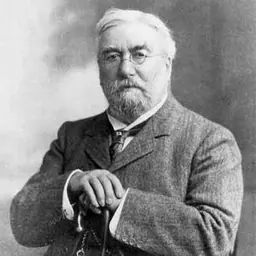
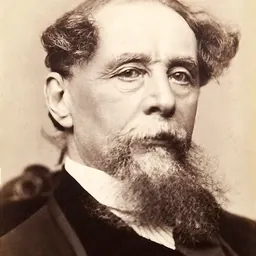
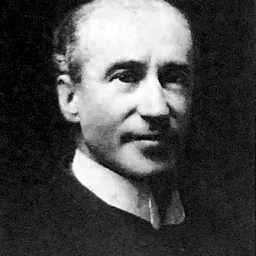
Related people
Same field, nearest in time
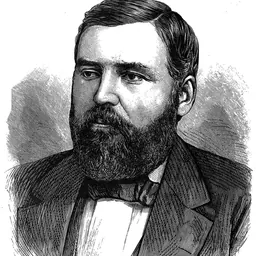


Contemporaries
People whose lives overlapped John Browning's




Frequently asked questions
Who was John Browning?
English inventor and manufacturer of scientific instruments
When was John Browning born?
John Browning was born in 1831 in Kent.
When did John Browning die?
John Browning died on 14 December 1925 in Cheltenham.
What was John Browning's occupation?
John Browning was an astronomer.
What was John Browning known for?
John Browning was known for Scientific instrument.
What nationality was John Browning?
John Browning was British.
Sources & further reading
· DBpedia: John Browning (scientific instrument maker)
Cite this page
APA: Biography.guide. (2026). John Browning. https://biography.guide/john-browning-astronomer/
MLA: "John Browning." Biography.guide, https://biography.guide/john-browning-astronomer/.
Chicago: "John Browning." Biography.guide. https://biography.guide/john-browning-astronomer/.
Data last updated: 2026-09-22 · Spot an error? Report a correction.
Page generated 2026-09-27 05:25 UTC