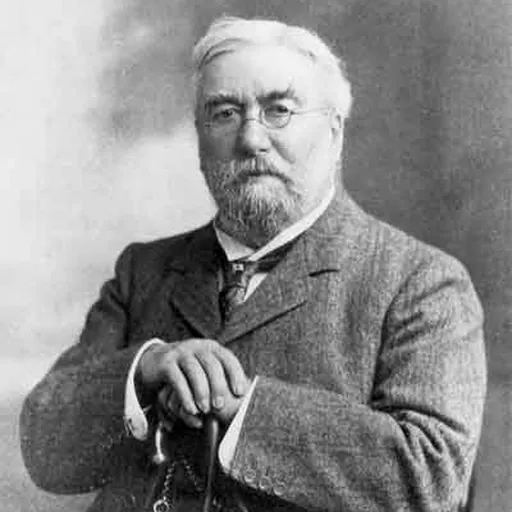
About Norman Lockyer
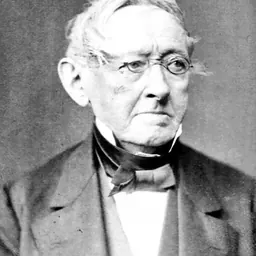
Lived 1836 – 1920 (aged 84). Norman Lockyer was a British physicist, astronomer and university teacher, known for Helium and Nature (journal).
Sir Joseph Norman Lockyer (17 May 1836 – 16 August 1920) was an English scientist and astronomer. Along with the French scientist Pierre Janssen, he is credited with discovering the gas helium. Lockyer also is remembered for being the founder and first editor of the influential journal Nature.
Biography
Lockyer was born in Rugby, Warwickshire. His early introduction to science was through his father, who was a pioneer of the electric telegraph. After a conventional schooling supplemented by travel in Switzerland and France, he worked for some years as a civil servant in the British War Office. He settled in Wimbledon, South London after marrying Winifred James, who helped translate at least four French scientific works into English. He was a keen amateur astronomer with a particular interest in the Sun. In 1885 he became the world's first professor of astronomical physics at the Royal College of Science, South Kensington, now part of Imperial College. At the college, the Solar Physics Observatory was built for him and here he directed research until 1913.
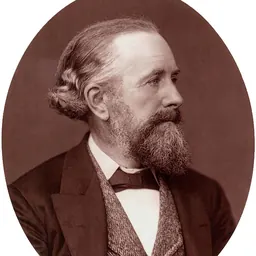
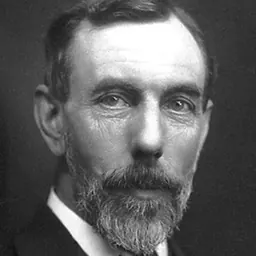
In the 1860s Lockyer became fascinated by electromagnetic spectroscopy as an analytical tool for determining the composition of heavenly bodies. He conducted his research from his new home in West Hampstead, with a -inch telescope which he had already used in Wimbledon. , and because their papers reached the French academy on the same day, he and Lockyer usually are awarded joint credit for helium's discovery. Terrestrial helium was found about 27 years later by the Scottish chemist William Ramsay. In his work on the identification of helium, Lockyer collaborated with the noted chemist Edward Frankland.
To facilitate the transmission of ideas between scientific disciplines, Lockyer established the general science journal Nature in 1869. He was elected as a member of the American Philosophical Society in 1874. He remained its editor until shortly before his death.
Lockyer led eight expeditions to observe solar eclipses, for example in 1870 to Sicily (with his first wife Winifred as his assistant ), 1871 to India and 1898 to India. After his retirement in 1913, Lockyer established an observatory near his home in Salcombe Regis near Sidmouth, Devon. Originally known as the Hill Observatory, the site was renamed the Norman Lockyer Observatory after his death and directed by his fifth son William J.S. Lockyer. For a time the observatory was a part of the University of Exeter, but is now owned by the East Devon District Council, and run by the Norman Lockyer Observatory Society. The Norman Lockyer Chair in Astrophysics at the University of Exeter is currently held by Professor Tim Naylor, who is the member of the Astrophysics group there which studies star formation and extrasolar planets. Naylor was the lead scientist for the eSTAR Project.
English Heritage plaque in Penywern Road, Earls Court, London.
Lockyer died at his home in Salcombe Regis in 1920, and was buried there in the churchyard of St Peter and St Mary.
Publications J. Norman Lockyer (1870). Questions on Lockyer's Elementary Lessons in Astronomy: For the Use of Schools. Macmillan, 1870 (Macmillan's School Class Books). Joint author: John Forbes-Robertson. J. Norman Lockyer (1873). Elements of Astronomy: Accompanied with Numerous Illustration, a Colored Representation of the Solar, Stellar, and Nebular Spectra, and Celestial Charts of the Northern and the Southern Hemisphere. New York: D. Appleton and Company, 1873. (1873) (1873) (1878) (1878) J. Norman Lockyer (1880). Astronomy. Macmillan & Co. (Science Primers) (1880) Report to the Committee on Solar Physics on the Basic Lines Common to Spots and Prominences (1880) (1887) (1887) (1868–94) (1890) Penrose, F.C., (communicated by Joseph Norman Lockyer), The Orientation of Greek Temples, Nature, v.48, n.1228, 11 May 1893, pp. 42–43 (1894) Norman Lockyer; William Rutherford (1896). The Rules of Golf: Being the St. Andrews Rules for the Game. Macmillan & Co. (1897) Recent and Coming Eclipses (1900) (1900) (1903) Stonehenge and Other British Stone Monuments Astronomically Considered (1906; second edition, 1909) (1907) (1909) (1910)
Honours and awards
Fellow of the Royal Society (1869) Rumford Medal, Royal Society of London (1874)
Honorary member, Manchester Literary and Philosophical Society, 1887
Janssen Medal, Paris Academy of Sciences (1889) Knight Commander of the Order of the Bath (1897) President, British Association (1903 – 1904) The crater Lockyer on the Moon and the crater Lockyer on Mars are both named after him, as is Norman Lockyer Island in Nunavut, Canada.
Don’t just read it —
keep it.
Full-length biographies made to live with: read them, listen on the way to work, watch them tonight.
- E-book
- Audio
- Video
Instant download · yours to keep · every purchase keeps this site free
Important facts
People in Norman Lockyer's life
Named in this biography and alive at the same time


Related people
Same field, nearest in time





Contemporaries
People whose lives overlapped Norman Lockyer's




Frequently asked questions
Who was Norman Lockyer?
English scientist and astronomer (1836–1920)
When was Norman Lockyer born?
Norman Lockyer was born on 17 May 1836 in Rugby.
When did Norman Lockyer die?
Norman Lockyer died on 16 August 1920 in Salcombe Regis, Sidmouth.
What was Norman Lockyer's occupation?
Norman Lockyer was a physicist, astronomer and university teacher.
What was Norman Lockyer known for?
Norman Lockyer was known for Helium and Nature (journal).
What nationality was Norman Lockyer?
Norman Lockyer was British.
Sources & further reading
Cite this page
APA: Biography.guide. (2026). Norman Lockyer. https://biography.guide/norman-lockyer/
MLA: "Norman Lockyer." Biography.guide, https://biography.guide/norman-lockyer/.
Chicago: "Norman Lockyer." Biography.guide. https://biography.guide/norman-lockyer/.
Data last updated: 2026-09-21 · Spot an error? Report a correction.
Portrait: Wikimedia Commons · author & licence
Page generated 2026-09-27 04:58 UTC