
John Brinkley
Bishop of Cloyne; Royal Astronomer of Ireland; Irish Anglican bishop and astronomer
About John Brinkley
Lived 1763 – 1835 (aged 71–72). John Brinkley was a British astronomer and anglican priest.
John Mortimer Brinkley (1763 14 September 1835) was the first Royal Astronomer of Ireland and later Bishop of Cloyne. He was the President of the Royal Irish Academy (1822–35), the President of the Royal Astronomical Society (1831–33), and in 1792, he became the second Andrews Professor of Astronomy at Trinity College Dublin. Brinkley received the Cunningham Medal in 1818, and the Copley Medal in 1824.
Early years Brinkley was born in Woodbridge, Suffolk and was baptised there on 31 January 1763, the illegitimate son of Sarah Brinkley, a butcher's daughter.
On being admitted to Cambridge, he was recorded as being the son of John Toler Brinkley, a vintner, but it is strongly suggested that his real father was John Toler, 1st Earl of Norbury, Chief Justice of the Irish Court of Common Pleas. However, his memorial at Trinity College Dublin states that he died aged 70; also, he was recorded as being 17 upon matriculation at Gonville and Caius College, Cambridge in August 1783, both of which imply a slightly later birth year.
Career
Scientific
He graduated Bachelor of Arts (BA) in 1788 as Senior Wrangler and Smith's Prizeman, was elected a fellow of the college and was awarded Cambridge Master of Arts (MA Cantab) in 1791. He was ordained at Lincoln Cathedral in the same year.
In 1792 he became the second Andrews Professor of Astronomy at Trinity College Dublin, which carried the new title of Royal Astronomer of Ireland. He was the director at the Dunsink Observatory from 1790 to 1827. Together with John Law, Bishop of Elphin, he drafted the chapter on "Astronomy" in William Paley's Natural Theology. His main work concerned stellar astronomy and he published his Elements of Plane Astronomy in 1808.
In 1818 he was awarded the prestigious Cunningham Medal of the Royal Irish Academy and in 1822 was elected a Foreign Honorary Member of the American Academy of Arts and Sciences. He was awarded the Copley Medal by the Royal Society in 1824.
Brinkley's observations that several stars shifted their apparent place in the sky in the course of a year - interpreted as evidence of Stellar parallax - were disproved at Greenwich by his contemporary John Pond, the Astronomer Royal. In 1826, he was appointed Bishop of Cloyne in County Cork, a position he held for the remaining nine years of his life. Brinkley was elected President of the Royal Astronomical Society in 1831, serving in that position for two years.
He was also an honorary Fellow of the Royal Society of Edinburgh (HFRSE).
Clerical
On May 24 May 1806 he was appointed a prebendary of Elphin Cathedral; and on 5 June 1806 he became Rector of Derrybrusk. Later that year Trinity College Dublin awarded him the degree of Doctor of Divinity. He was appointed the Archdeacon of Clogher in 1808; and collated to the Vicarage of Laracor. He was appointed bishop of Cloyne in 1836, and there is a memorial to him in Cloyne Cathedral.
Family Brinkley married Esther, daughter of Matthew Weld of Molesworth Street, Sheriff of Dublin City, by his wife Elizabeth Kane, daughter of Nathaniel Kane (d. 1757) of Drumreaske, County Monaghan; Sheriff (1720) and Lord Mayor of Dublin (1734); co-founder of the Bank of Kane & Latouche. Brinkley and his wife were the parents of two sons and a daughter: John (1793–1847), Rector of Glanworth, Diocese of Cloyne, who married Anna, second daughter and co-heir of Walter Stephens, of Hybla, County Kildare; Sarah Jane (1801–1827), second wife of Dr. Robert Graves, who died giving birth to a daughter; and Matthew (1797–1855) J.P., of Parsonstown House, County Meath, who married Harriet, a daughter of Richard Graves and with her was the father of Francis Brinkley.
Death Brinkley died in 1835 at Leeson Street, Dublin and was buried in Trinity College chapel. He was succeeded at Dunsink Observatory by William Rowan Hamilton.
Arms
Don’t just read it —
keep it.
Full-length biographies made to live with: read them, listen on the way to work, watch them tonight.
- E-book
- Audio
- Video
Instant download · yours to keep · every purchase keeps this site free
Important facts
People in John Brinkley's life
Named in this biography and alive at the same time


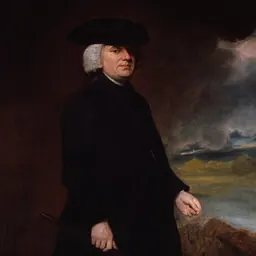
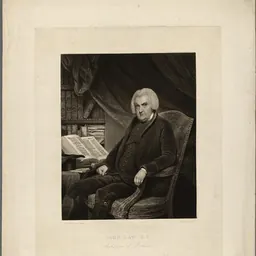
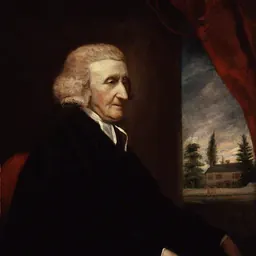
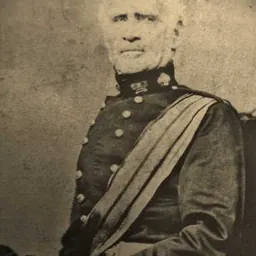

Related people
Same field, nearest in time



Contemporaries
People whose lives overlapped John Brinkley's




Frequently asked questions
Who was John Brinkley?
Bishop of Cloyne; Royal Astronomer of Ireland; Irish Anglican bishop and astronomer
When was John Brinkley born?
John Brinkley was born in 1763 in Suffolk, Woodbridge.
When did John Brinkley die?
John Brinkley died on 14 September 1835 in Dublin.
What was John Brinkley's occupation?
John Brinkley was an astronomer and anglican priest.
What nationality was John Brinkley?
John Brinkley was British.
Sources & further reading
· DBpedia: John Brinkley (astronomer)
Cite this page
APA: Biography.guide. (2026). John Brinkley. https://biography.guide/john-brinkley/
MLA: "John Brinkley." Biography.guide, https://biography.guide/john-brinkley/.
Chicago: "John Brinkley." Biography.guide. https://biography.guide/john-brinkley/.
Data last updated: 2026-09-20 · Spot an error? Report a correction.
Page generated 2026-09-27 05:18 UTC