
About William Rowan
Lived 1789 – 1879 (aged 90). William Rowan was a British military personnel and general field marshal.
Field Marshal Sir William Shearman Rowan, (18 June 1789 – 26 September 1879) was a British Army officer. He served in the Peninsular War and then the Hundred Days, fighting at the Battle of Waterloo and taking part in an important charge led by Sir John Colborne against the Imperial Guard when he was wounded. He later assisted Colborne in Colborne's new role as Acting Governor General of British North America during the rebellions by the Patriote movement in 1837. Rowan returned to Canada as Commander-in-Chief, North America in which role he made an important conciliatory speech in response to the burning of the Parliament Buildings in Montreal by an angry mob in April 1849.
Life Early life He was the son of Robert Rowan of Mullans, County Antrim and Elizabeth Rowan (née Wilson), Rowan was the younger brother of Sir Charles Rowan (c.1782–1852), Commissioner of the Metropolitan Police in London, and formerly an officer of the 52nd Light Infantry, a regiment in which their brother Robert and their father's brother Charles were also officers.
Military career The Battle of Nivelle where the 52nd Light Infantry played an important part in the victory. At the age of 14 years, and promoted to lieutenant on 15 June 1804. He was deployed to Sicily in 1806 and to Sweden in 1808 before being promoted to captain and being given command of a company in the 2nd Battalion of his regiment on 19 October 1808. After returning to Spain, he was present at the Battle of Sabugal in April 1811, the Battle of Vitoria in June 1813, the Battle of the Pyrenees in July 1813 and the Battle of the Bidassoa in October 1813 as well as the Battle of Nivelle in November 1813, the Battle of the Nive in December 1813, the Battle of Orthez in February 1814 and, having been promoted to brevet major on 3 March 1814, he also fought at the Battle of Toulouse in April 1814. Waterloo - General Hill invites the last survivors of the French Imperial Guard to surrender. Rowan's promotion to brevet major was directly in recognition of his personal bravery and the success of his command in the fighting in the marsh which actually decided the Battle of Orthez in Wellington's favour.
Waterloo During the Hundred Days Rowan fought at the Battle of Waterloo in June 1815, taking part in an important charge led by Sir John Colborne against the Imperial Guard, during which he was wounded in action and 150 of his men were killed or wounded. He transferred to the 58th Regiment of Foot on 27 July 1826 and, having been promoted to the substantive rank of lieutenant colonel on 22 July 1830, he became Military and Civil Secretary to Sir John Colborne, Lieutenant Governor of Upper Canada, in 1832. before returning to England in 1839. Rowan returned to Canada as Commander-in-Chief, North America in Spring 1849.
Later life
Promoted to substantive rank of lieutenant-general on 20 January 1854, Rowan returned to England in 1855 and retired to a house in Gay Street, Bath.
Rowan was also colonel of the 19th Regiment of Foot and later of the 52nd Light Infantry. He was promoted to full general on 13 August 1862 and, having been advanced to Knight Grand Cross of the Order of the Bath on 28 March 1865, he was promoted to field marshal on 2 June 1877. He died on 26 September 1879 at No. 9 Gay Street, Bath and was buried at Lansdown Cemetery in Bath.
Awards Knight Grand Cross of the Order of the Bath 1838, Military General Service Medal 1848 with clasps Vittoria, Pyrenees, Nivelle, Nive, Orthes and Toulouse.
Don’t just read it —
keep it.
Full-length biographies made to live with: read them, listen on the way to work, watch them tonight.
- E-book
- Audio
- Video
Instant download · yours to keep · every purchase keeps this site free
Important facts
People in William Rowan's life
Named in this biography and alive at the same time
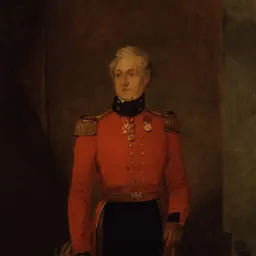


Related people
Same field, nearest in time

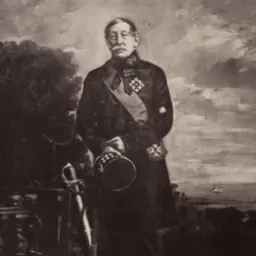
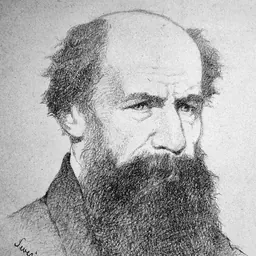
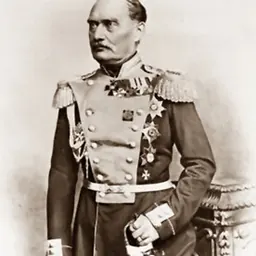

Contemporaries
People whose lives overlapped William Rowan's




Frequently asked questions
Who was William Rowan?
British Field Marshal
When was William Rowan born?
William Rowan was born on 18 June 1789 in Isle of Man.
When did William Rowan die?
William Rowan died on 26 September 1879 in Bath.
What was William Rowan's occupation?
William Rowan was a military personnel and general field marshal.
What nationality was William Rowan?
William Rowan was British.
Sources & further reading
Cite this page
APA: Biography.guide. (2026). William Rowan. https://biography.guide/william-rowan/
MLA: "William Rowan." Biography.guide, https://biography.guide/william-rowan/.
Chicago: "William Rowan." Biography.guide. https://biography.guide/william-rowan/.
Data last updated: 2026-09-26 · Spot an error? Report a correction.
Page generated 2026-09-27 05:14 UTC