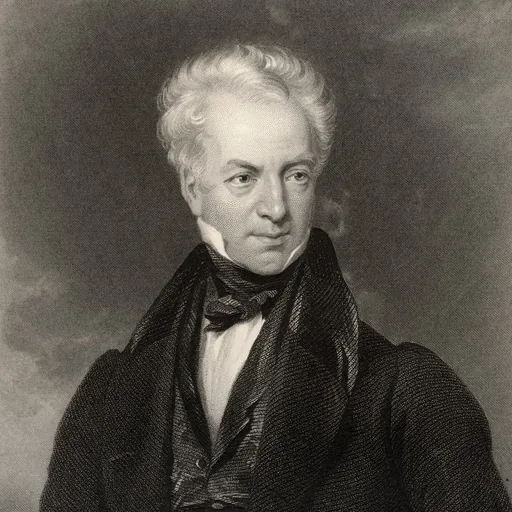
About John Baron
Lived 1786 – 1851 (aged 64–65). John Baron was a physician.
John Baron, M.D. (1786–1851), was an English physician, the biographer of Edward Jenner.
Life He was born at St. Andrews, where his father was professor of rhetoric in the university. At the age of fifteen he was sent to Edinburgh to study medicine, and he graduated M.D. there four years later (1805), at the age of nineteen. The same year his father died, and he prepared his college lectures for the press. He then attended a patient in Lisbon for two years, and on his return settled in practice at Gloucester. Appointed one of the physicians to the General Infirmary, he acquired a practice as a physician in Gloucester and the surrounding country.
In 1832, poor health after Asiatic cholera obliged him to retire. He lived at Cheltenham during the rest of his life, disabled by 'creeping palsy' during his later years. He was an early advocate, at the Gloucester asylum, of the more humane treatment of lunatics, was a founder of the Medical Benevolent Fund, and an active supporter of the Medical Missionary Society of Edinburgh. He died in 1851.
Baron also published three books on tubercles:
'Enquiry illustrating the Nature of Tuberculated Accretions of Serous Membranes,’ &c., plates, London, 1819; 'Illustrations of the Enquiry respecting Tuberculous Diseases,’ plates, London, 1822; and 'Delineations of the Changes of Structure which occur in Man and some of the Inferior Animals,’ plates, London, 1828.
His services to pathology gained Baron admission to the Royal Society in 1823. The theory of tubercles, from Jenner and earlier John Hunter, later ran out as misleading; it had opponents in Gaspard Laurent Bayle, René Laennec, and François-Joseph-Victor Broussais. Dupuy, a French veterinarian, had been led two years earlier (1817), and independently of Baron, to adopt the same hydatid theory, to explain the hanging 'pearls' or 'grapes' that are a common form of tubercle in cattle. The idea was that tubercles were hydatids become solid. Hydatids were then understood to include not only bladderworms, but almost any kind of vesicle filled with fluid. Jenner had been misled by the coexistence of tubercles and true hydatids in the lung of the ox, leading him to adopt the "hydatid theory" of tubercles in general.
Don’t just read it —
keep it.
Full-length biographies made to live with: read them, listen on the way to work, watch them tonight.
- E-book
- Audio
- Video
Instant download · yours to keep · every purchase keeps this site free
Important facts
People in John Baron's life
Named in this biography and alive at the same time


Related people
Same field, nearest in time



Contemporaries
People whose lives overlapped John Baron's


Frequently asked questions
Who was John Baron?
British doctor
When was John Baron born?
John Baron was born in 1786.
When did John Baron die?
John Baron died in 1851.
What was John Baron's occupation?
John Baron was a physician.
Sources & further reading
· DBpedia: John Baron (physician)
Cite this page
APA: Biography.guide. (2026). John Baron. https://biography.guide/john-baron-physician/
MLA: "John Baron." Biography.guide, https://biography.guide/john-baron-physician/.
Chicago: "John Baron." Biography.guide. https://biography.guide/john-baron-physician/.
Data last updated: 2026-09-22 · Spot an error? Report a correction.
Portrait: Wikimedia Commons · author & licence
Page generated 2026-09-27 05:03 UTC