
About René Laennec
Lived 1781 – 1826 (aged 45). René Laennec was a French physician, inventor and professor, known for Stethoscope.
René-Théophile-Hyacinthe Laennec (; 17 February 1781 – 13 August 1826) was a French medical doctor and musician. His skill at carving his own wooden flutes led him to invent the stethoscope in 1816, while working at the Hôpital Necker. He pioneered its use in diagnosing various chest conditions. He became a lecturer at the in 1822 and professor of medicine in 1823. His final appointments were that of head of the medical clinic at the Hôpital de la Charité and professor at the Collège de France. He went into a coma and subsequently died of tuberculosis on 13 August 1826, at age 45.
Early life Laennec was born in Quimper (Brittany). His mother died of tuberculosis when he was five years old, and he went to live with his great-uncle the Abbé Laennec (a priest). As a child, Laennec became ill with fatigue and repeated instances of fever. Laennec was also thought to have asthma.
Invention of the stethoscope René Laennec wrote in the classic treatise De l'Auscultation Médiate,
The children held their ear to one end of the stick while the opposite end was scratched with a pin, the stick transmitted and amplified the scratch. His skill as a flautist may also have inspired him. He built his first instrument as a 25 cm by 2.5 cm hollow wooden cylinder, which he later refined into three detachable parts. The refined design featured a funnel-shaped cavity to augment the sound, separable from the body of the stethoscope.
His clinical work allowed him to follow chest patients from bedside to the autopsy table. He was therefore able to correlate sounds captured by his new instruments with specific pathological changes in the chest, in effect pioneering a new non-invasive diagnostic tool. Tuberculosis, for example, was one ailment he could more clearly identify using his knowledge of typical and atypical chest sounds. Laennec was the first to classify and discuss the terms rales, rhonchi, crepitance, and egophony – terms that doctors now use on a daily basis during physical exams and diagnoses.
Laennec often referred to the stethoscope as "the cylinder", and as he neared death only a few years later, he bequeathed his own stethoscope to his nephew, referring to it as "the greatest legacy of my life".
The modern type, with two earpieces, was invented in 1851 by A. Leared; in 1852 G.P. Cammann perfected the design of the instrument for commercial production, which has become the current standard form.
Other medical contributions
He developed the understanding of peritonitis and cirrhosis. Although the disease of cirrhosis was known, Laennec gave cirrhosis its name, using the Greek word (κιρρός kirrhos, tawny) that referred to the tawny, yellow nodules characteristic of the disease.
He coined the term melanoma and described metastases of melanoma to the lungs. In 1804, while still a medical student, he was the first person to lecture on melanoma. This lecture was subsequently published in 1805. Laennec actually used the term melanose, which he derived from the Greek (μέλας, melas) for "black". Over the years, there were bitter exchanges between Laennec and Dupuytren, the latter objecting that there was no mention of his work in this area and his role in its discovery.
He also studied phthisis pulmonalis (tuberculosis). Coincidentally, his nephew, Mériadec Laennec, is said to have diagnosed tuberculosis in Laennec using Laennec's stethoscope.
Laennec advocated objective scientific observation. Professor Benjamin Ward Richardson stated in Disciples of Aesculapius that "the true student of medicine reads Laennec's treatise on mediate auscultation and the use of the stethoscope once in two years at least as long as he is in practice. It ranks with the original work of Vesalius, Harvey and Hippocrates."
Religious views
Laennec "was intensely religious and was a devout Catholic all his life".
Legacy and tribute
Honors: Medical terms named after Laennec: Laennec's cirrhosis refers to the appearance of regenerated liver, comprising small lobules separated by a fine, fibrous tissue; Laennec's thrombus is an antenatal thrombus in the heart; Laennec's pearls refer to sputum produced by asthmatics; Hamman's murmur, also known as Laënnec–Hamman symptom, Laënnec–Müller–von Bergmann–Hamman symptom, or Hamman's crunch, is a crunching sound due to spontaneous mediastinal emphysema, heard over the precordium. At the Université Claude Bernard Lyon 1 one of the four medical schools is named after Laennec. On 17 February 2016, Google celebrated his 235th birthday with a Google Doodle.
Laennec in fiction A Rene Laennec appears in Rudyard Kipling's Rewards and Fairies, the second of two books where two children, Dan and Una, encounter past inhabitants of England. In the short section "Marlake Witches", set during the Napoleonic Wars, Una meets a consumptive young lady who speaks of being treated by a French doctor, a prisoner on parole, one Rene Laennec. This prisoner discusses with a local herbalist the use of 'wooden trumpets' for listening to patients' chests, much to the distrust of the local doctor. Obviously, Kipling was aware of Laennec's work and invented an English connection.
He was the subject of a 1949 French film Doctor Laennec in which he was played by Pierre Blanchar.
Laennec's landmarks in Paris On the exterior wall of the "Hôpital Necker – Enfants Malades", where Laennec wrote Mediate auscultation, near the entrance of the hospital in 149, Rue de Sèvres, there is a marble memorial tablet with an engraved portrait of Laennec and this inscription: "Dans cet hôpital Laennec découvrit l'auscultation. 1781–1826".
Footnotes
Don’t just read it —
keep it.
Full-length biographies made to live with: read them, listen on the way to work, watch them tonight.
- E-book
- Audio
- Video
Instant download · yours to keep · every purchase keeps this site free
Important facts
People in René Laennec's life
Named in this biography and alive at the same time
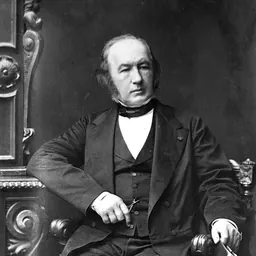
Related people
Same field, nearest in time



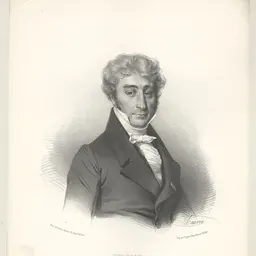


Contemporaries
People whose lives overlapped René Laennec's

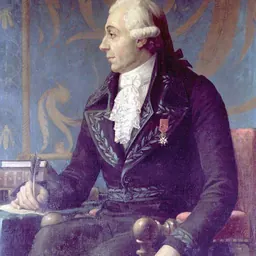
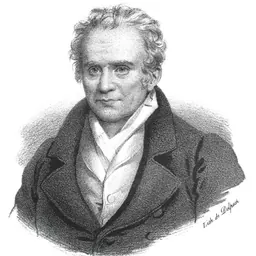

Frequently asked questions
Who was René Laennec?
French physician, inventor of stethoscope (1781-1826)
When was René Laennec born?
René Laennec was born on 17 February 1781 in Quimper.
When did René Laennec die?
René Laennec died on 13 August 1826 in Kerlouarnec Manor.
What was René Laennec's occupation?
René Laennec was a physician, inventor and professor.
What was René Laennec known for?
René Laennec was known for Stethoscope.
What nationality was René Laennec?
René Laennec was French.
Sources & further reading
Cite this page
APA: Biography.guide. (2026). René Laennec. https://biography.guide/rene-laennec/
MLA: "René Laennec." Biography.guide, https://biography.guide/rene-laennec/.
Chicago: "René Laennec." Biography.guide. https://biography.guide/rene-laennec/.
Data last updated: 2026-09-20 · Spot an error? Report a correction.
Page generated 2026-09-27 05:25 UTC