
About John Appleton Brown
Lived 1844 – 1902 (aged 57). John Appleton Brown was an American painter.
John Appleton Brown (July 12, 1844 – January 18, 1902) was an American landscape painter working largely in pastels and oils, born in West Newbury, Massachusetts. He showed talent at an early age and studied under Emile Lambinet in France. For many years he worked and showed in Boston, summering in his native northeastern Massachusetts and painting his best known lyrical landscapes there. In 1891 he and his wife, noted artist Agnes Augusta Bartlett Brown, moved to New York City, where he died on January 18, 1902. and many sources where Brown attended high school. He was the second of two sons of George Frederick Handel Brown (a combmaker) and Asenath L. Page. he spent summer school vacations painting landscapes of his native West Newbury and the surrounding area. Initially he spent a year studying with New England landscape painter Alfred Thompson Bricher. His work was exhibited with his friends and mentors William Morris Hunt and Joseph Foxcroft Cole, at shows of the Boston Art Club, and at prominent galleries. whose jurors included established Barbizon school painters. The Browns typically maintained a winter studio in Boston and had a summer house in West Newbury, whose surrounds comprised the rural New England landscapes which were frequent subjects of his art.
According to Dartmouth College curator and art writer Barbara J. MacAdam, in the 1880s Brown adopted a brighter palette and "turned more frequently to images of fruit trees in full flower, lending him the sobriquet of 'Appleblossom Brown.'" Later in the 1880s the Browns summered not only in West Newbury, but also at Celia Thaxter's salon on Appledore Island among the Isles of Shoals off the coast of southern Maine. There he became a close friend of Childe Hassam In 1891, the Browns moved from Boston to New York City, which offered a more vibrant arts scene. In 1893 Brown received a medal at the World's Columbian Exposition. A rare negative review appeared in the March, 1872 issue of the Atlantic Monthly. This article focused on an early Brown work "Grindelwald Valley," whose subject of majestic soaring mountains in the Swiss Alps was, in the reviewer's opinion, an audacious one for Brown. In this critic's view, Brown's treatment of such a grand subject as mere sketch had the “unpardonable defect of being thinly painted.” A little over five years later, another Atlantic Monthly review concluded that in the autumn landscape "On the Artichoke, West Newbury," Brown's treatment of clouds reflected in water was appropriately not belabored in its detail: "Though done with one sweep of the brush, it would be hard to conceive how any subsequent caressing or tinkering could add an iota to their tender and evanescent loveliness."
Poetry as inspiration for, as reflected in, as inspired by, and as illustrated with Appleton Brown's work is another common theme among critics and writers. In 1879 Brown collaborated with Lucy Larcom, illustrating her book Landscape in American Poetry, which viewed the same New England landscape Brown painted through the words of noteworthy poets, such as John Greenleaf Whittier, from the same region. Just as poetry inspired Appleton Brown's pictures, so too did his art inspire poetry. Will Amos Reed's book of verse Through Broken Reeds contains the poem "On Seeing a Picture by J. Appleton Brown." It begins, "How deep in nature’s lore must artists dip / To form such lights and shadows with a brush’s tip!"
Personal life and death
In June 1874, Brown married Newburyport native Agnes Augusta Bartlett. She was a noted artist in her own right, painting in oil in a style not unlike her husband's. Her subjects included landscapes, flowers, and later cats. and "retiring and modest" in nature. At the same time, Brown's work was exhibited at fashionable shows that displayed not only art but also fashionable art viewers. Brown maintained "social relations with our best families," which included the historians Henry Cabot Lodge and Francis Parkman. Brown was also a member of the Society of American Artists, and an associate of the National Academy of Design. His works are now housed in such institutions as the Harvard University art museums, the Isabella Stewart Gardner Museum, and the Museum of Fine Arts, Boston.
Gallery
Don’t just read it —
keep it.
Full-length biographies made to live with: read them, listen on the way to work, watch them tonight.
- E-book
- Audio
- Video
Instant download · yours to keep · every purchase keeps this site free
Important facts
People in John Appleton Brown's life
Named in this biography and alive at the same time




Related people
Same field, nearest in time
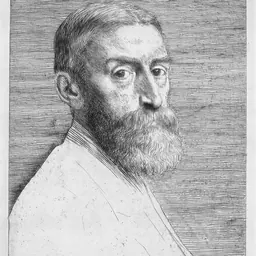
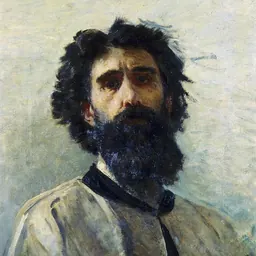
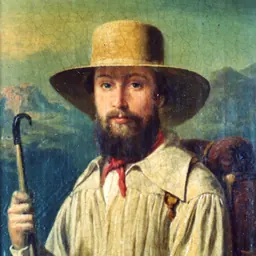
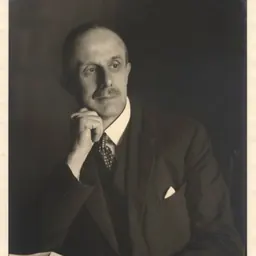

Contemporaries
People whose lives overlapped John Appleton Brown's
Frequently asked questions
Who was John Appleton Brown?
American artist (1844-1902)
When was John Appleton Brown born?
John Appleton Brown was born on 24 June 1844 in West Newbury.
When did John Appleton Brown die?
John Appleton Brown died on 8 January 1902 in New York City.
What was John Appleton Brown's occupation?
John Appleton Brown was a painter.
What nationality was John Appleton Brown?
John Appleton Brown was American.
Sources & further reading
· Wikipedia: John Appleton Brown
· DBpedia: John Appleton Brown
Cite this page
APA: Biography.guide. (2026). John Appleton Brown. https://biography.guide/john-appleton-brown/
MLA: "John Appleton Brown." Biography.guide, https://biography.guide/john-appleton-brown/.
Chicago: "John Appleton Brown." Biography.guide. https://biography.guide/john-appleton-brown/.
Data last updated: 2026-09-22 · Spot an error? Report a correction.
Page generated 2026-09-27 05:02 UTC