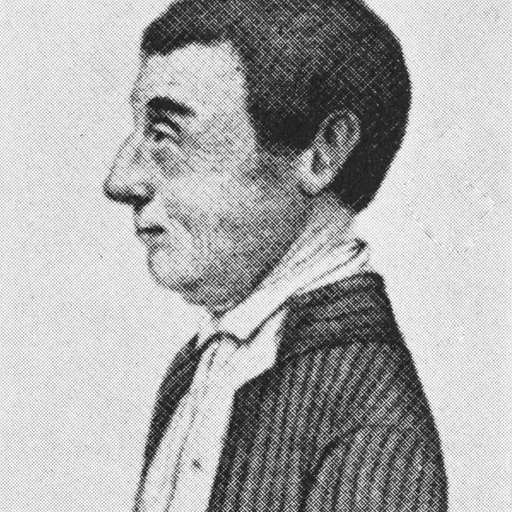
John Abbot
British born, American entomologist, ornithologist and scientific illustrator
About John Abbot
Lived 1751 – 1840 (aged 89). John Abbot was an American and British ornithologist, entomologist, zoologist, botanist, illustrator and artist.
John Abbot was an American naturalist and artist. He was the first artist in the New World to create an extensive series of insect drawings and to show insects in all stages of development. In addition to more than 3,000 insect illustrations, he also produced drawings of birds and plants. To facilitate his work he collected a great number of insects and reared thousands more. He was considered one of the best insect illustrators of his era and his art and insect collections were sold to an eager market in London.
Early life By his own recollection, Abbot was born in London on June 1, 1751 but parish records indicate his birthday on May 31. He was the eldest son of James Abbot, a successful attorney, and Ann (Clousinger) Abbot. He grew up in a fashionable London neighborhood of Bennet Street, St. James, and spent part of his time at his family's country house. He was tutored at home and showed an early interest in collecting and drawing. Abbot studied art with Jacob Bonneau and his first known entomological paintings were created in 1766. Abbot's technique improved rapidly and in a few years he was producing some of the best entomological illustrations of the eighteenth-century. The Russian naturalist Andrey Avinoff, an accomplished artist himself, described Abbot's work as "among the masterpieces of entomological portraiture".
Sometime after 1767, Bonneau used his connections to introduce his talented student to Dru Drury, a wealthy naturalist and owner of one of the best insect collections in England. Drury gave Abbot access to his collection and introduced him to other prominent entomologists and naturalists in London. His interest in natural history art was boosted after he received a gift of Catesby's Natural History of Carolina from Lady Sarah Honywood (widow of Sir Philip Honywood). Drury and other members of the Royal Society recognized his talent as an illustrator and encouraged him to go to America to collect insects. Abbot was eager for the adventure and settled on Virginia as his destination. He made arrangements with Thomas Martyn and John Francillon, both naturalists and dealers in natural history collections, to purchase whatever specimens he might ship back to London.
Legacy He produced thousands of insect illustrations, as well as several sets of bird illustrations. The majority are preserved in the Natural History Museum, London, the British Museum and Houghton Library at Harvard University. Other repositories of his drawings include Johns Hopkins University, University of South Carolina, Emory University, and the Alexander Turnbull Library. Some have been dispersed following various auctions that included his drawings. The bird and insect specimens that he collected were sent to Britain and Europe, but a certain number were lost at sea, which discouraged him. He nonetheless continued to collect and paint specimens until at least 1835.
The only publication to bear his name was The Natural History of the Rarer Lepidopterous Insects of Georgia, whose primary author was James Edward Smith. It included 104 plates that were reproduced from original drawings by John Abbot, which are now preserved at Johns Hopkins University. Abbot also provided most of the observations published in the book. First appearing in 1797, new copies of the book were issued for thirty years.
As a result of this publication including the name of a type of oak inhabited by insects Abbot researched, his legacy includes credit in the International Plant Names Index (IPNI) as a co-publisher (with Smith) of Quercus lobulata, credited as a discovery by Daniel Solander, though later acknowledged as a synonym for the previously discovered Quercus stellata, credited to Friedrich Adam Julius von Wangenheim. For this reason, Abbot has been assigned the taxonomic author abbreviation Abbot for use in botanical nomenclature.
From 1829 to 1837, renowned French entomologist Jean Baptiste Boisduval and wealthy American naturalist John Eatton Le Conte published installments of Histoire Générale et Iconographie des Lépidoptères et des Chenilles de l'Amérique Septentrionale. This publication included 78 hand-colored engraved plates, most created from original drawings by John Abbot. The majority of these original drawings are now deposited at the University of South Carolina. A collection of 130 watercolors of birds, are held by the Smithsonian Institution.
Ornithologist Elsa G. Allen promoted Abbot's ornithological work in articles published in The Auk, and in her 1951 book The History of American Ornithology Before Audubon. In 1957, a ceremony in Savannah, Georgia was held in Abbott's honor, and involved Allen unveiling a memorial dedicated to him. At the time of her death, Allen was working on a biography of Abbott, for which she received a grant from the National Academy of Sciences. One critic said that Abbot was Allen's "peculiar province".
Works with James Edward Smith, The Natural History of the Rarer Lepidopterous Insects of Georgia Collected from Observations by John Abbot (1797) (2 volumes, 104 plates). Drawings of the Insects of Georgia, in America (1792–1804) (17 volumes, unpublished). Original drawings for Jean Baptiste Alphonse Dechauffour de Boisduval's and John Eatton Le Conte's Histoire Générale et Iconographie des Lépidoptères et des Chenilles de l'Amérique septentrionale (1833).
Don’t just read it —
keep it.
Full-length biographies made to live with: read them, listen on the way to work, watch them tonight.
- E-book
- Audio
- Video
Instant download · yours to keep · every purchase keeps this site free
Important facts
more
J. AbbotPeople in John Abbot's life
Named in this biography and alive at the same time



Related people
Same field, nearest in time


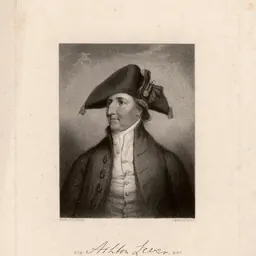
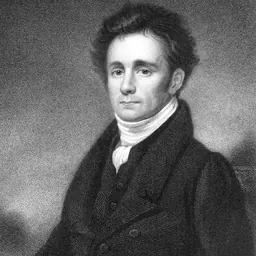
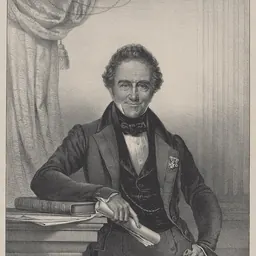
Contemporaries
People whose lives overlapped John Abbot's





Frequently asked questions
Who was John Abbot?
British born, American entomologist, ornithologist and scientific illustrator (1751-1840)
When was John Abbot born?
John Abbot was born on 31 May 1751 in London.
When did John Abbot die?
John Abbot died on 1 December 1840 in Bulloch County.
What was John Abbot's occupation?
John Abbot was an ornithologist, entomologist, zoologist, botanist, illustrator and artist.
What nationality was John Abbot?
John Abbot was American and British.
Sources & further reading
· DBpedia: John Abbot (entomologist)
Cite this page
APA: Biography.guide. (2026). John Abbot. https://biography.guide/john-abbot-ornithologist/
MLA: "John Abbot." Biography.guide, https://biography.guide/john-abbot-ornithologist/.
Chicago: "John Abbot." Biography.guide. https://biography.guide/john-abbot-ornithologist/.
Data last updated: 2026-09-23 · Spot an error? Report a correction.
Portrait: Wikimedia Commons · author & licence
Page generated 2026-09-27 05:07 UTC