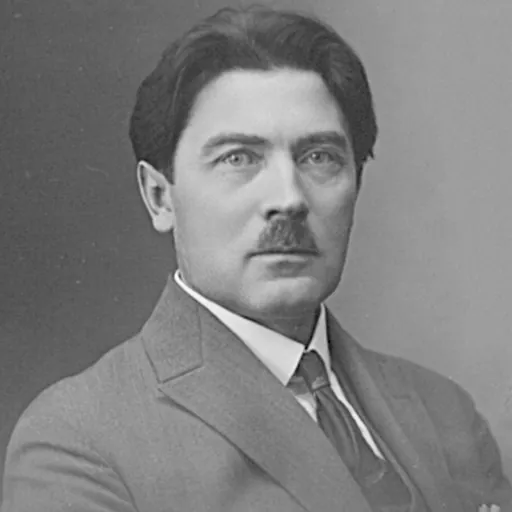
About Johannes Aavik
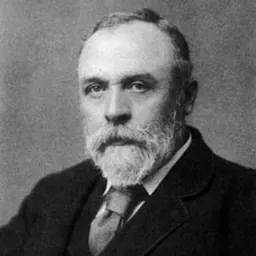
Lived 1880 – 1973 (aged 92). Johannes Aavik was an Estonian and Swedish philologist, translator, linguist, poet, university teacher and violinist.
Johannes Aavik ( – 18 March 1973) was an Estonian linguist and innovator of the Estonian language.
Early life and education
Aavik was born at the Nurga farm in Randvere, Saaremaa, in the Governorate of Livonia of the Russian Empire (now Estonia). He studied history at the University of Tartu and the University of Nezin in 1905. He was a member of the Young Estonia movement and obtained a doctorate degree in Romance languages at the University of Helsinki in 1910. Aavik taught Estonian and French at the University of Tartu from 1926 to 1933. In 1934, he was appointed by the Estonian Ministry of Education as Chief Inspector of Secondary Schools, a position he held until 1940. He fled from Estonia to escape from the Soviet invasion in 1944, became a refugee in Sweden, and lived in Stockholm for the remainder of his life.
Estonian language innovation In 1912, he started writing articles to literary journals, proposing ways to modernize the Estonian language. In his opinion, Estonian language needed innovation, as its sphere of usage widened rapidly with the emergence of a modern nation. Besides the need for standardization of grammar and orthography, Aavik also believed that the language needed to be versatile and euphonic.
He suggested intensive borrowing from Finnish, and some of his suggestions were quickly accepted and became part of standard Estonian vocabulary. From 1914 he started to artificially create new word stems to replace "awkward" compound words. Thus, he proposed relv ("weapon") instead of sõjariist (literally, "war tool"), roim ("crime") instead of kuritöö ("evil deed") and veenma ("convince") instead of uskuma panema ("put into believing"). He generally tried to avoid the sounds t and s and preferred shorter words to longer ones. He also favoured o in successive syllables to u, as is common in the South Estonian dialects. Aavik considered many of his neologisms as created out of nothing (see ex nihilo lexical enrichment). However, many of Aavik's neologisms were influenced by foreign languages and lexical items (Aavik had a broad classical education and knew Ancient Greek, Latin and French). For example, his innovation roim ("crime") might have been influenced by the English word crime; relv ("weapon") might have been influenced by the English word revolver; and taunima ("to condemn, disapprove") might have been influenced by the Finnish word tuomita ("to condemn, to judge"). His principles (utility, aesthetics and native quality) were summarized in Keeleuuenduse äärmised võimalused (Extreme Perspectives of Language Innovation; Tartu, 1924).
Language innovation slowly died away after the 1927 act that made it compulsory for schools to teach standard Estonian as put down in the Estonian Orthographic Dictionary (1925, chief editor Johannes Voldemar Veski) and Estonian Grammar (by Elmar Muuk, 1927). However, some words proposed by Aavik and fallen into oblivion have been picked up and re-introduced by more recent literati.
Aavik's innovations are discussed in the essay "Linguistic Innovation in Estonian" by Paul Saagpakk, published in his Estonian–English Dictionary.
Death and legacy Aavik died in Stockholm, Sweden. On 26 September 1992, the Johannes Aavik Society was established in Tallinn, Estonia. The society focuses on research of Estonian language and especially on those language aspects which are related to Johannes Aavik. The society has 107 members. The society publishes the publication "Keeleuuenduse Kirjastik".
Don’t just read it —
keep it.
Full-length biographies made to live with: read them, listen on the way to work, watch them tonight.
- E-book
- Audio
- Video
Instant download · yours to keep · every purchase keeps this site free
Important facts
People in Johannes Aavik's life
Named in this biography and alive at the same time


Related people
Same field, nearest in time


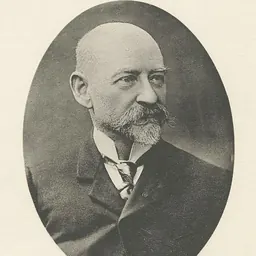

Contemporaries
People whose lives overlapped Johannes Aavik's

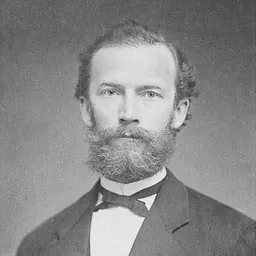

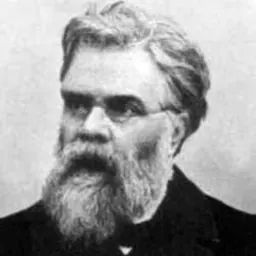
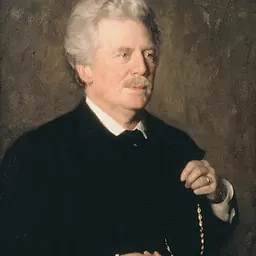
Frequently asked questions
Who was Johannes Aavik?
Estonian philologist and Fennophile (1880–1973)
When was Johannes Aavik born?
Johannes Aavik was born on 8 December 1880 in Randvere.
When did Johannes Aavik die?
Johannes Aavik died on 18 March 1973 in Stockholm.
What was Johannes Aavik's occupation?
Johannes Aavik was a philologist, translator, linguist, poet, university teacher and violinist.
What nationality was Johannes Aavik?
Johannes Aavik was Estonian and Swedish.
Sources & further reading
Cite this page
APA: Biography.guide. (2026). Johannes Aavik. https://biography.guide/johannes-aavik/
MLA: "Johannes Aavik." Biography.guide, https://biography.guide/johannes-aavik/.
Chicago: "Johannes Aavik." Biography.guide. https://biography.guide/johannes-aavik/.
Data last updated: 2026-09-21 · Spot an error? Report a correction.
Portrait: Wikimedia Commons · author & licence
Page generated 2026-09-27 04:59 UTC