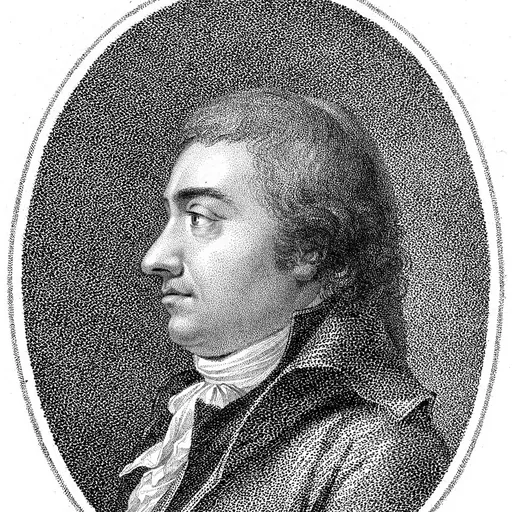
About Johann Rudolf Zumsteeg
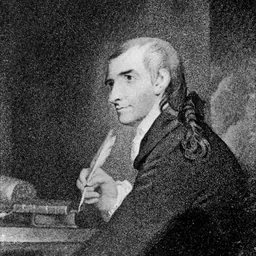
Lived 1760 – 1802 (aged 42). Johann Rudolf Zumsteeg was a German composer, conductor, university teacher, concertmaster, cellist and chapelmaster.
Johann Rudolf Zumsteeg (10 January 1760 – 27 January 1802) was a German composer and conductor from the Classical period.
Zumsteeg championed the operas of Mozart in Stuttgart, staging the first performances there of Die Zauberflöte, Don Giovanni, and Così fan tutte. He also was a prolific composer of Lieder and ballads. His ballads had a great influence on the young Franz Schubert, who imitated a number of Zumsteeg's as studies (some even in exactly the same keys) while he was a teenager.
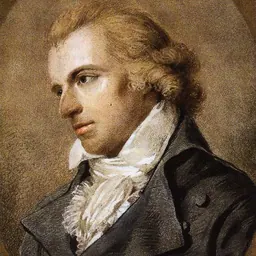
Life and early career Zumsteeg was born in Sachsenflur, Lauda-Königshofen, in a military camp to his father Rudolph Zum Steeg. He received an education at the Karlsschule Stuttgart after the death of both parents. Zumsteeg was initially admitted as a stucco worker, however his musical aptitude soon allowed him transfer to the music department. There Zumsteeg became intimate friends with Friedrich Schiller. A setting for Schiller's drama, Die Räuber (1782) is an example of the type of close collaboration that Zumsteeg undertook with prominent poets.
Zumsteeg showed promise as a virtuoso cellist, and in 1778 claimed the highest award in the performance division of the Karlsschule for the sixth time.
Zumsteeg's seven-volume composition Kleine Lieder und Balladen was published by Breitkopf & Härtel between 1800 and 1805. The volumes were highly popular in Germany, remaining well-known until the 1830s. According to Schubert's friend Joseph von Spaun, Schubert discovered them while at seminary. "He had several of Zumsteeg's songs in front of him and told me that these songs moved him profoundly...He said he could revel in these songs for days on end. And to this youthful predilection of his we probably owe the direction Schubert took."
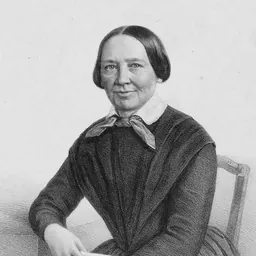
In 1783, Zumsteeg married Luise Andreae with whom he had seven children. His daughter Emilie Zumsteeg became a composer too. Luise Andreae remained supportive of her husband in his tumultuous life as a musician. According to Schubert's friend Josef von Spaun, Schubert spent most of his days studying and analyzing Zumsteeg's works. Das Pfauenfest (1801) Elbondocani (1803) Duodrama Tamira (1788) Ballads Lenore Des Pfarrers Tochter von Taubenhain Die Büßende Die Entführung Das Lied von der Treue Ritter Toggenburg
Don’t just read it —
keep it.
Full-length biographies made to live with: read them, listen on the way to work, watch them tonight.
- E-book
- Audio
- Video
Instant download · yours to keep · every purchase keeps this site free
Important facts
People in Johann Rudolf Zumsteeg's life
Named in this biography and alive at the same time


Related people
Same field, nearest in time


Contemporaries
People whose lives overlapped Johann Rudolf Zumsteeg's




Frequently asked questions
Who was Johann Rudolf Zumsteeg?
German composer
When was Johann Rudolf Zumsteeg born?
Johann Rudolf Zumsteeg was born on 10 January 1760 in Lauda-Königshofen.
When did Johann Rudolf Zumsteeg die?
Johann Rudolf Zumsteeg died on 27 January 1802 in Stuttgart.
What was Johann Rudolf Zumsteeg's occupation?
Johann Rudolf Zumsteeg was a composer, conductor, university teacher, concertmaster, cellist and chapelmaster.
What nationality was Johann Rudolf Zumsteeg?
Johann Rudolf Zumsteeg was German.
Sources & further reading
· Wikipedia: Johann Rudolf Zumsteeg
· DBpedia: Johann Rudolf Zumsteeg
Cite this page
APA: Biography.guide. (2026). Johann Rudolf Zumsteeg. https://biography.guide/johann-rudolf-zumsteeg/
MLA: "Johann Rudolf Zumsteeg." Biography.guide, https://biography.guide/johann-rudolf-zumsteeg/.
Chicago: "Johann Rudolf Zumsteeg." Biography.guide. https://biography.guide/johann-rudolf-zumsteeg/.
Data last updated: 2026-09-20 · Spot an error? Report a correction.
Page generated 2026-09-27 05:09 UTC