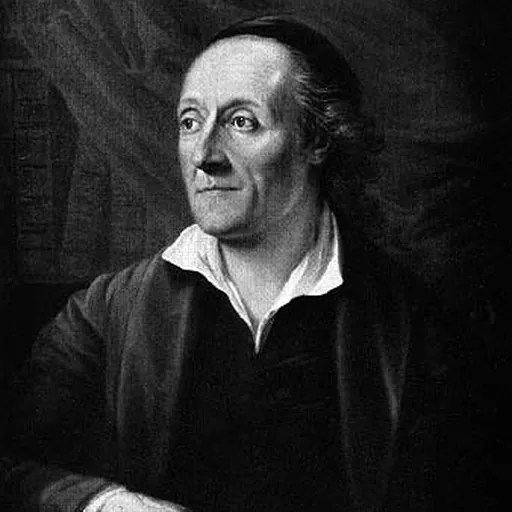
About Johann Kaspar Lavater
Lived 1741 – 1801 (aged 59). Johann Kaspar Lavater was a Swiss writer, philosopher, theologian, poet, criminologist and painter.
Johann Kaspar (or Caspar) Lavater (; 15 November 1741 – 2 January 1801) was a Swiss poet, writer, philosopher, physiognomist and Reformed theologian.
Early life Lavater was born in Zürich, and was educated at the Gymnasium there, where J. J. Bodmer and J. J. Breitinger were amongst his teachers.
Corruption fighter At barely twenty-one years of age, Lavater greatly distinguished himself by denouncing, in conjunction with his friend Henry Fuseli the painter, an iniquitous magistrate, who was compelled to make restitution of his ill-gotten gains. published between 1775 and 1778.
Lavater is attributed with catalysing a golden age for silhouettes through this work in physiognomy. According to him, the character of a person could be elucidated through examining their “lines of countenance”. The most accurate of readings were facilitated by the tracing of a profile outline portrait. This contour line could be filled with black or cut from the white paper and placed over a black backing. More often, the silhouette was simply cut from black paper. In the chapter “On Shades”, Lavater wrote, “What can less the image of a living man be than a shade? Yet how full of speech! Little gold, but the purest."
The fame of this book, which found admirers in France and England as well as Germany, rested largely upon the handsome style of publication and the accompanying illustrations. Lavater published 632 aphorisms in all. Blake considered the following aphorism to be an excellent example of an aphorism. "40. Who, under pressing temptations to lie, adheres to truth, nor to the profane betrays aught of a sacred trust, is near the summit of wisdom and virtue."
Last days During his later years, Lavater's influence waned, and he incurred considerable ridicule due to his vanity. His conduct during the French occupation of Switzerland brought about his death. On the taking of Zürich by the French in 1799, Lavater, while trying to appease the aggressors, was shot by an infuriated grenadier; he died over a year later in Zürich.
The Swiss artist and illustrator, Warja Honegger-Lavater, was a direct descendant of Johann Kaspar Lavater.
Publications Vermischte Schriften (2 volumes, 1774–1781) Kleinere prosaische Schriften (3 volumes, 1784–1785) Nachgelassene Schriften (5 volumes, 1801–1802) Sämtliche Werke (poems only; 6 volumes, 1836–1838) Ausgewählte Schriften (8 volumes, 1841–1844). Physiognomische Fragmente zur Beförderung der Menschenkenntnis und Menschenliebe
Don’t just read it —
keep it.
Full-length biographies made to live with: read them, listen on the way to work, watch them tonight.
- E-book
- Audio
- Video
Instant download · yours to keep · every purchase keeps this site free
Important facts
People in Johann Kaspar Lavater's life
Named in this biography and alive at the same time
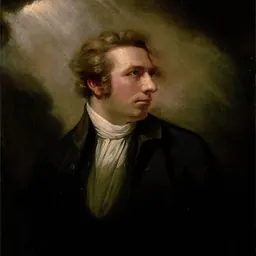
Related people
Same field, nearest in time

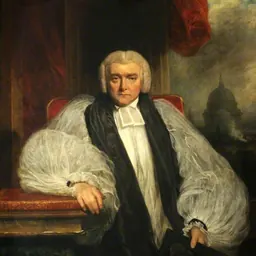


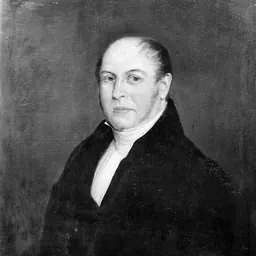
Contemporaries
People whose lives overlapped Johann Kaspar Lavater's





Frequently asked questions
Who was Johann Kaspar Lavater?
Swiss poet (1741-1801)
When was Johann Kaspar Lavater born?
Johann Kaspar Lavater was born on 15 November 1741 in Zurich.
When did Johann Kaspar Lavater die?
Johann Kaspar Lavater died on 2 January 1801 in Zurich.
What was Johann Kaspar Lavater's occupation?
Johann Kaspar Lavater was a writer, philosopher, theologian, poet, criminologist and painter.
What nationality was Johann Kaspar Lavater?
Johann Kaspar Lavater was Swiss.
Sources & further reading
· Wikipedia: Johann Kaspar Lavater
· DBpedia: Johann Kaspar Lavater
Cite this page
APA: Biography.guide. (2026). Johann Kaspar Lavater. https://biography.guide/johann-kaspar-lavater/
MLA: "Johann Kaspar Lavater." Biography.guide, https://biography.guide/johann-kaspar-lavater/.
Chicago: "Johann Kaspar Lavater." Biography.guide. https://biography.guide/johann-kaspar-lavater/.
Data last updated: 2026-09-22 · Spot an error? Report a correction.
Portrait: Wikimedia Commons · author & licence
Page generated 2026-09-27 05:01 UTC