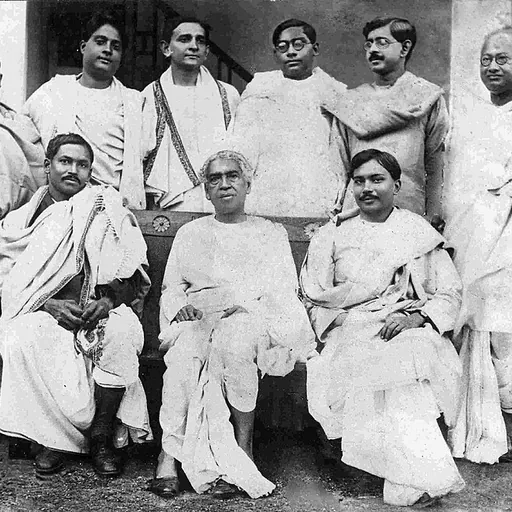
About Jnanendra Nath Mukherjee
Lived 1893 – 1983 (aged 90). Jnanendra Nath Mukherjee was a chemist.
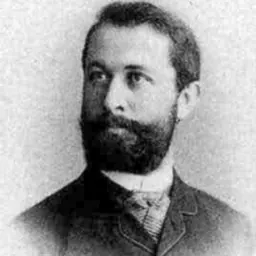
Jnanendra Nath Mukherjee CBE, FRSC was an Indian colloid chemist.
Early life Mukherjee was born on 23 April 1893 to a Kulin Brahmin family of Kannaujite descent in the village of Mahadevpur in Rajshahi District, Bengal Presidency (now Bangladesh). He was the eldest son of his parents, Shri Durgadas Mukherjee and Shrimati Saratshashi Devi. His father had a brilliant academic career and became the Principal of the Raj Chandra College, Barisal. He gave it up later in favour of a Provincial Judicial Service. Mukherjee lost his father when he was only twelve years old, and was brought up along with his younger brother.
School of Soil Science Dr Mukherjee was able to foresee how basic soil colloid studies could be of help in understanding many of the soil properties and problems. He brought to use in the study of the soil all the tools and techniques he had been developing and improving through years of patient research.
Agricultural research development Besides making pioneering contribution in the domain of Soil Science, Dr Mukherjee played a key role in the development of agricultural research and education in the country. Soon after his appointment as Director of the Imperial (now Indian Agricultural Research Institute, New Delhi), in 1945, Dr Mukherjee began to reorganise the research and educational activities of the Institute in the country as a whole. Under his direction the Institute expanded considerably in terms of its academic activities and scientific performance. He initiated research in the area of soil-plant studies. Some of the sections he created in the Division of Soil Science and Agricultural Chemistry are Soil Survey, Soil Physics, Agricultural Chemistry, Soil Fertility, Soil Microbiology, Biochemistry, Organic Chemistry and Spectroscopy. Recent expansion of some of the sections such as Soil Survey, Microbiology, Biochemistry, Agricultural Chemicals, Agricultural Physics were credited to him. The credit for initiating systematic studies on micronutrient elements in soils and plants and also on clay mineralogy of soils with the help of sophisticated instruments and modern techniques goes to him. He initiated work in the institute on the nutritive value of foods, feeds and fodders, on insecticides and fungicides, and on the chemistry of plant products. He was the first in the country to lay great emphasis on the importance of soil surveys for agricultural development and underlined the importance of uniformity in the methods of survey, classification and nomenclature of the soils of India. At his suggestion the Ministry of Agriculture, Government of India established in 1949 the Central Committee on Soil Science with him as chairman. The terms and reference of the committee were practically in conformity with the objectives of the All India Soil and Land Use Survey Organization established in 1956 with 4 regional centres. The soil map of India revised under his guidance (scale 1" --- 70 miles) showing 20 soil classes was published in 1954. He also developed the concept of the basic soil regions in the classifications of the soils of India based on similar characteristics of land viz.., the climate, topography, vegetation and soils. Commander of the Order of the British Empire (CBE) (1943 Birthday Honours) Fellow of Indian Academy of Science, Bangalore, Indian Chemical Association and Royal Society of Chemistry (London) Founder Secretary, Indian Chemical Society, President (1935–36), Indian Society of Soil Science Member, Council (1935–38) and as vice-president (1941–42) Foreign Secretary, INSA (1943–44) and (1947–51) General President, Indian Science Congress Association (1952).
Don’t just read it —
keep it.
Full-length biographies made to live with: read them, listen on the way to work, watch them tonight.
- E-book
- Audio
- Video
Instant download · yours to keep · every purchase keeps this site free
Important facts
Related people
Same field, nearest in time



Contemporaries
People whose lives overlapped Jnanendra Nath Mukherjee's





Frequently asked questions
Who was Jnanendra Nath Mukherjee?
Indian Bengali chemist (1893-1983)
When was Jnanendra Nath Mukherjee born?
Jnanendra Nath Mukherjee was born on 23 April 1893 in Bangladesh, British India, Rajshahi.
When did Jnanendra Nath Mukherjee die?
Jnanendra Nath Mukherjee died on 10 May 1983 in Kolkata.
What was Jnanendra Nath Mukherjee's occupation?
Jnanendra Nath Mukherjee was a chemist.
Sources & further reading
· Wikipedia: Jnanendra Nath Mukherjee
· DBpedia: Jnanendra Nath Mukherjee
Cite this page
APA: Biography.guide. (2026). Jnanendra Nath Mukherjee. https://biography.guide/jnanendra-nath-mukherjee/
MLA: "Jnanendra Nath Mukherjee." Biography.guide, https://biography.guide/jnanendra-nath-mukherjee/.
Chicago: "Jnanendra Nath Mukherjee." Biography.guide. https://biography.guide/jnanendra-nath-mukherjee/.
Data last updated: 2026-09-20 · Spot an error? Report a correction.
Portrait: Wikimedia Commons · author & licence
Page generated 2026-09-27 04:58 UTC