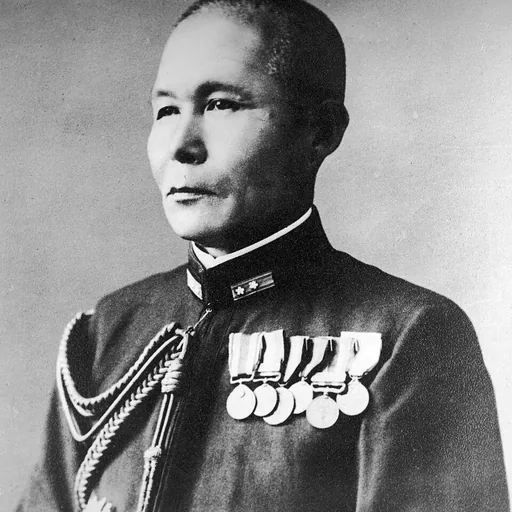
About Jisaburō Ozawa
Lived 1886 – 1966 (aged 80). Jisaburō Ozawa was a Japanese military personnel.
Biography Career prior to World War II Jisaburō Ozawa was born in 1886 in Miyazaki District, a rural area of Koyu County, Kyūshū Island, Japan.
Ozawa graduated in 1909 from the Imperial Japanese Naval Academy in the 37th class, he was ranked 45th out of 179 students. He served as a midshipman on the ex-Russian protected cruiser Soya Varyag, on the pre-dreadnought battleship and on the cruiser . He was appointed Ensign 2nd class in late 1910, and promoted to Ensign 1st class in late 1912. He served on the destroyer Arare, the battlecruiser , and the cruiser . Promoted to lieutenant in late 1915, he served on the dreadnought battleship . He specialized in torpedo tactics and served on the destroyer . He graduated from the Naval War College (19th class) in 1921. Promoted to lieutenant commander on December 1, 1921, he embarked on the destroyer , then joined the staff of the Mako Guard District in the Penghu Islands. He then served on the destroyers and . He served as a torpedo officer on the battleship in 1925, then joined the staff of the 1st Fleet. He was promoted to commander on December 1, 1926. He joined the Naval District of Yokosuka in 1927, then served as an instructor at the Torpedo Naval Service School and the Naval Gunnery School. He later served on the armored cruiser Kasuga in 1928–1929, which had been converted into a training ship. In 1930, he visited the United States and Europe and was promoted to captain on December 1, 1930.
He commanded the 1st, 4th and 11th Destroyer Groups. From 1932 to 1934 he served as an instructor at the Naval War College and at the Army War College. At the end of 1934 he was given command of the heavy cruiser , and the following year of the battleship .
On December 1, 1936, he was promoted to rear admiral. He taught at the Naval War College in 1936, then held various staff positions, including Chief of Staff of the Combined Fleet in 1937. At the end of 1937, he took command of the 8th Cruiser Division (the cruisers , and ), then, at the end of 1939, the 1st Carrier Division (aircraft carriers and ). He was one of the main designers of Japanese naval aviation tactics.
He was the first high-ranking officer to recommend that carrier forces be brought together in an Air Fleet so that they could train and fight together. This would eventually lead to the creation of 1st Air Fleet, also known as the Kidō Butai, a combined carrier battle group comprising most of Japan's carriers. On 10 April 1941, Vice-Admiral Chūichi Nagumo was appointed commander-in-chief of the First Air Fleet. Many contemporaries and historians have doubted his suitability for this command, given his lack of familiarity with naval aviation. Admiral Nishizō Tsukahara would say that: "He (Nagumo) was wholly unfitted by background, training, experience, and interest for a major role in Japan’s naval air arm." Nagumo was appointed by the Navy General Staff, rather than the Combined Fleet. Ozawa was Admiral Isoroku Yamamoto's choice for the command of First Air Fleet, but Yamamoto did not have a strong enough case to remove Nagumo. On the morning of December 10, while Force Z tried to intercept Ozawa's fleet it was attacked by land-based aircraft of the Japanese navy, resulting in the sinking of battleship and battlecruiser . The loss of two major capital ships severely weakened the British Eastern Fleet, which contributed greatly to British defeat in Malaya and the fall of Singapore.
From January to March 1942, his fleet supported the invasions of Java and Sumatra, the main islands of the Dutch East Indies. On March 1, 1942, the Southern Expeditionary Fleet was re-designated as the 1st Southern Expeditionary Fleet.
In April 1942, Vice-Admiral Nagumo of the Combined Fleet launched a raid on Ceylon (Sri Lanka) against the British Eastern Fleet, code-named Operation C. At the same time, Vice-Admiral Ozawa, commanding the Malay Force, launched a separate operation against Allied merchant ships in the Bay of Bengal. In this operation, Ozawa commanded a fleet of four heavy cruisers of the 7th Cruiser Division under Vice Admiral Takeo Kurita, his flagship the heavy cruiser , the aircraft carrier , a light cruiser and four destroyers.
In 3 days, Ozawa's force managed to sink 23 merchant ships (20 in a single day), totaling over 130,000 gross registered tons. In addition, April saw 32,000 tons of shipping sunk by Japanese submarines off India's west coast.
The plan for the attack involved Seiran aircraft launched by submarine aircraft carriers upon the West Coast of the United States—specifically, the cities of San Diego, Los Angeles, and San Francisco. The planes would spread weaponized bubonic plague, cholera, typhus, dengue fever, and other pathogens in a biological terror attack upon the population. The submarine crews would infect themselves and run ashore in a suicide mission. Planning for Operation PX was finalized on March 26, 1945, but shelved shortly thereafter due to strong opposition from Army Chief of General Staff Yoshijirō Umezu.
Okinawa and the end of the war
In February 1945, with the formation of the 5th Air Fleet, under Vice Admiral Matome Ugaki, navy high command began to supervise kamikaze operations. Until then, kamikaze attacks were mostly organized by local commanders.
In March, when briefing Emperor Hirohito on Japan's response to the expected invasion of Okinawa, Japanese military leaders explained that the Imperial Japanese Army was planning extensive air attacks, including the use of kamikaze tactics. The emperor then reportedly asked, "But what about the Navy? What are they doing to assist in defending Okinawa? Have we no more ships?" Feeling pressured by the emperor to mount some kind of attack, Japanese Navy high command conceived a kamikaze-type mission for their remaining operational large ships. Ozawa was involved in the planning of Operation Ten-Go, code name of the suicide attack of battleship Yamato, cruiser and eight other warships against Allied forces engaged at Okinawa.
On May 29, 1945, when Admiral Toyoda succeeded Admiral Oikawa as Chief of the General Staff of the Imperial Japanese Navy, Vice Admiral Ozawa succeeded him as the last Commander-in-Chief of the Combined Fleet. Upon his appointment, he refused a promotion to admiral and remained as a vice admiral until the final disbandment of the Imperial Japanese Navy. He was the only wartime commander of the Combined Fleet who did not become an admiral.
As commander of the Combined Fleet, he continued Operation Kikusui, a series of kamikaze attacks launched against Allied naval forces around Okinawa. Kikusui managed to inflict serious damage to the Allies but it ended following the defeat of Japanese land forces on Okinawa, as Ozawa's remaining forces prepared for the final showdown on the Japanese home islands. In the face of devastating B-29 air raids on Japan, on June 24 Ozawa ordered Vice Admiral Kinpei Teraoka, commander of the 3rd Air Fleet, to begin preparations for Operation Tsurugi. The operation was a suicide attack in which Yokosuka P1Ys would strafe and bomb American airfields in the Mariana Islands, afterwards, Mitsubishi G4Ms carrying Giretsu Kuteitai commandos would crash land on them. The commandos would then destroy as many B-29 bombers as possible before fighting to the death. This attack was scheduled to take place between August 19 and 23. However, Japan surrendered on August 15.
On 25 June 1945, Ozawa issued orders for an attack on American ships anchored at Ulithi, dubbed Operation Arashi. The orders called for submarines and to transport Nakajima C6N1 Saiun reconnaissance aircraft to Truk in the Caroline Islands in late July 1945. In Operation Hikari, the C6N aircraft were to conduct a reconnaissance of Ulithi, noting the presence and location of Allied aircraft carriers and troop transports. Submarine carriers and then were to launch a combined total of six M6A1 floatplanes — which were to use the reconnaissance information to assist them in targeting Allied ships — on 17 August 1945 for a nighttime strike under a full moon against the Ulithi anchorage, each plane armed with an 800-kilogram (1,764 lb) bomb. Ozawa also authorized Operation Tan No. 4, a surprise kamikaze attack on Ulithi, following Operation Tan No. 2 on March 11 (No. 3 was cancelled due to weather). None of these attacks on Ulithi materialized because of Japan's surrender.
Just before the surrender of Japan, Vice Admiral Ōnishi, who is known as the father of the kamikaze, vocally advocated for continuing the war. Ōnishi claimed that the sacrifice of 20 million more Japanese lives would make Japan victorious, Ozawa reportedly rebuked Ōnishi by asking him who would rebuild Japan if 20 million more men had died.
On 15 August, hours after Hirohito announced the surrender of Japan, Vice Admiral Ugaki personally joined a kamikaze attack. Ozawa criticized Ugaki's suicide, claiming that this was a violation of orders. He then forbade his staff from committing suicide. That same day, the commander of Atsugi Air Base Yasuna Kozono publicly announced that his unit would not surrender. Ozawa perceived this as a mutiny and prepared to suppress it. However, the situation came to an end when Kozono fell ill with malaria.
According to American officers who interviewed him after the war, Ozawa made a favorable impression. Although he was elderly and infirm by then, he was composed, had a sharp mind and was well informed. It was from post-war interrogations with Ozawa that historians learned of important changes to the Shō-Gō Plan that took place at the eve of the Battle for Leyte Gulf. He also had the reputation of being both courageous and compassionate towards his men.
Ozawa avoided prosecution by SCAP authorities and served as an advisor for the Japanese Defense Agency. He died in 1966 at the age of 80.
Don’t just read it —
keep it.
Full-length biographies made to live with: read them, listen on the way to work, watch them tonight.
- E-book
- Audio
- Video
Instant download · yours to keep · every purchase keeps this site free
Important facts
People in Jisaburō Ozawa's life
Named in this biography and alive at the same time




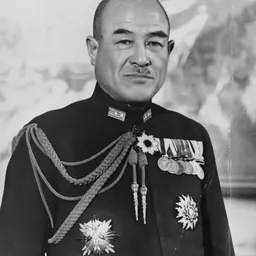
Related people
Same field, nearest in time



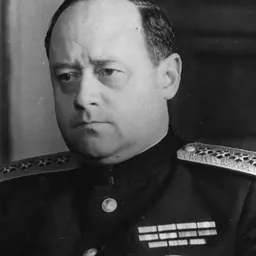
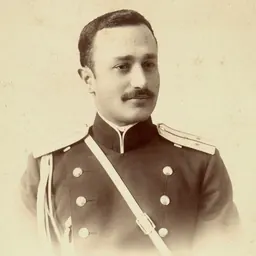
Contemporaries
People whose lives overlapped Jisaburō Ozawa's
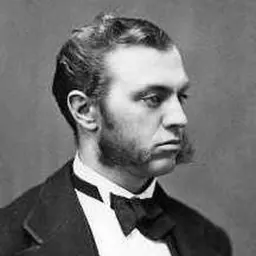

Frequently asked questions
Who was Jisaburō Ozawa?
Japanese admiral (1886–1966)
When was Jisaburō Ozawa born?
Jisaburō Ozawa was born on 2 October 1886 in Koyu district.
When did Jisaburō Ozawa die?
Jisaburō Ozawa died on 9 November 1966 in Tokyo.
What was Jisaburō Ozawa's occupation?
Jisaburō Ozawa was a military personnel.
What nationality was Jisaburō Ozawa?
Jisaburō Ozawa was Japanese.
Sources & further reading
Cite this page
APA: Biography.guide. (2026). Jisaburō Ozawa. https://biography.guide/jisaburo-ozawa/
MLA: "Jisaburō Ozawa." Biography.guide, https://biography.guide/jisaburo-ozawa/.
Chicago: "Jisaburō Ozawa." Biography.guide. https://biography.guide/jisaburo-ozawa/.
Data last updated: 2026-09-20 · Spot an error? Report a correction.
Portrait: Wikimedia Commons · author & licence
Page generated 2026-09-27 04:57 UTC