
About Takeo Kurita
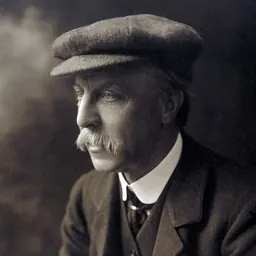
Lived 1889 – 1977 (aged 88). Takeo Kurita was a Japanese military officer.
Battle of Leyte Gulf It was as Commander-in-Chief of the IJN 2nd Fleet dubbed "Center Force" during the Battle of the Sibuyan Sea and the Battle off Samar (both part of the Battle of Leyte Gulf) for which Kurita is best known. The IJN 2nd Fleet included the largest and most heavily armed battleships in the world, and . Additionally, the IJN 2nd Fleet included the older battleships , , and , 10 cruisers and 13 destroyers. Critically, however, the IJN Second Fleet did not include any aircraft carriers.
Kurita was a dedicated officer, willing to die if necessary, but not wishing to die in vain. Like Isoroku Yamamoto, Kurita believed that for a captain to "go down with his ship" was a wasteful loss of valuable naval experience and leadership. When ordered by Admiral Soemu Toyoda to take his fleet through the San Bernardino Strait in the central Philippines and attack the American landings at Leyte, Kurita thought the effort a waste of ships and lives, especially since he could not get his fleet to Leyte Gulf until five days after the landings, leaving little more than empty transports for his huge battleships to attack. He bitterly resented his superiors, who, while safe in bunkers in Tokyo, ordered him to fight to the death against hopeless odds and without air cover. For his part, Toyoda was aware that the plan was a major gamble, but as the Imperial Japanese Navy fleet was running out of fuel and other critical supplies, he felt that the potential gain offset the risk of losing a fleet that was about to become useless in any event.
Ambush in the Palawan Passage While his fleet was en route from Brunei to attack the American invasion fleet, Kurita's ships were attacked in the Palawan Passage by U.S. submarines. damaged the heavy cruiser and sank Kurita's flagship, the heavy cruiser , forcing him to swim for his life while sank the heavy cruiser . Kurita was plucked from the water by a destroyer and transferred his flag to the Yamato, but Kurita's dunking did him little good, especially since he had only recently recovered from a severe case of dengue fever, and no doubt contributed to the fatigue which may have influenced his subsequent actions.
Battle of the Sibuyan Sea While in the confines of the Sibuyan Sea and approaching the San Bernardino Strait, Kurita's force underwent five aerial attacks by U.S. carrier planes which damaged several of his ships, including Yamato. Constant air attacks from Admiral William "Bull" Halsey's 3rd Fleet scored two bomb hits on Yamato, reducing her speed, and numerous torpedo and bomb hits on her sister ship Musashi, mortally wounding her. The Japanese battleship Musashi sank on October 24, 1944, at 7.36pm local time. The mighty battleship capsized and sunk four hours after capsizing, having sustained huge damage after a massive, day-long aerial attack by U.S. forces, sustaining approximately 19 torpedo hits and 17 bomb hits before she sank.
The American planes also scored a number of damaging near misses on other Japanese vessels, reducing Japanese fleet speed to some 18 knots. Knowing that he was already six hours behind schedule and facing the possibility of a sixth attack in the narrow confines of the San Bernardino Strait, Kurita requested air support and turned his fleet west away from Leyte Gulf.
Thus began a chain of events that continues to engage historians and biographers to this day. Halsey, believing that he had mauled Kurita's fleet and that the Japanese Center Force was retreating, and believing that he had the orders and authorization to do so, abandoned his station guarding General MacArthur's landing at Leyte Gulf and the San Bernardino Strait, in order to pursue Admiral Jisaburō Ozawa's Northern Fleet of Japanese carriers that were sent as a decoy to lure the Americans away from Leyte. But before doing so, in fact before Ozawa's force had been sighted, Halsey had sent a message announcing a "battle plan" to detach his battleships to cover the exit of the strait. With the decision to attack Ozawa, this battle plan was never executed and the heavy ships went north with the carriers. The battle plan called for detaching the battleships to guard San Bernardino Strait, which meant that Halsey's flagship, the battleship , would have been detached too, leaving him behind while Vice Admiral Marc Mitscher chased the carriers. Unfortunately for Halsey, after an hour and a half without further air attacks Kurita turned east again at 1715 towards San Bernardino Strait and the eventual encounter with Kinkaid's forces in Leyte Gulf.
Battle off Samar At this point in time, with the battleship Musashi having recently been sunk, the powerful force commanded by Kurita consisted of some four battleships, including the almighty flagship battleship Yamato with her 18 inch guns, as well as the battleships Nagato, Kongo, and Haruna, six heavy cruisers, two light cruisers, and eleven destroyers, still a powerful force despite previous damage taken in the Battle of the Sibuyan Sea.
Vice Admiral Thomas C. Kinkaid, Commander 7th Fleet and responsible for protecting the landing forces, assumed that Halsey's "battle plan" was a deployment order and that Task Force 34 (TF 34) was actually guarding San Bernardino Strait. Kinkaid thus concentrated his battleships to the south in order to face the Japanese "Southern Force". During the night of 24–25 October 1944, Kurita changed his mind again, and turned his ships around and headed east again, toward Leyte Gulf. On the morning of 25 October, Kurita's fleet, led by Yamato, exited San Bernardino Strait and sailed south along the coast of Samar. Thirty minutes after dawn, the battleships of the Imperial Japanese Navy sighted "Taffy 3" — a task unit of Kinkaid's covering forces that consisted of six escort carriers, three destroyers and four destroyer escorts, commanded by Rear Admiral Clifton Sprague. Taffy 3 was intended to provide shore support and anti-submarine patrols, not to engage in fleet action against battleships.
Believing he had chanced upon the carriers of the American 3rd Fleet, Kurita immediately ordered his battleships to open fire. Recognizing that his best chance depended upon destroying the aircraft carriers before they could launch their aircraft, Kurita gave the order for "general attack" rather than take the time to reform his ships for action with the enemy. Kurita then compounded his error by ordering his destroyers to the rear to prevent them from obstructing his battleships' line of fire, preventing them from racing ahead to cut off the slower American carriers. Concern that his destroyers would burn too much fuel in a flank speed stern chase of what Kurita presumed were 30-knot fleet carriers also played a part in Kurita's decision. However, at the moment Taffy 3 was sighted, Center Force was in the midst of changing from nighttime scouting to daytime air defense steaming formation. Kurita's ships thus charged uncoordinated into action and Kurita quickly lost tactical control of the battle, a situation not helped by poor visibility, intermittent rain squalls and a wind direction favorable to the Americans, who immediately began to make smoke for additional concealment.
Kurita's forces mauled Taffy 3, sinking the escort carrier , the destroyers and , and the destroyer escort , and inflicting significant damage on most of the other ships. But continual air attacks by aircraft from Taffy 3 and Taffy 2 stationed farther south and a determined counterattack by the U.S. escorts served to further confuse and separate Kurita's forces. Kurita, whose flagship fell far behind early in the battle while avoiding a torpedo salvo from USS Hoel, lost sight of the enemy and many of his own ships. Meanwhile, the courageous efforts of the Taffies had cost him three heavy cruisers: , , and . Many of his other ships had also been hit and most had suffered casualties from the relentless strafing. After about two and a half hours in action with Taffy 3, Kurita ordered his force to regroup on a northerly course, away from Leyte.
By this time, Kurita had received news that the Japanese Southern Force, which was to attack Leyte Gulf from the south, had already been destroyed by Kinkaid's battleships. With Musashi gone, Kurita still had four battleships but only three cruisers remaining, all of his ships were low on fuel and most of them were damaged. Kurita was intercepting messages that indicated Admiral Halsey had sunk all four carriers of the "Northern Force" and was racing back to Leyte with his battleships to confront the Japanese fleet, and that powerful elements of 7th Fleet were approaching from Leyte Gulf. After steaming back and forth off Samar for two more hours, Kurita, who had been on Yamatos bridge for nearly 48 hours by this point, and his chief of staff Tomiji Koyanagi decided to retire and retreated back through the San Bernardino Strait.
Kurita's ships were subjected to further air attack the rest of the day and Halsey's battleships just missed catching him that night, sinking the destroyer , which had remained behind to save the survivors from Chikuma. Kurita's retreat saved Yamato and the remainder of the IJN 2nd Fleet from certain destruction, but he had failed to complete his mission, attacking the amphibious forces in Leyte Gulf. The path had been laid open to him by the sacrifices of the Northern and Southern Forces, but closed again by the determination and courage of the Taffies.
After Leyte and postwar
Kurita was criticized by some elements in the Japanese military for not fighting to the death. In December, Kurita was removed from command. In order to protect him against assassination, he was reassigned as commandant of the Imperial Japanese Navy Academy.
Following the Japanese surrender, Kurita found work as a scrivener and masseur, living quietly with his daughter and her family. He was found by an American naval officer after the war where he was interviewed for the Analysis Division of the U.S. Strategic Bombing Survey. With Kurita's address in hand, a young American naval officer got out of a jeep and spotted the unimposing figure tending to his garden chores. Years later, he still vividly recalled the moment: "It really made an impression of me. The war was just over. Less than a year before Kurita had been in command of the largest fleet that was ever put together, and there he was out there chopping potatoes."
Kurita never discussed politics or the war with his family or others, except to conduct a brief interview with a journalist, Masanori Itō, in 1954 when he stated that he had made a mistake at Leyte by turning away and not continuing with the battle, a statement he later retracted. In retirement, Kurita made twice-yearly pilgrimages to Yasukuni Shrine to pray for his dead comrades-in-arms. In 1966, he was present at the deathbed of his old colleague, Jisaburō Ozawa, at which he silently wept.
It was not until he was in his 80s that Kurita began to again speak of his actions at Leyte. He claimed privately to a former Naval Academy student (and biographer), Jiro Ooka, that he withdrew the fleet from the battle because he did not believe in wasting the lives of his men in a futile effort, having long since believed that the war was lost.
Kurita died in 1977 at age 88, and his grave is at the Tama Cemetery in Fuchu, Tokyo.
Don’t just read it —
keep it.
Full-length biographies made to live with: read them, listen on the way to work, watch them tonight.
- E-book
- Audio
- Video
Instant download · yours to keep · every purchase keeps this site free
Important facts
People in Takeo Kurita's life
Named in this biography and alive at the same time



Related people
Same field, nearest in time



Contemporaries
People whose lives overlapped Takeo Kurita's



Frequently asked questions
Who was Takeo Kurita?
Japanese admiral
When was Takeo Kurita born?
Takeo Kurita was born on 28 April 1889 in Mito.
When did Takeo Kurita die?
Takeo Kurita died on 19 December 1977 in Nishinomiya.
What was Takeo Kurita's occupation?
Takeo Kurita was a military officer.
What nationality was Takeo Kurita?
Takeo Kurita was Japanese.
Sources & further reading
Cite this page
APA: Biography.guide. (2026). Takeo Kurita. https://biography.guide/takeo-kurita/
MLA: "Takeo Kurita." Biography.guide, https://biography.guide/takeo-kurita/.
Chicago: "Takeo Kurita." Biography.guide. https://biography.guide/takeo-kurita/.
Data last updated: 2026-09-20 · Spot an error? Report a correction.
Page generated 2026-09-27 05:33 UTC