
About Jean-Louis Laneuville
Lived 1756 – 1826 (aged 69). Jean-Louis Laneuville was a French painter and art dealer.
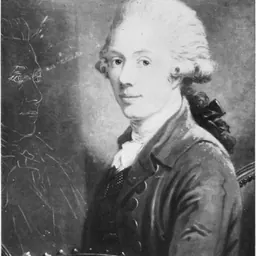
Jean-Louis Titon La Neuville, called Jean-Louis Laneuville (, 26 December 1756, Paris – 26 March 1826, Paris) was a French painter, art dealer and expert. He was a gifted portraitist who made portraits of eminent persons of the French Revolution in a style similar to that of his teacher Jacques-Louis David.
Life
Jean-Louis Laneuville was born in Paris as the natural son of J.B.M. Pierre Titon. His father was a prominent parliamentarian and rapporteur in the ‘’Affair of the Diamond Necklace". Little is known about his early training. He studied, at least briefly, with his contemporary Jacques-Louis David and exhibited at the open-air Exposition de la Jeunesse between 1783 and 1789. He started sending pictures to the official Salon after it was opened for non-academicians in 1791.
During the French Revolution (1789–95) Laneuville appears to have looked for patronage from the powerful political figures of his time. This is demonstrated by the fact that 8 of the 12 portraits he sent to the Salon of 1793 were politicians and in 1795 the numbers were four of the six. It is not clear whether he targeted these politicians because of his own political preferences or because he felt this was an untapped market.
Jean-Louis Laneuville resided and worked at the Hôtel de Longueville in central Paris from 1798 to 1804. Around this time Laneuville produced portraits of two young brothers: Pierre Robillard and Amedée-Selim Robillard, who were cousins of Théodore Géricault. Géricault was born in 1791, and was a year older than Amédée-Selim. Géricault's father worked at the family tobacco business at the Hôtel de Longueville from 1797 to 1806. Théodore Géricault's uncle, Jean-Baptiste Caruel, lived and worked at the Hôtel de Longueville from 1791 to 1804, allowing us to reliably date Théodore Géricault's first connection to Jean-Louis Laneuville to this period.
Laneuville portrayed deputies to the Convention, including Bertrand Barère de Vieuzac (1792-3; Kunsthalle Bremen), Pierre-François-Joseph Robert and Joseph Delaunay (1793; Palace of Versailles) and Jules-François Paré (1795; Carnavalet Museum). In 1791 he was elected a judge of the Prix d'Encouragement, and in 1796 signed a petition defending the acquisition of looted artworks.
Laneuville continued to receive private and official portrait commissions during the reign of Napoleon. He was also active as an expert art appraiser and possibly also as an art dealer since his estate included a large number of Old Masters and contemporary French art.
Work
Laneuville was exclusively active as a portrait painter. His works from the French Revolution era are invariably painted along a very strict formula: they show the single sitter strongly delineated against a neutral background and depict the physiognomy and materials with painstaking precision. He applied paint in such a polished manner that the brushwork is not visible and reduced his colors to simple contrasts of strong tones. The sitter is always looking at the viewer in an intense and level manner. Laneuville's style was so similar to that of David, that many of his works have been wrongly attributed to David.
An example of his style is the Portrait of Jean Antoine Joseph Debry (1793, Indiana University Art Museum). Debry was a deputy to the National Convention which was to draw up a constitution for France following the Revolution. Debry is shown in the portrait with a serious expression which invites the viewer to share in his exercise of Republican responsibility and virtues. This type of representation suited the revolutionary ideas of the politically engaged individual. The scandal may also have been caused by the imagery of the portrait, which emphasized the increased visibility of women in political life, and may also have awoken the spectre of Marie Antoinette who stood accused of having brought the nation to the brink because of her sexual impulses and political ambitions. A few days before the closing of the 1796 Salon, the portrait of Thérésa Tallien was returned to the exhibition after Laneuville had made some changes to it.
Don’t just read it —
keep it.
Full-length biographies made to live with: read them, listen on the way to work, watch them tonight.
- E-book
- Audio
- Video
Instant download · yours to keep · every purchase keeps this site free
Important facts
People in Jean-Louis Laneuville's life
Named in this biography and alive at the same time
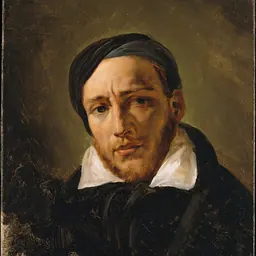
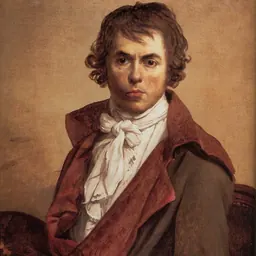
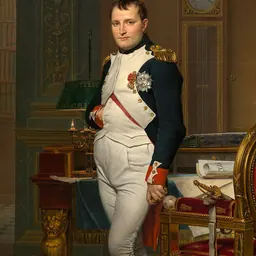
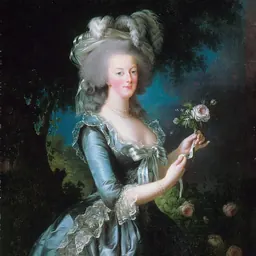
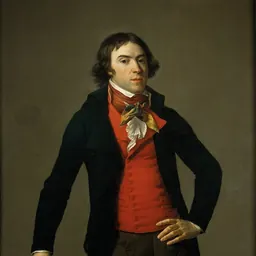
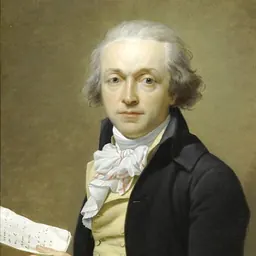
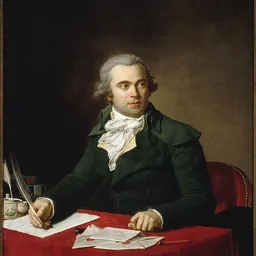
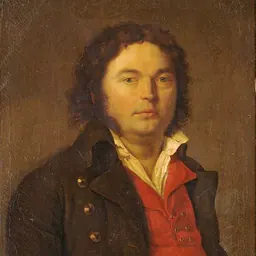
Related people
Same field, nearest in time





Contemporaries
People whose lives overlapped Jean-Louis Laneuville's




Frequently asked questions
Who was Jean-Louis Laneuville?
French painter (1756-1826)
When was Jean-Louis Laneuville born?
Jean-Louis Laneuville was born on 26 December 1756 in Paris.
When did Jean-Louis Laneuville die?
Jean-Louis Laneuville died on 26 March 1826 in Paris.
What was Jean-Louis Laneuville's occupation?
Jean-Louis Laneuville was a painter and art dealer.
What nationality was Jean-Louis Laneuville?
Jean-Louis Laneuville was French.
Sources & further reading
· Wikipedia: Jean-Louis Laneuville
· DBpedia: Jean-Louis Laneuville
Cite this page
APA: Biography.guide. (2026). Jean-Louis Laneuville. https://biography.guide/jean-louis-laneuville/
MLA: "Jean-Louis Laneuville." Biography.guide, https://biography.guide/jean-louis-laneuville/.
Chicago: "Jean-Louis Laneuville." Biography.guide. https://biography.guide/jean-louis-laneuville/.
Data last updated: 2026-09-20 · Spot an error? Report a correction.
Page generated 2026-09-27 05:14 UTC