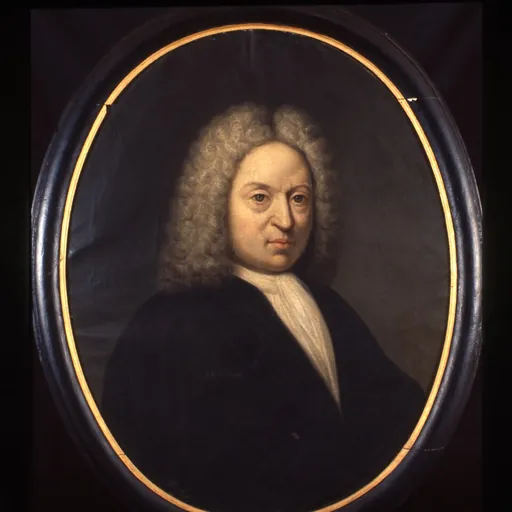
About Jean Le Clerc
Lived 1657 – 1736 (aged 78). Jean Le Clerc was a theologian, translator, historian, journalist, philosopher and university teacher.
Jean Le Clerc , also Johannes Clericus (March 19, 1657 – January 8, 1736), was a Genevan theologian, biblical scholar, and journalist. He was famous for promoting exegesis, or critical interpretation of the Bible, and was a radical of his age. He parted with Calvinism over his interpretations and left Geneva for that reason. He was a propagator of John Locke's philosophy and of Isaac Newton's physics.
Biography
Le Clerc was born on March 19, 1657, in Geneva, where his father, Stephen Le Clerc, was professor of Greek. The family originally belonged to the neighborhood of Beauvais in France, and several of its members acquired some name in literature. Jean Le Clerc applied himself to the study of philosophy under Jean-Robert Chouet (1642–1731) the Cartesian, and attended the theological lectures of Philippe Mestrezat, François Turrettini and Louis Tronchin (de) (1629–1705). In 1678 and 1679, he spent some time in Grenoble as tutor in a private family; on his return to Geneva he passed his examinations and received ordination. Soon afterwards he went to Saumur.
Views His suspected Socinianism was the cause, it is said, of his exclusion from the chair of dogmatic theology. In reality, Le Clerc was a liberal Remonstrant like de Courcelles, not a Socinian like Crellius, though he was much more critical of dogma than others in the Remonstrant camp.
In 1685 he published Sentimens de quelques theologiens de Hollande sur l'histoire critique du Vieux Testament composée par le P. Richard Simon, in which, while pointing out what he believed to be Richard Simon's faults, he advanced views of his own. These included: arguments against the Mosaic authorship of the Pentateuch; his views as to the manner in which the five books were composed; and his opinions on the subject of divine inspiration in general, in particular on the Book of Job, Book of Proverbs, Ecclesiastes, and Canticles. Simon's Réponse (1686) drew from Le Clerc a Defence des sentimens in the same year, which was followed by a new Réponse (1687). In turn, Charles Gildon published a partial and unattributed translation of Le Clerc's Logica as the treatise "Logic; or, The Art of Reasoning" in the second (1712) and subsequent editions of John Brightland's Grammar of the English Tongue. In 1728, Ephraim Chambers used Gildon's translation of Le Clerc's version of the Port-Royal Logique as one of his sources when he compiled his Cyclopaedia. John Mills and Gottfried Sellius later translated Chambers's Cyclopaedia into French. Their translation was appropriated by Denis Diderot and Jean le Rond d'Alembert as the starting point for their Encyclopédie. In particular, the article on définition (1754) in the Encyclopédie can be traced through this chain of writers, editors, translators, and compilers to the Port-Royal Logique through the Logica of Jean Le Clerc.
In 1693, his series of Biblical commentaries began with that on the Book of Genesis; the series was not completed until 1731. The portion relating to the New Testament books included the paraphrase and notes of Henry Hammond. Le Clerc's commentary challenged traditional views and argued the case for inquiry into the origin and meaning of the biblical books, It was hotly attacked on all sides. Other works include the collected works of Erasmus, begun in 1703, and Harmonia evangelica, 1700. One of his final works was his three-volume Histoire des Provinces-Unies des Pays Bas, covering the history of the Dutch Republic up to the 1713 Treaty of Utrecht and published between 1723 and 1728.
Don’t just read it —
keep it.
Full-length biographies made to live with: read them, listen on the way to work, watch them tonight.
- E-book
- Audio
- Video
Instant download · yours to keep · every purchase keeps this site free
Important facts
People in Jean Le Clerc's life
Named in this biography and alive at the same time

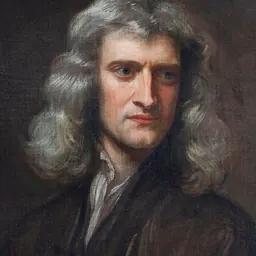

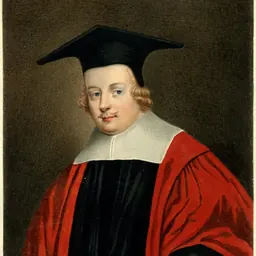
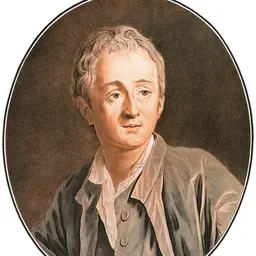


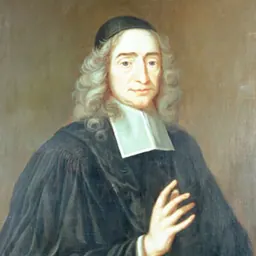
Related people
Same field, nearest in time
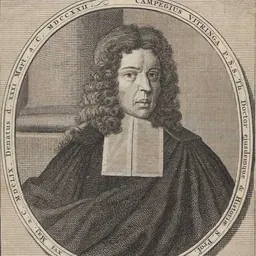
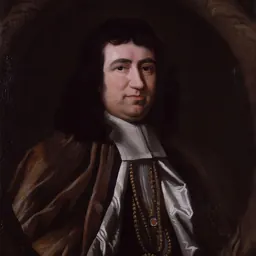

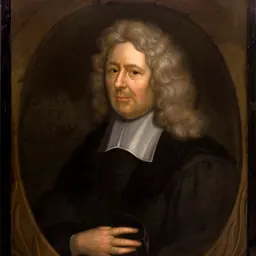

Contemporaries
People whose lives overlapped Jean Le Clerc's



Frequently asked questions
Who was Jean Le Clerc?
Genevan theologian and biblical scholar (1657–1736)
When was Jean Le Clerc born?
Jean Le Clerc was born on 29 March 1657 in Geneva.
When did Jean Le Clerc die?
Jean Le Clerc died on 8 January 1736 in Amsterdam.
What was Jean Le Clerc's occupation?
Jean Le Clerc was a theologian, translator, historian, journalist, philosopher and university teacher.
What nationality was Jean Le Clerc?
Jean Le Clerc's recorded nationality: Republic of Geneva.
Sources & further reading
· DBpedia: Jean Le Clerc (theologian)
Cite this page
APA: Biography.guide. (2026). Jean Le Clerc. https://biography.guide/jean-le-clerc/
MLA: "Jean Le Clerc." Biography.guide, https://biography.guide/jean-le-clerc/.
Chicago: "Jean Le Clerc." Biography.guide. https://biography.guide/jean-le-clerc/.
Data last updated: 2026-09-22 · Spot an error? Report a correction.
Portrait: Wikimedia Commons · author & licence
Page generated 2026-09-27 05:04 UTC