
About Jean-Adolphe Beaucé
Lived 1818 – 1875 (aged 56). Jean-Adolphe Beaucé was a French painter and illustrator.
Jean-Adolphe Beaucé designed this certificate of the Soc. Établie pour l'Exploitation de l'Ancienne Manufacture Royale de Draps Fins d'Abbeville from January 2, 1855.
Jean-Adolphe Beaucé (2 August 1818 – 13 July 1875) was a French battle-scene painter. He followed the French army on campaign from 1843 onwards in North Africa, the Middle East and Mexico. He also painted portraits of military figures and created illustrations for works by writers such as Alexandre Dumas.
Life and work Born in Paris, Beaucé received his artistic training in the studio of the painter Charles-Louis Bazin. He subsequently specialized in military depictions in the style of Horace Vernet. In 1839, he debuted at the Salon de Paris with the battle painting La bataille de Toulouse, 10 avril 1814, where he would exhibited regularly in the following years. He repeatedly accompanied the French army on its campaigns on behalf of the government, creating official depictions of military events.
In Algeria, he drew inspiration for the paintings Prise de la Smala d'Abd-el-Kader par SAR le Mgr le duc d'Aumale, exhibited at the Salon of 1844, and La Charge du colonel Morris à la bataille d'Isly (Salon of 1853). He depicted the Crimean War in the painting Le général Conrobert reconnaissant les travaux des Russes devant Sébastopol (Salon of 1861), and the French intervention in Lebanon found its visual expression in Le Debarquement des troupes français en Syrie, à Beyrouth. Shortly afterward, Beaucé accompanied the troops to Italy, where he chose the Battle of Solferino as his subject, painting La Bataille de Solferino, shown in the Salon of 1861.
Furthermore, Beaucé accompanied the army across the Atlantic to gather further inspiration for his paintings during the French intervention in Mexico. This journey resulted in works such as Le Campement du 3e zouaves à San Jacinto and Entry of the French Expeditionary Force into Mexico City. During the Franco-Prussian War, he was besieged with the French Army of the Rhine during the Siege of Metz.
In addition to his paintings, Beaucé created numerous drawings for woodcuts, primarily for book illustration. These include Jean Bart et Louis XIV, by Eugène Sue, Des Quarante-cinq by Alexandre Dumas, Histoire de Napoléon I, by , and several works by Victor Hugo.
He died on 13 July 1875 in the Parisian suburb of Boulogne-Billancourt and is buried in the 49th division of the cimetière du Père-Lachaise in Paris.
Works in public collections Compiègne, château de Compiègne : General Niel at the Battle of Solférino, marouflage on canvas L'Isle-Adam, musée Louis Senlecq : François Louis de Bourbon Prince de Conty Looking at a Battle Scene, print Narbonne, musée d'art et d'histoire : Captain Lelièvre's Heroic Defence at Mazagran, oil on panel Pau, musée des beaux-arts : Portrait of Marshal Bosquet Troyes, musée Saint-Loup : Napoléon on the Bridge at Arcis-sur-Aube, oil on canvas Versailles, château de Versailles
Illustrations Dumas Les Trois mousquetaires, Paris, Lecrivain et Toubon, 1875 Vingt ans après, Paris, Lecrivain et Toubon, 1885 Les Qurantes-cinq, Paris, Calmann Lévy, 154 p. Le Comte de Monte-Christo, Paris, Lecrivain et Toubon, 1860, 159 p. Le Vicomte de Bragelonne, Paris, Marescq, 1875, 479 p. Le Trou de l'enfer, Paris, Marescq et Cie, 1855, 154 p. La Dame de Monsoreau, Paris, Librairie illustrée, 1875, 560 p. Le Chevelier d'Harmental, Paris, Marescq, 1854
Other Alain-René Lesage, Le Diable boiteux, Paris, G. Havard, 1849 Eugène de Mirecourt, Confessions de Marion Delorme, Paris, V. Bunel, 1876, 840 p. Ann Radcliffe, Les Mystères d'Udolphe, Paris, Marescq et Cie, 1869, 96 p. Eugène Sue, Jean Bart et Louis XIV : drames maritimes du XVIIe siècle, Paris, Marescq et Cie, 1851, 490 p. Eugène Sue, Les Mystères de Paris, Paris, [s.n.], 1851, 384 p. Victor Hugo, Les Burgraves, Paris, J. Hetzel, 48 p. Victor Hugo, Bug-Jargal, Paris, J. Hetzel, 1876 Victor Hugo, Angelo, tyran de Padoue, 1866
Gallery
Don’t just read it —
keep it.
Full-length biographies made to live with: read them, listen on the way to work, watch them tonight.
- E-book
- Audio
- Video
Instant download · yours to keep · every purchase keeps this site free
Important facts
People in Jean-Adolphe Beaucé's life
Named in this biography and alive at the same time
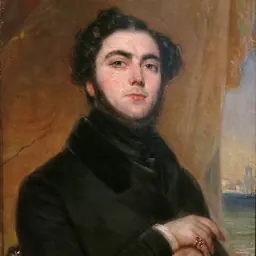



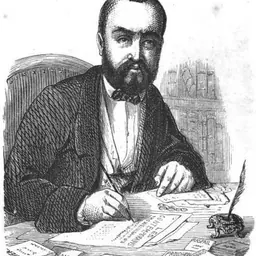
Related people
Same field, nearest in time
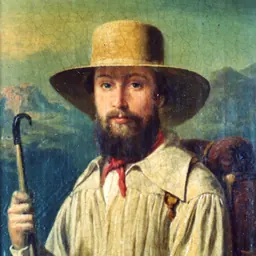
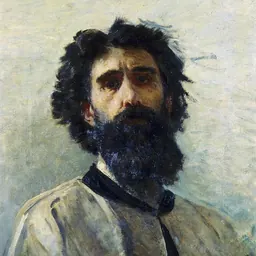

Contemporaries
People whose lives overlapped Jean-Adolphe Beaucé's



Frequently asked questions
Who was Jean-Adolphe Beaucé?
French painter (1818-1875)
When was Jean-Adolphe Beaucé born?
Jean-Adolphe Beaucé was born on 2 August 1818 in former 9th arrondissement of Paris.
When did Jean-Adolphe Beaucé die?
Jean-Adolphe Beaucé died on 13 July 1875 in Boulogne-Billancourt.
What was Jean-Adolphe Beaucé's occupation?
Jean-Adolphe Beaucé was a painter and illustrator.
What nationality was Jean-Adolphe Beaucé?
Jean-Adolphe Beaucé was French.
Sources & further reading
· Wikipedia: Jean-Adolphe Beaucé
· DBpedia: Jean-Adolphe Beaucé
Cite this page
APA: Biography.guide. (2026). Jean-Adolphe Beaucé. https://biography.guide/jean-adolphe-beauce/
MLA: "Jean-Adolphe Beaucé." Biography.guide, https://biography.guide/jean-adolphe-beauce/.
Chicago: "Jean-Adolphe Beaucé." Biography.guide. https://biography.guide/jean-adolphe-beauce/.
Data last updated: 2026-09-20 · Spot an error? Report a correction.
Page generated 2026-09-27 05:17 UTC