
About Eugène Sue
Lived 1804 – 1857 (aged 53). Eugène Sue was a French novelist, writer, politician and physician.
Marie-Joseph "Eugène" Sue (; 26 January 18043 August 1857) was a French novelist. He was one of several authors who popularized the genre of the serial novel in France with his very popular and widely imitated The Mysteries of Paris, which was published in a newspaper from 1842 to 1843.
Early life Sue was born in Paris, France. He was the son of a distinguished surgeon in Napoleon's army, Jean-Joseph Sue, and had Empress Joséphine as his godmother. Sue himself acted as surgeon both in the 1823 French campaign in Spain and at the Battle of Navarino in 1827. In 1829 his father's death put him in possession of a considerable fortune, and he settled in Paris.
Literary career Sue's naval experiences supplied much of the material for his first novels, Kernock le pirate (1830), Atar-Gull (1831), La Salamandre (1832), La Coucaratcha (1832–1834), and others, written at the height of the Romantic movement of 1830. In the quasi-historical style he wrote Jean Cavalier, ou Les Fanatiques des Cevennes (1840) and Latréaumont (1837). His Mathilde (1841 ) contains the first known expression of the popular proverb "La vengeance se mange très-bien froide", also constituting the first known English usage of the proverb later expressed in English as "Revenge is a dish best served cold".
He was strongly affected by the socialist ideas of the day, and these prompted his most famous works, the anti-Catholic novels: The Mysteries of Paris (Les Mystères de Paris) (published in Journal des débats from 19 June 1842 until 15 October 1843) and The Wandering Jew (Le Juif errant; 1844–1845), which were among the most popular specimens of the serial novel. The Wandering Jew is a Gothic novel depicting the titular character in conflict with the villain, a murderous Jesuit named Rodin. Some of Sue's books, among them The Wandering Jew and The Mysteries of Paris, were dramatized by himself, usually in collaboration with others. His period of greatest success and popularity coincided with that of Alexandre Dumas, with whom he has been compared.
According to Umberto Eco, parts of Sue's book Les Mystères du peuple served as a source for Maurice Joly in his 1864 work Dialogue in Hell Between Machiavelli and Montesquieu, a book attacking Napoleon III and his political ambitions. The two are depicted in Will Eisner's cartoon book The Plot, co-authored with Eco.
Political career After the French Revolution of 1848, Sue was elected to the Legislative Assembly from the Paris-Seine constituency in April 1850. He was exiled from Paris in consequence of his protest against the French coup d'état of 1851. This exile stimulated his literary production. Sue died in Annecy-le-Vieux, Savoy on 3 August 1857 and was buried at the Cimetière de Loverchy (Annecy) in the Non-Catholic's Carré des "Dissidents".
Legacy Rue Eugène Sue in the 18th arrondissement of Paris near the Marcadet-Poissonniers station of the Paris Métro, not far from Montmartre and the Sacré-Cœur. Calle Eugenio Sue in Polanco. Sue is a character in Umberto Eco's 2010 novel The Prague Cemetery.
Don’t just read it —
keep it.
Full-length biographies made to live with: read them, listen on the way to work, watch them tonight.
- E-book
- Audio
- Video
Instant download · yours to keep · every purchase keeps this site free
Important facts
People in Eugène Sue's life
Named in this biography and alive at the same time
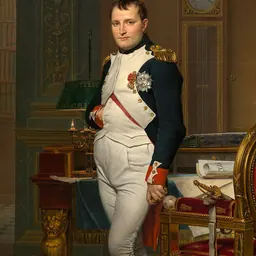

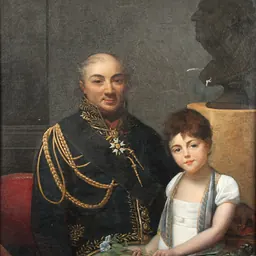

Related people
Same field, nearest in time
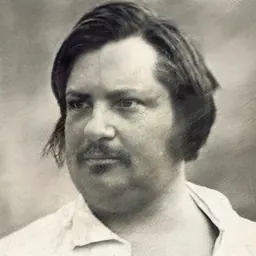
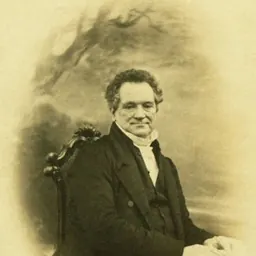

Contemporaries
People whose lives overlapped Eugène Sue's





Frequently asked questions
Who was Eugène Sue?
French writer (1804-1857)
When was Eugène Sue born?
Eugène Sue was born on 26 January 1804 in Paris.
When did Eugène Sue die?
Eugène Sue died on 3 August 1857 in Annecy.
What was Eugène Sue's occupation?
Eugène Sue was a novelist, writer, politician and physician.
What nationality was Eugène Sue?
Eugène Sue was French.
Sources & further reading
Cite this page
APA: Biography.guide. (2026). Eugène Sue. https://biography.guide/eugene-sue/
MLA: "Eugène Sue." Biography.guide, https://biography.guide/eugene-sue/.
Chicago: "Eugène Sue." Biography.guide. https://biography.guide/eugene-sue/.
Data last updated: 2026-09-25 · Spot an error? Report a correction.
Page generated 2026-09-27 05:12 UTC