
Jay Presson Allen
American screenwriter, producer, playwright
About Jay Presson Allen
Lived 1922 – 2006 (aged 84). Jay Presson Allen was an American screenwriter, film producer, novelist, writer and playwright.
Jacqueline “Jay” Presson Allen (March 3, 1922 – May 1, 2006) was an American screenwriter, playwright, and novelist. Known for her withering wit and sometimes off-color wisecracks, she was one of the few women making a living as a screenwriter at a time when women were a rarity in the profession. She was twice nominated for the Academy Award for Best Adapted Screenplay, for Bob Fosse’s Cabaret and Sidney Lumet’s Prince of the City (1981), among several other accolades.
Early life Allen was born Jacqueline Presson in San Angelo, Texas, on March 3, 1922, the only child of buyer Willie Mae (née Miller) and department store merchant Albert Jack Presson. She was never particularly fond of her given name, and decided to use her first initial when writing. She would spend all day at the movie house every weekend, from 1 p.m. until somebody dragged her out at 7 p.m. From that time on, movies became very important to her and she knew she would not be staying in her hometown. She attended Miss Hockaday's School for Young Ladies in Dallas for a couple of years, but later said she left the school "having had no education to speak of".
Career Early work Allen skipped college and left home at the age of 18 to become an actress. She said her career in New York City lasted "for about 25 minutes" when she realized that she only liked rehearsals and the first week of performance, and would rather be "out there" where the decisions were being made. In the early 1940s, she married "the first grown man who asked me," Robert M. Davis, a promising young singer, and they lived in Claremont, California, during World War II. She continued acting while in California; she has a small credited role (under the name Jay Presson) in the 1945 film An Angel Comes to Brooklyn and can be glimpsed briefly as "Miss Zelda" in the 1946 film Gay Blades.
Allen became a writer by default, having always read constantly. Being able to write pretty well, she decided to "write her way out" of the marriage and set out to become financially independent of her husband. She always claimed her first husband's big fault was marrying someone too young.
Marnie While The Prime of Miss Jean Brodie was still an unproduced script, Alfred Hitchcock read it and offered Allen the script for Marnie (1964). Hitchcock brought Allen to California to work on the film at Universal Studios in the San Fernando Valley. Allen, who lived close by, would bicycle to work. This upset Hitchcock, who insisted that a limousine be sent for her every day, whether she wanted it or not.
In Allen's opinion, she could not learn fast enough to make a first-rate movie, although she thought Marnie did have some good scenes in it. Hitchcock would have made her a director but she told him no. Said Allen: "It seems perfectly clear to me that any project takes a minimum of a year to direct. I like to get things on and over with. ... Did you ever hear the phrase, 'the lady proposes, the studio disposes'? I didn't make it up. I would never propose myself as a director." Harris won a Tony Award for her performance. In 1973, Allen adapted her play for the screen, which turned out to be a critical and commercial disappointment.
Travels with My Aunt Robert Fryer, who had produced the Jean Brodie film, had collaborated with Katharine Hepburn to make the film version of Graham Greene's Travels with My Aunt (1972), specifically for George Cukor to direct. Cukor for some reason was not getting any work and Hepburn was casting around for projects. They asked Allen to come on board for the script, but she was busy and instead suggested Hugh Wheeler. After a few months, Fryer and Hepburn still weren't happy with Wheeler's script, so Allen agreed to work on the project and wrote a very straightforward script for them. But Hepburn had just starred in the disastrous adaptation of Madwoman of Chaillot and did not want, in Allen's words, "to play another crazy old lady." Hepburn was reluctant to let Cukor down and would not admit her reservations and began to find fault with the script, even rewriting many sections herself. Consequently, Allen finally gave up the endeavor, telling Hepburn that she ought to write it herself, which the actress did. Eventually, Hepburn provoked the studio into making her quit the project, leaving Fryer free to bring Jean Brodie'''s Maggie Smith onto the picture. One speech of Allen's remains in the script, otherwise it is all Hepburn's product. The Writer's Guild refused to put Hepburn's name on the script because she was not a guild member; Fryer refused to let Allen take her name off because she was the one he paid, and Wheeler was burned that he received no credit at all. Allen and Fosse got along badly from the start: she found him "so depressed that it took two hours just to get him in the frame of mind for work." In Allen's opinion most of the humor from the original was lost; she believed Fosse did not really like the lead character of Sally Bowles at all. Later in life Allen would remark about television: "I hate it, I hate it because the buck doesn't stop anywhere." When Carr finally produced a musical version, Allen was forced to file suit for payment from her work on the adaptation.
The Verdict "What I really like to do is a very swift rewrite for a great deal of money. Then I'm out of it. There's no emotional commitment at all – your name's not on it, you're home free", she would explain.
Tru The 1989 Broadway production of Tru starring Robert Morse as Truman Capote was actually a request of the lawyer for the Capote Estate. Allen was reluctant to write about Capote at first, but once she had researched him, she found the last ten years of his life not as off-putting as she had thought: "Capote had a kind of Gallantry in the face of a devastating situation." Friends of Capote were amazed at her accuracy portraying a man she had only met but not known, and there was much question about how many of the lines are Capote's and how many Allen's; she maintained that at least 70% of the dialogue is Capote's own. The show closed after 11 previews and 41 performances.
Script doctor When she was not writing, Allen and her husband were among the most visible of Manhattan's theater crowd. Her last film work was her screenplay for the 1990 remake of the classic, Lord of the Flies. However, she disliked the finished product and had her name removed.
The papers of Jay Presson Allen and her husband Lewis M. Allen are held at the Harry Ransom Center in Austin, Texas.
Credits
Novels Spring Riot (1948; as Jay Presson) Just Tell Me What You Want (1975)
Film Wives and Lovers (1963; play The First Wife) Marnie (1964; screenplay) The Prime of Miss Jean Brodie (1969; screenplay; play) Cabaret (1972; screenplay) Travels with My Aunt (1972; screenplay) Funny Lady (1975; screenplay) It's My Turn (1980; executive producer) Just Tell Me What You Want (1980; screenplay from her novel; producer) Prince of the City (1981; screenplay; executive producer) Deathtrap (1982; screenplay; executive producer) Lord of the Flies (1990; under the pseudonym Sara Schiff)
as an uncredited script doctor Never Cry Wolf (1983; uncredited rewrite) Copycat (1995; uncredited rewrite)
Stage plays The Prime of Miss Jean Brodie (1966), adaptation Forty Carats (1968), adaptation A Little Family Business (1982), adaptation Tru (1989) and directed The Big Love (1991) and directed La Cage aux Folles (1995), uncredited adaptation
Television Danger (1953; writer of 2 episodes, "Surface Tension" and "Inside Straight" as Jay Presson) Armstrong Circle Theatre (1954; writer of 1 episode "Brink of Disaster" as Jay Presson) The Philco-Goodyear Television Playhouse (1954; teleplay writer of 1 episode "Beg, Borrow or Steal" as Jay Presson) Star Tonight (1955; writer of 1 episode "The Dark Search" as Jay Presson) Goodyear Playhouse (writer of 1 episode "Do It Yourself" as Jay Presson) The Borrowers (1973; teleplay) Family pilot: "The Best Years" (1976; teleplay) The Prime of Miss Jean Brodie (1978; teleplays) Hothouse (1988; executive producer, creator) American Playhouse: Tru (1992; teleplay)
Don’t just read it —
keep it.
Full-length biographies made to live with: read them, listen on the way to work, watch them tonight.
- E-book
- Audio
- Video
Instant download · yours to keep · every purchase keeps this site free
Important facts
People in Jay Presson Allen's life
Named in this biography and alive at the same time

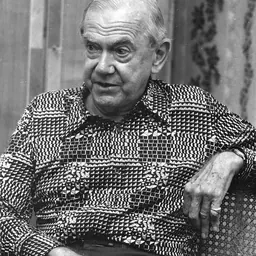

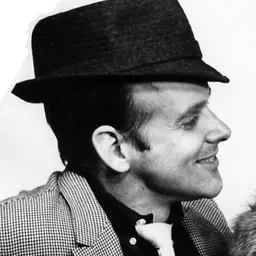
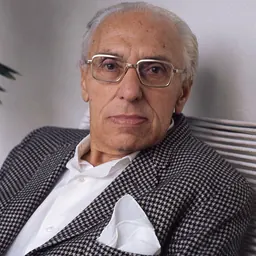
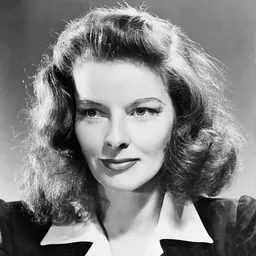
Related people
Same field, nearest in time


Contemporaries
People whose lives overlapped Jay Presson Allen's


Frequently asked questions
Who was Jay Presson Allen?
American screenwriter, producer, playwright (1922-2006)
When was Jay Presson Allen born?
Jay Presson Allen was born on 3 March 1922 in San Angelo.
When did Jay Presson Allen die?
Jay Presson Allen died on 1 May 2006 in New York City.
What was Jay Presson Allen's occupation?
Jay Presson Allen was a screenwriter, film producer, novelist, writer and playwright.
What nationality was Jay Presson Allen?
Jay Presson Allen was American.
Sources & further reading
· Wikipedia: Jay Presson Allen
Cite this page
APA: Biography.guide. (2026). Jay Presson Allen. https://biography.guide/jay-presson-allen/
MLA: "Jay Presson Allen." Biography.guide, https://biography.guide/jay-presson-allen/.
Chicago: "Jay Presson Allen." Biography.guide. https://biography.guide/jay-presson-allen/.
Data last updated: 2026-09-20 · Spot an error? Report a correction.
Page generated 2026-09-27 05:18 UTC