
About Jay Keasling
Born 1964. Jay Keasling is an American biochemist and university teacher, known for Metabolic engineering.
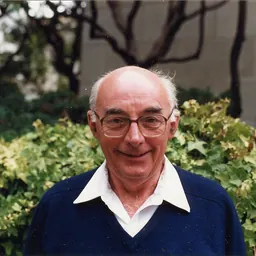
Jay D. Keasling is a professor of chemical engineering and bioengineering at the University of California, Berkeley. He is also associate laboratory director for biosciences at the Lawrence Berkeley National Laboratory and chief executive officer of the Joint BioEnergy Institute. He is considered one of the foremost authorities in synthetic biology, especially in the field of metabolic engineering.
Keasling was elected a member of the National Academy of Engineering in 2010 for developing synthetic biology tools to engineer the antimalarial drug artemisinin.
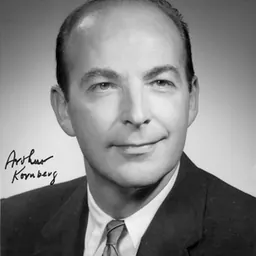
Education Keasling received his bachelor's degree at the University of Nebraska–Lincoln where he was a member of Delta Tau Delta International Fraternity. He went on to complete his Doctor of Philosophy degree at the University of Michigan in 1991 under the supervision of Bernhard Palsson. Keasling performed post-doctoral research with Arthur Kornberg at Stanford University in 1991–1992.
Research Keasling's current research is focused on metabolic engineering (engineering chemistry inside microorganisms) for production of chemicals and new uses of renewable resources, like sugar and cellulosic biomass. Keasling has also worked on genetic tool development (an area now known as synthetic biology). Keasling's laboratory has applied metabolic chemistry to a number of real-world problems including the production of the antimalarial drug artemisinin and drop-in biofuels. Keasling has published over 300 papers in peer-reviewed journals and has over 30 issued patents.
Artemisinin Malaria is a global health problem that threatens 300–500 million people and kills more than one million people annually. The chloroquine-based drugs that were used widely in the past have lost effectiveness because the Plasmodium parasite that causes malaria has become resistant to them. Artemisinin, a sesquiterpene lactone endoperoxide, extracted from Artemisia annua L is highly effective against Plasmodium spp. resistant to other anti-malarial drugs. However, there are several problems with current production methods for artemisinin. First, artemisinin combination therapies (ACTs) are too expensive for people in the developing world to afford. Second, artemisinin is extracted from A. annua, and its yield and consistency depend on climate and the extraction process. While there is a method for chemical synthesis of artemisinin, it is too low yielding and therefore too expensive for use in producing low-cost drugs. Third, although the World Health Organization has recommended that artemisinin be formulated with other active pharmaceutical ingredients in ACTs, many manufacturers are still producing mono-therapies of artemisinin, which increase the chance that Plasmodium spp. will develop resistance to artemisinin.
Keasling's laboratory at the University of California, Berkeley, has engineered both Escherichia coli and Saccharomyces cerevisiae to produce artemisinic acid, a precursor to artemisinin that can be derivatized using established, simple, inexpensive chemistry to form artemisinin or any artemisinin derivative currently used to treat malaria. The microorganisms were engineered with a ten-enzyme biosynthetic pathway using genes from Artemisia annua, Saccharomyces cerevisiae, and Escherichia coli (twelve genes in all) to transform a simple and renewable sugar, like glucose, into the complicated chemical structure of the anti-malarial drug artemisinin. The engineered microorganism is capable of secreting the final product from the cell, thereby purifying it from all other intracellular chemicals and reducing the purification costs and therefore the cost of the final drug. Given the existence of known, relatively high-yielding chemistry for the conversion of artemisinic acid to artemisinin or any other artemisinin derivative, microbially-produced artemisinic acid is a viable, renewable, and scalable source of this potent family of anti-malarial drugs.
A critical element of Keasling's work was the development of genetic tools to aid in the manipulation of microbial metabolism, particularly for low-value products that require high yields from sugar.His laboratory developed single-copy plasmids for the expression of complex metabolic pathways, promoter systems that allow regulated control of transcription consistently in all cells of a culture, mRNA stabilization technologies to regulate the stability of mRNA segments, and a protein engineering approach to attach several enzymes of a metabolic pathway onto a synthetic protein scaffold to increase pathway flux. These and other gene expression tools now enable precise control of the expression of the genes that encode novel metabolic pathways to maximize chemical production, to minimize losses to side products, and minimize the accumulation of toxic intermediates that may poison the microbial host, all of which are important for economical production of this important drug.
Another critical aspect of Keasling's work was discovering the chemistry and enzymes in Artemisia annua responsible for synthesis of artemisinin. These enzymes included the cytochrome P450 that oxidizes amorphadiene to artemisinic acid and the redox partners that transfer reducing equivalents from the enzyme to cofactors. The discovery of these enzymes and their functional expression in both yeast and E. coli, along with the other nine enzymes in the metabolic pathway, allowed production of artemisinic acid by these two microorganisms. S. cerevisiae was chosen for the large-scale production process and was further engineered to improve artemisinic acid production.
Keasling's microbial production process has a number of advantages over extraction from plants. First, microbial synthesis will reduce the cost of artemisinin, the most expensive component of artemisinin-based combination therapies—by as much as tenfold—and therefore make artemisinin-derived anti-malarial drugs more affordable to people in the developing world. Second, weather conditions or political climates that might otherwise affect the yield or cost of the plant-derived version of the drug will not affect the microbial source for the drug. Third, microbial production of artemisinin in large tanks will allow for more careful distribution of artemisinin to legitimate drug manufacturers that formulate artemisinin combination therapies, rather than monotherapies. This will, in turn, slow the development of resistance to this drug. Fourth, severe shortages of plant-derived artemisinin are projected for 2011 and beyond, which will increase the cost of artemisinin combination therapies. Finally, microbially-derived artemisinic acid will enable production of new derivatives of artemisinin that Plasmodium may not be resistant to, thereby extending the time over which artemisinin may be used.
To ensure that the process he developed would benefit people in the developing world, Keasling assembled a unique team consisting of his laboratory at the University of California, Berkeley, Amyris Biotechnologies ( a company founded on this technology) and the Institute for OneWorld Health (a non-profit pharmaceutical company located in San Francisco). In addition to assembling the team, Keasling developed an intellectual property model to ensure that microbially-sourced artemisinin could be offered as inexpensively as possible to people in the developing world: patents granted from his work at UCB are licensed royalty free to Amyris Biotechnologies and the Institute for OneWorld Health for use in producing artemisinin so long as they do not make a profit on artemisinin sold in the developing world. The team was funded in December 2004 by the Bill & Melinda Gates Foundation to develop the microbial production process. The science was completed in December 2007. In 2008, Sanofi-Aventis licensed the technology and worked with Amyris to develop the production process. Sanofi-Aventis has produced 35 tons of artemisinin using Keasling’s microbial production process, which is enough for 70 million treatments. Distribution of artemisinin combination therapies containing the microbially-sourced artemisinin began in August 2014 with 1.7 million treatments shipped to Africa. It is anticipated that 100-150 million treatments will be produced using this technology and shipped annually to Africa, Asia and South America.
Biofuels Renewable fuels are needed for all modes of transportation but most microbially-sourced fuels can be used only as a small fraction of gasoline in conventional spark-ignition engines. Keasling’s laboratory has engineered microorganisms to produce hydrocarbons with similar properties to the fuels now derived from petroleum. These fuels are synthesized from plant-derived sugars, such as cellulose feedstock, which is of little economic value. Consequently, microbes can minimize the carbon footprint by minimizing the energy expenditure in sourcing fuel, such off-shore drilling and hydraulic fracturing.
Keasling and his colleagues demonstrated that Escherichia coli and Saccharomyces cerevisiae can be engineered to produce the fatty acid-based biofuels fatty acid ethyl esters, alkenes, and methyl ketones. As linear hydrocarbons are the key components of diesel, these biologically produced fuels are excellent diesel replacements. However, fuels containing only long, linear, hydrocarbon chains will freeze under cold conditions. To develop fuels suitable for cold applications, Keasling's laboratory engineered E. coli and S. cerevisiae to produce branched and cyclic hydrocarbons using the isoprenoid biosynthetic pathway: isopentanol, a drop-in replacement for gasoline; pinene, a replacement for jet fuel; and bisabolene, a replacement for diesel fuel. Because isoprenoids add a methyl side chain every four carbons in the backbone, fuels made from isoprenoids have very low freeze and cloud points, making them suitable as cold-weather diesels and jet fuels.
One of the biggest challenges in scaling up microbial fermentations is the stability of the microbial strain: the engineered microorganism will attempt to mutate or shed the metabolic pathway, in part because intermediates in the metabolic pathway accumulate and are toxic to the cells. To balance pathway flux and reduce the cost of producing a desired biofuel, Keasling's laboratory developed dynamic regulators to sense the levels of intermediates in the pathway and regulate pathway activity. These regulators stabilized the pathway and the cell and improved biofuel yields making it possible to grow the engineered cells in large-scale fermentation tanks for fuel production.
Many of the best fuels and chemicals are toxic to the producer organism. One way to limit fuel toxicity is to actively pump the fuel from the cell. To identify pumps ideally suited for a particular fuel, Keasling and his colleagues bioprospected environmental microorganisms for many, different, three-component transporters and selected for the pumps most effective for a particular fuel. These transporters allowed E. coli to grow in the presence of the fuels and, as a result, produce more of the target fuel than it would have been able to do so in the absence of the transporter.
The starting materials (generally sugars) are the most significant factor in the biofuel production cost. Cellulose, a potentially low-cost starting material, must be depolymerized into sugars by adding an expensive cocktail of enzymes. One way to reduce this cost is to engineer the fuel-producing microbe to also produce the enzymes to depolymerize cellulose and hemicellulose. Recently, Keasling's laboratory demonstrated that a microorganism could be engineered to synthesize and secrete enzymes to depolymerize cellulose and hemicellulose into sugars and to produce a gasoline replacement (butanol), a diesel-fuel replacement (fatty acid ethyl ester), or a jet fuel replacement (pinene).
As a technological platform, biofuel manufacturing faces huge economic hurdles many of which depend on the market pricing of crude oil and other conventionally sourced fuels. Nonetheless, metabolic engineering is a technology that is becoming increasingly competitive and is expected to have wide-reaching effects by 2020.
Awards Graduation with High Distinction, University of Nebraska–Lincoln, 1986 Regents Scholarship, University of Nebraska–Lincoln, 1982-1986 NIH Postdoctoral Fellowship, Stanford University, 1991-1992 Zeneca Young Faculty Fellowship, Zeneca Ltd., 1992-1997 CAREER Award, National Science Foundation, 1995 Chevron Young Faculty Fellowship, Chevron, 1995 AIChE Award for Chemical Engineering Excellence in Academic Teaching, Northern California Section of the American Institute for Chemical Engineers, 1999 Elected Fellow of the American Institute of Medical and Biological Engineering, 2000 Allan P. Colburn Memorial Lecturer, Department of Chemical Engineering, University of Delaware, 2002 Inaugural Schwartz Lecturer, Department of Chemical Engineering, Johns Hopkins University, 2003 Blue-Green Lecturer, Department of Chemical Engineering, University of Michigan & Department of Chemical Engineering and Materials Sciences, Michigan State University, 2005 Seventh Annual Frontiers of Biotechnology Lecture, Department of Chemical Engineering, Massachusetts Institute of Technology, 2005 Technology Pioneer, World Economic Forum, 2005 Scientist of the Year, Discover magazine, 2006. Eastman Lectureship, Department of Chemical Engineering, Georgia Tech, 2007 Research Project of the Year, Northern California Section of the American Institute for Chemical Engineers, 2007 Elected Fellow of the American Academy for Microbiology, 2007 Professional Progress Award, American Institute for Chemical Engineers, 2007 Truman Lecturer, Sandia National Laboratories, 2007 Visionary Award, Bay Bio, 2007 Sierra Section Recognition for Leadership in the Chemical Engineering Profession, American Institute of Chemical Engineers – Northern California Section, 2008 Patten Distinguished Seminar, Department of Chemical Engineering, University of Colorado, 2008 2008 Britton Chance Distinguished Lecturer, Department of Chemical and Biomolecular Engineering and Institute Medicine and Engineering, University of Pennsylvania, 2008 Chancellor;s Award for Public Service for Research in the Public Interest, University of California, Berkeley, 2009 The Sixteenth F. A. Bourke Distinguished Lecture in Biotechnology, Center for Advanced Biotechnology and Department of Biomedical Engineering, Boston University, 2009 2009 University Lectures in Chemistry, Department of Chemistry, Boston College, 2009 Inaugural Biotech Humanitarian Award, Biotechnology Industry Organization (BIO), 2009 Danckwerts Lectureship, World Congress on Chemical Engineering, 2009 Cox Distinguished Lectureship, Washington University, 2009. Ashland Lectureship, University of Kentucky, 2009 LGBTQ Engineer of the Year, National Organization of Gay and Lesbian Scientists and Technical Professionals, 2010 National Academy of Engineering, 2010 Eyring Lectures in Chemistry and Biochemistry, Arizona State University, 2010 Treat B Johnson Lecture, Department of Chemistry, Yale University, 2010 Division O (Fermentation and Biotechnology) Lectureship, American Society for Microbiology, 2010 Presidential Green Chemistry Challenge Award, United States Environmental Protection Agency, 2010 Kewaunee Lectureship, Pratt School of Engineering, Duke University, 2011 Tetelman Fellowship Lectureship, Jonathan Edwards College, Yale University, 2012 Henry McGee Lecturer, Virginia Commonwealth University, School of Engineering, 2012 Katz Lectureship, Department of Chemical Engineering, University of Michigan, 2012 Heuermann Lecture, Institute of Agriculture and Natural Resources, University of Nebraska–Lincoln, 2012 International Metabolic Engineering Award, Metabolic Engineering Society, 2012 18th Annual Heinz Award for Technology, the Economy and Employment, Heinz Family Foundation, 2012 Marvin J. Johnson Award in Microbial and Biochemical Technology, Division of Biochemical Technology, American Chemical Society, 2013 Promega Biotechnology Research Award, American Society for Microbiology, 2013 George Washington Carver Award for Innovation in Industrial Biotechnology, Biotechnology Industry Organization, 2013 Food, Pharmaceutical and Bioengineering Division Award, Food, Pharmaceutical and Bioengineering Division, American Institute of Chemical Engineers, 2013 Herman S. Block Award Lectureship, Department of Chemistry, University of Chicago, 2014 Arun Guthikonda Memorial Award Lectureship, Department of Chemistry, Columbia University, 2014 Devon Walter Meek Award Lectures, Department of Chemistry, Ohio State University, 2014 Eni Renewable Energy Prize, Eni S.p.A., 2014 Innovator Award – Biosciences, Economist magazine, 2014 National Academy of Inventors, 2014 Innovator of the Year Award, US Department of Energy Office of Technology/National Academy of Inventors, 2025
Companies Keasling is a founder of Amyris (with Vincent Martin, Jack Newman, Neil Renninger and Kinkead Reiling), LS9 (now part of REG with George Church and Chris Sommerville), and Lygos (with Leonard Katz, Clem Fortman, Jeffrey Dietrich and Eric Steen).
Personal life Keasling is originally from Harvard, Nebraska, and is openly gay.
Don’t just read it —
keep it.
Full-length biographies made to live with: read them, listen on the way to work, watch them tonight.
- E-book
- Audio
- Video
Instant download · yours to keep · every purchase keeps this site free
Important facts
People in Jay Keasling's life
Named in this biography and alive at the same time







Related people
Same field, nearest in time
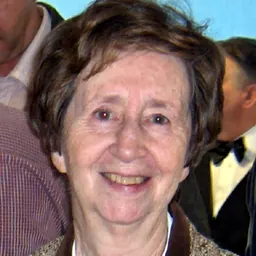
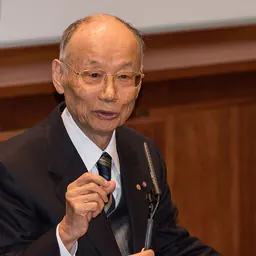
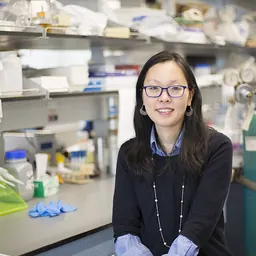
Contemporaries
People whose lives overlapped Jay Keasling's


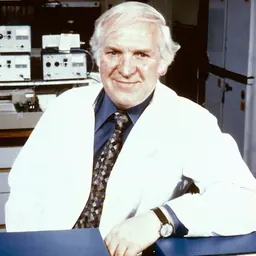
Frequently asked questions
Who is Jay Keasling?
American biologist
When was Jay Keasling born?
Jay Keasling was born in 1964.
What is Jay Keasling's occupation?
Jay Keasling is a biochemist and university teacher.
What is Jay Keasling known for?
Jay Keasling is known for Metabolic engineering.
What nationality is Jay Keasling?
Jay Keasling is American.
Sources & further reading
Cite this page
APA: Biography.guide. (2026). Jay Keasling. https://biography.guide/jay-keasling/
MLA: "Jay Keasling." Biography.guide, https://biography.guide/jay-keasling/.
Chicago: "Jay Keasling." Biography.guide. https://biography.guide/jay-keasling/.
Data last updated: 2026-09-20 · Spot an error? Report a correction.
Page generated 2026-09-27 05:22 UTC