
James Livingston
Commander of the 1st Canadian Regiment of the Continental Army
About James Livingston
Lived 1747 – 1832 (aged 84). James Livingston was an American military personnel.
James Livingston (March 27, 1747 – March 9, 1832), born in New York, was an American Patriot. Livingston was living in the Province of Quebec (as it was known following the French and Indian War) when the American Revolutionary War broke out. He was responsible for raising and leading the 1st Canadian Regiment of the Patriots' Continental Army during the invasion of northeastern Canada, and continued to serve in the war until 1781. He retired to Saratoga, New York, where he served as a state legislator and raised a family of five children.
Early life James Livingston was born March 27, 1747, in Albany, New York, to Johanes "John" Livingston (1709–1791) and Catherine Ten Broeck (1715–1801). His siblings included Margerita Livingston (1742–1820), Dirck Livingston (1744–1784), Janet Livingston (1751–1823), Abraham Livingston (1753–1802), Catherine (née Livingston) Willard (1755–1827), and Maria Livingston (1761–1839).
His paternal grandfather was Robert Livingston the Younger (1663–1725), a nephew of Robert Livingston the Elder. His paternal grandmother, Margareta Schuyler (b. 1682), was the daughter of Pieter Schuyler (1657–1724), the first Mayor of Albany. They were all members of the prominent Livingston family. His maternal grandparents were Dirck Ten Broeck (1686–1751) and Margarita Cuyler (1682–1783). His mother, the great-granddaughter of Dirck Wesselse Ten Broeck (1638–1717), was the sister of General Abraham Ten Broeck (1734–1810), who married Elizabeth Van Rensselaer, and Christina Ten Broeck (1718–1801), who married Philip Livingston (1716–1778), and Sara Ten Broeck, who married Johannes Ten Eyck. Among his many cousins was Dirck Ten Broeck (1765–1832), the Speaker of the New York State Assembly from 1798 to 1800.
Up to, and then also following, the arrival of the American forces at Île aux Noix in early September, Livingston was active in the Chambly area, raising local support for the Americans. On September 15, he reported to Schuyler that militia under his control had cut off Fort Chambly from communication with Montreal, and that Brown and Ethan Allen were raising additional troops and guarding the southern shore of the Saint Lawrence River.
Forces under his command, numbering about 200, participated in the capture of Fort Chambly on October 18, along with militia under Brown's command. On November 20, Montgomery made him a colonel in the Continental Army, and gave him command of the 1st Canadian Regiment, consisting mainly of the troops he had recruited. This regiment then served at the battle of Quebec in December 1775, and the ensuing retreat. They later saw action in the Saratoga campaign, including the relief of the siege of Fort Stanwix in August 1777, both Battles of Saratoga, and the Battle of Rhode Island.
Livingston was in command of Verplanck's Point on the Hudson River in September 1780, when he played a crucial role in the unmasking of Benedict Arnold's treachery. While on guard duty, his troops fired on the British sloop of war Vulture, forcing that vessel to retreat southwards. This ship had brought British Major John André to meet with General Arnold. After being driven off in his approach by water, he attempted to re-approach on land by portaging in civilian clothing. He was captured with incriminating papers in his possession. André was hanged as a spy, and Arnold, knowing that his plot had been discovered, managed to escape to the British lines.
Livingston retired from the Continental Army on January 1, 1781. In recognition of his service, he was granted of land near where Tyre, New York is today. In 1801, Congress awarded him another of land near the modern location of Columbus, Ohio.
Post-war After the war, Livingston settled in Saratoga. From July 1, 1783 until June 30, 1788, he served in the New York State Assembly beginning with the 7th Legislature and continuing through the 8th, 9th, 10th, and finally, the 11th New York State Legislature as a Federalist. He served again from July 1, 1789 until June 30, 1791 during the 13th and 14th Legislatures.
Livingston served as a member of the first Board of Regents of the University of New York from April 13, 1787 until his resignation in 1797.
Death Livingston died in Saratoga, New York, in 1832, at age 85. Together, they had at least two sons and three daughters, including:
Elizabeth Livingston (1773–1818), who married Peter Gerrit Smith (1768–1837), a business partner of John Jacob Astor. Gerrit Smith was their son. James Livingston (1775–1851), who married Patty Martha Griffith Richard Montgomery Livingston (1787–1838), who was named after the general in his memory and who married Sarah Livingston (1792–1873). Edward Chinn Livingston (1783–1843), early settler of Columbus, Ohio, who married Martha Nelson (1785–1855) Margaret Livingston (1785–1871), who married Daniel Cady (1773–1859). Catharine Ten Broeck Livingston (1789–1874), who married Henry Brevoort Henry (1786–1818).
Descendants He was the grandfather, through his eldest daughter Elizabeth, of famed abolitionist Gerrit Smith (1797–1874), who married Ann Carroll Fitzhugh. Smith was a candidate for President of the United States in 1848, 1856, and 1860.
He was also the grandfather, through his daughter Margaret of:
Tryphenia Cady (1804–1891), who married Edward Bayard (1806–1889), a Union College classmate of Eleazar and son of James Bayard, a U.S. Senator. Eleazer Livingston Cady (1806–1826), who died at age 20 just before his graduation from Union College. Harriet Elizabeth Cady (1810–1894), who married Daniel Cady Eaton (1804–1855), son of Amos Eaton and brother of General Amos Beebe Eaton, and her first cousin. Margaret Chinn Cady (1817–1901), who married Duncan McMartin (1817–1894), son of Duncan McMartin Jr., a New York State Senator.
Footnotes
Don’t just read it —
keep it.
Full-length biographies made to live with: read them, listen on the way to work, watch them tonight.
- E-book
- Audio
- Video
Instant download · yours to keep · every purchase keeps this site free
Important facts
People in James Livingston's life
Named in this biography and alive at the same time
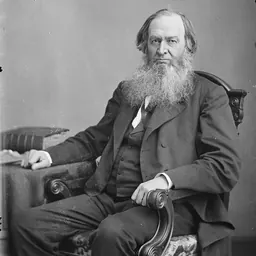


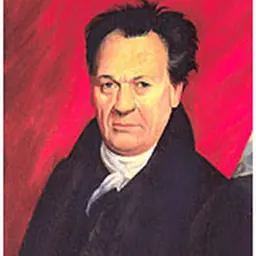

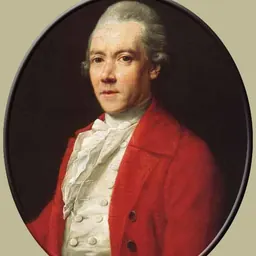

Related people
Same field, nearest in time


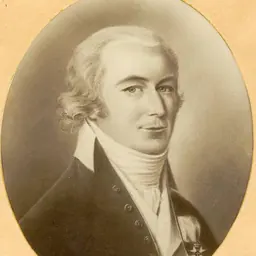

Contemporaries
People whose lives overlapped James Livingston's



Frequently asked questions
Who was James Livingston?
Commander of the 1st Canadian Regiment of the Continental Army
When was James Livingston born?
James Livingston was born on 25 March 1747 in Albany.
When did James Livingston die?
James Livingston died on 9 March 1832 in Saratoga.
What was James Livingston's occupation?
James Livingston was a military personnel.
What nationality was James Livingston?
James Livingston was American.
Sources & further reading
· DBpedia: James Livingston (American Revolution)
Cite this page
APA: Biography.guide. (2026). James Livingston. https://biography.guide/james-livingston/
MLA: "James Livingston." Biography.guide, https://biography.guide/james-livingston/.
Chicago: "James Livingston." Biography.guide. https://biography.guide/james-livingston/.
Data last updated: 2026-09-20 · Spot an error? Report a correction.
Page generated 2026-09-27 05:15 UTC