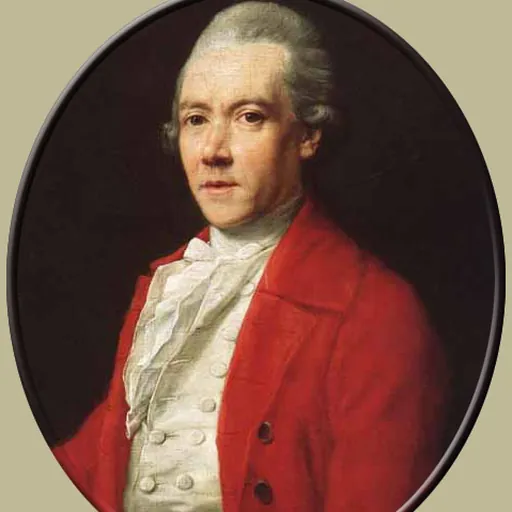
Philip Livingston
American politician, signer of the Declaration of Independence
About Philip Livingston
Lived 1716 – 1778 (aged 62). Philip Livingston was an American and British merchant and politician.
Philip Livingston (January 15, 1716 – June 12, 1778) was an American Founding Father, merchant, politician, and slave trader from New York City. He represented New York at the October 1774 First Continental Congress, where he favored imposing economic sanctions upon Great Britain as a way of pressuring the British Parliament to repeal the Intolerable Acts. Livingston was also a delegate to the Second Continental Congress from 1775 to 1778, and signed the Declaration of Independence.
Early life and education Livingston was born in Albany, New York, on January 15, 1716, the fourth surviving son of Philip Livingston (1686–1749), 2nd Lord of the Manor, and Catherine Van Brugh Livingston, the daughter of New York Mayor Pieter Van Brugh. Along with his brother, William Livingston (1723–1790), he grew up in the Albany area, dividing his time between his father's Albany townhouse and the manor house in Linlithgo, at the junction of the Roeliff Jansen Kill and the Hudson River.
Livingston graduated from Yale College in 1737.
Career Mercantile career Following graduation, he returned to Albany to undergo a mercantile apprenticeship under his father. Through his father's influence, he obtained clerkships in Albany's municipal government.
He purchased a stone townhouse on Duke Street, Manhattan, a forty-acre estate in Brooklyn Heights and personally owned several slaves, one of whom ran away in November 1752; Livingston published advertisements in several city newspapers, including the New-York Mercury and New-York Gazette, offering a reward for his recapture. He also served as an alderman of the East Ward from 1754 to 1762. In 1756 he was president and founding member of the St. Andrew's Society, New York's first benevolent organization, and he founded New York City's first chamber of commerce in 1768. His brother William, a prominent lawyer in New Jersey, was also a delegate to the Continental Congress from 1774 to June 1776. In July 1775, Philip signed the Olive Branch Petition, a final attempt to achieve an understanding with the Crown.
When the British occupied New York City, Philip and his family fled to Kingston, New York, where he maintained another residence. Livingston suffered from dropsy, and his health deteriorated in 1778.
Personal life
On April 14, 1740, he married Christina Ten Broeck (1718–1801), daughter of Dirck Ten Broeck (1686–1751) and Margarita Cuyler (1682–1783). Christina was the sister of Albany Mayor Abraham Ten Broeck and the great-granddaughter of Albany Mayor Dirck Wesselse Ten Broeck (1638–1717), through her maternal grandfather, Wessel Ten Broeck (1664–1747). Together, Philip and Christina had nine children:
Philip Philip Livingston (1741–1787), who married Sara Johnson (1749–1802) Dirck "Richard" Livingston (b. 1743), who died unmarried. Peter Van Brugh Livingston (b. 1751), who died unmarried. When Livingston died, his estate was insufficient to meet his debts, and his executors renounced the administration of the estate. On February 25, 1785, the New York Legislature passed an act, entitled An Act for vesting the Estate of Philip Livingston, late of the City of New-York, Esquire, deceased, in Trustees for the Payment of his Debts, and other Purposes therein mentioned,
Descendants Through his son Philip, the only of his sons to have children, he was the grandfather of Philip Henry Livingston (1769–1831) and Edward Philip Livingston (1779–1843), the Lieutenant Governor of New York.
Legacy Livingston Avenue and the former Philip Livingston Magnet Academy, both in Albany, New York, are named for him.
Don’t just read it —
keep it.
Full-length biographies made to live with: read them, listen on the way to work, watch them tonight.
- E-book
- Audio
- Video
Instant download · yours to keep · every purchase keeps this site free
Important facts
Family & relationships
People in Philip Livingston's life
Named in this biography and alive at the same time


Related people
Same field, nearest in time



Contemporaries
People whose lives overlapped Philip Livingston's


Frequently asked questions
Who was Philip Livingston?
American politician, signer of the Declaration of Independence (1716-1778)
When was Philip Livingston born?
Philip Livingston was born on 15 January 1716 in Albany.
When did Philip Livingston die?
Philip Livingston died on 12 June 1778 in York.
What was Philip Livingston's occupation?
Philip Livingston was a merchant and politician.
What nationality was Philip Livingston?
Philip Livingston was American and British.
Sources & further reading
· Wikipedia: Philip Livingston
Cite this page
APA: Biography.guide. (2026). Philip Livingston. https://biography.guide/philip-livingston-merchant/
MLA: "Philip Livingston." Biography.guide, https://biography.guide/philip-livingston-merchant/.
Chicago: "Philip Livingston." Biography.guide. https://biography.guide/philip-livingston-merchant/.
Data last updated: 2026-09-23 · Spot an error? Report a correction.
Portrait: Wikimedia Commons · author & licence
Page generated 2026-09-27 05:07 UTC