
About James Grainger
Lived 1721 – 1766 (aged 44–45). James Grainger was a poet, translator, writer and physician.
James Grainger (c. 1721–1766) was a Scottish medical doctor, poet and translator. He settled on St. Kitts from 1759 until his death of a fever on 16 December 1766. As a writer, he is best known for his poem The Sugar Cane, which is now valued as an important historical document.
Early years and military career James Grainger was born about 1721 in Duns, Berwickshire, the son of John Grainger, a former tax collector of Cumbrian origin. and was to be republished several times over the next century. Begun while he was still with the army, the work was prefaced with a brief life of the Latin poet and was dedicated to John Bourryau, with whom Grainger was soon to travel to the West Indies. The accompanying voluminous notes that crowd out the text were dismissed in a review by Tobias Smollett as "a huge farrago of learned lumber, jumbled together to very little purpose, seemingly calculated to display the translator's reading", and launched an acrimonious war of words between the former friends.
Colonial career In 1759 Grainger set out for the West Indian island of St. Kitts. On the voyage out he attended Louisa Burt, the widow of William Pym Burt, and married her daughter Daniel Mathew Burt shortly after arriving. By this he joined a family of plantation owners, having married the sister of William Mathew Burt, the island's governor, but did not gain a substantial dowry. he continued his medical practice as well. His georgic poem The Sugar Cane was completed by 1762 and represents all he had learned on that subject, and about his new home in general. As with his translation of Tibullus, at least half of the text was made up of explanatory footnotes. James Boswell recalled in his Life of Johnson that upon a reading of this poem he "had made all the assembled wits burst into a laugh, when, after much blank-verse pomp, the poet began a new paragraph ... 'Now, Muse, let's sing of rats.'" The poem did not appear until 1764, during a brief return visit to London. That year also, Grainger published anonymously his pioneering Essay on the more common West-India Diseases and the remedies which that country itself produces, to which are added some hints on the management of negroes. The only other poem surviving from this period was the ballad of "Bryan and Pereene", based on a local anecdote, which was published in Percy's Reliques.
Don’t just read it —
keep it.
Full-length biographies made to live with: read them, listen on the way to work, watch them tonight.
- E-book
- Audio
- Video
Instant download · yours to keep · every purchase keeps this site free
Important facts
People in James Grainger's life
Named in this biography and alive at the same time
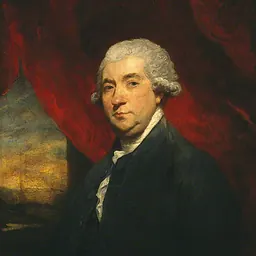

Related people
Same field, nearest in time


Contemporaries
People whose lives overlapped James Grainger's




Frequently asked questions
Who was James Grainger?
British writer
When was James Grainger born?
James Grainger was born in 1721 in Duns.
When did James Grainger die?
James Grainger died in 1766 in Saint Kitts.
What was James Grainger's occupation?
James Grainger was a poet, translator, writer and physician.
Sources & further reading
Cite this page
APA: Biography.guide. (2026). James Grainger. https://biography.guide/james-grainger/
MLA: "James Grainger." Biography.guide, https://biography.guide/james-grainger/.
Chicago: "James Grainger." Biography.guide. https://biography.guide/james-grainger/.
Data last updated: 2026-09-20 · Spot an error? Report a correction.
Page generated 2026-09-27 05:10 UTC