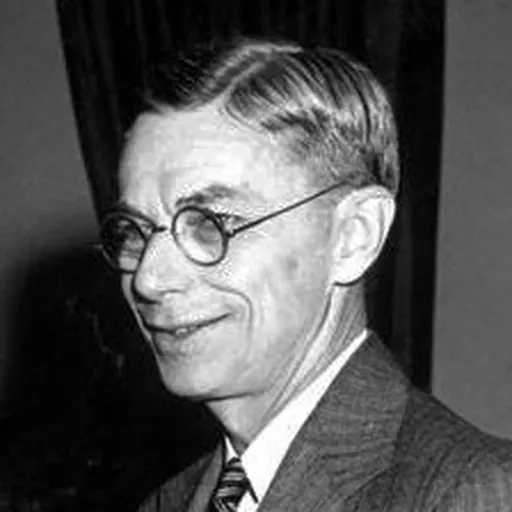
About James Bryant Conant
Lived 1893 – 1978 (aged 84). James Bryant Conant was an American chemist, diplomat, university teacher, politician and ambassador.
Career In 1915, Conant entered into a business partnership with two other Harvard chemistry graduates, Stanley Pennock and Chauncey Loomis, to form the LPC Laboratories. They opened a plant in a one-story building in Queens, New York City, where they manufactured chemicals used by the pharmaceutical industry like benzoic acid that were selling at high prices on account of the interruption of imports from Germany due to World War I. In 1916, the departure of organic chemist Roger Adams created a vacancy at Harvard that was offered to Conant. Since he aspired to an academic career, Conant accepted the offer and returned to Harvard. On November 27, 1916, an explosion killed Pennock and two others and completely destroyed a subsequent and newly opened plant in Newark, New Jersey. A contributing cause was Conant's faulty test procedures.
U.S. Army Following the United States declaration of war on Germany that launched U.S. involvement in World War I, Conant was commissioned as a second lieutenant in the U.S. Army Sanitary Corps on September 22, 1917. He went to the Camp American University, where he worked on the development of poison gases. Initially, his work concentrated on mustard gas, but in May 1918, Conant took charge of a unit concerned with the development of lewisite. He was promoted to major on July 20, 1918. A pilot plant was built, and then a full-scale production plant in Cleveland, but the war ended before lewisite could be used in battle.
Harvard University professor Conant was appointed an assistant professor of chemistry at Harvard in 1919. The following year he became engaged to Richards's daughter, Grace (Patty) Thayer Richards. They were married in the Appleton Chapel at Harvard on April 17, 1920, and had two sons, James Richards Conant, born in May 1923, and Theodore Richards Conant, born in July 1928.
Conant became an associate professor in 1924. In 1925, he visited Germany, then the heart of chemical research, for eight months. He toured the major universities and laboratories there and met many of the leading chemists, including Theodor Curtius, Kazimierz Fajans, Hans Fischer, Arthur Hantzsch, Hans Meerwein, Jakob Meisenheimer, Hermann Staudinger, Adolf Windaus and Karl Ziegler. After Conant returned to the United States, Arthur Amos Noyes made him an attractive offer to move to Caltech. The president of Harvard, Abbott Lawrence Lowell, made a counter offer: immediate promotion to professor, effective September 1, 1927, with a salary of $7,000 (roughly equivalent to as of ) and a grant of $9,000 per annum for research. Conant accepted and stayed at Harvard. In 1929, he became the Sheldon Emery Professor of Organic Chemistry, and then, in 1931, the chairman of the chemistry department. which, together with earlier work, led to what is now known as either the Conant-Finkelstein reaction or more commonly simply the Finkelstein reaction. A recent application of this reaction involved the preparation of an iodinated polyvinyl chloride from regular PVC. A combination of Conant's work on the kinetics of hydrogenation and George Kistiakowsky's work on the enthalpy changes of these reactions supported the later development of the theory of hyperconjugation.
Conant's investigations helped in the development of a more comprehensive understanding of the nature of acids and bases. He investigated the properties of certain acids which were many times stronger than mineral acid solutions in water. Conant christened them "superacids" and laid the foundation for the development of the Hammett acidity function. These investigations used acetic acid as the solvent and demonstrated that sodium acetate behaves as a base under these conditions. This observation is consistent with Brønsted–Lowry acid–base theory published in 1923, but cannot be explained under older Arrhenius theory approaches. Later work with George Wheland and extended by William Kirk McEwen looked at the properties of hydrocarbons as very weak acids, including acetophenone, phenylacetylene, fluorene and diphenylmethane. Conant can be considered alongside Brønsted, Lowry, Lewis, and Hammett as a developer of modern understanding of acids and bases.
Between 1929 and his retirement from chemical research in 1933, Conant published papers in Science, Nature, and the Journal of the American Chemical Society about chlorophyll and its structure. Though the complete structure eluded him, his work did support and contribute to Nobel laureate Hans Fischer's ultimate determination of the structure in 1939. Conant's work on chlorophyll was recognized when he was inducted as a foreign Fellow of the Royal Society on May 2, 1941. He also published three papers describing the polymerization of isoprene to prepare synthetic rubber.
Another line of research involved the biochemistry of the hemoglobin-oxyhemoglobin system. Conant ran a series of experiments with electrochemical oxidation and reduction, following in the footsteps of the famous German chemist and Nobel laureate Fritz Haber. He determined that the iron center in methemoglobin is a ferric (FeIII) center, unlike the ferrous (FeII) center found in normal hemoglobin, and this difference in oxidation state is the cause of methemoglobinemia, a medical condition which causes tissue hypoxia.
Conant wrote a chemistry textbook with his former science teacher Black, entitled Practical Chemistry, which was published in 1920, with a revised edition in 1929. This was superseded in 1937 by their New Practical Chemistry, which in turn had a revised edition in 1946. The text proved a popular one; it was adopted by 75 universities, and Conant received thousands of dollars in royalties. For his accomplishments in chemistry, he was awarded the American Chemical Society's Nichols Medal in 1932, Columbia University's Chandler Medal in 1932, and the American Chemical Society's highest honor, the Priestley Medal, in 1944. He also received the society's Charles Lathrop Parsons Award in 1955, for public service. He was elected a Fellow of the American Academy of Arts and Sciences in 1924, a Member of the National Academy of Sciences in 1929, Notable students of Conant's included Paul Doughty Bartlett, George Wheland, and Frank Westheimer. In 1932 he was also honored by membership of the German Academy of Sciences Leopoldina.
Harvard University president
After some months of lobbying and discussion, Harvard's ruling body, the Harvard Corporation, announced on May 8, 1933, that it had elected Conant as the next President of Harvard. Alfred North Whitehead, Harvard's eminent professor of philosophy disagreed with the decision, declaring, "The Corporation should not have elected a chemist to the Presidency." "But," Corporation member Grenville Clark reminded him, "Eliot was a chemist, and our best president too." "I know," replied Whitehead, "but Eliot was a bad chemist." Clark was very much responsible for Conant's election.
On October 9, 1933, Conant became the President of Harvard University with a low-key installation ceremony in the Faculty Room of University Hall. This set the tone for Conant's presidency as one of informality and reform. At his inauguration, he accepted the charter and seal presented to John Leverett the Younger in 1707, but dropped a number of other customs, including the singing of Gloria Patri and the Latin Oration. While, unlike some other universities, Harvard did not require Greek or Latin for entrance, they were worth double credits towards admission, and students like Conant who had studied Latin were awarded an A.B. degree while those who had not, received an S.B. One of his first efforts at reform was to attempt to abolish this distinction. But in 1937 he wrote:
As a first step to improving the faculty, Conant established a mandatory retirement age of sixty-six, with exceptional faculty members able to remain until age seventy-six. The latter affected two of the university's most eminent scholars, Frank Taussig and George Kittredge, who were persuaded to retire voluntarily rather than under the new rule. His longest and most bitter battle was over tenure reform, shifting to an "up or out" policy, under which scholars who were not promoted were terminated. A small number of extra-departmental positions was set aside for outstanding scholars. This policy led junior faculty to revolt, and nearly resulted in Conant's dismissal in 1938. Conant was fond of saying: "Behold the turtle. It makes progress only when it sticks its neck out."
Honorary degrees recipients pose at the 1947 Harvard University commencement in Cambridge, Massachusetts, June 5, 1947.
Front row (left to right): Robert Oppenheimer, Ernest Cadman Collwell, George C. Marshall, President James B. Conant of Harvard, Omar N. Bradley, T.S. Eliot and James Wadsworth.
Back row (left to right): William Addison Dwiggins, George Henry Chase, William Hodding Carter Jr, Ivor Armstrong Richards, William F Gibbs and Frank L Boyden. alt=Thirteen men pose for a formal picture. Seven are sitting and six standing. There are all wearing either suits or academic gowns, except Bradley, who is in his Army uniform with a garrison cap. Other reforms included the abolition of class rankings and athletic scholarships. Conant added new graduate degrees in education, history of science and public policy, and he introduced the Nieman Fellowship for journalists to study at Harvard, the first of which was awarded in 1939. He supported the "meatballs", as lower class students were called. He instituted the Harvard national scholarships for underprivileged students. At the next meeting of the Corporation in October, Conant persuaded it to reject the offer due to Hanfstaengl's Nazi associations. When the issue of Hanfstaengl's scholarship came up again in 1936, Conant turned the money down a second time. Hanfstaengl's presence on campus prompted a series of anti-Nazi demonstrations, in which a number of Harvard and MIT students were arrested. Conant made a personal plea for clemency that resulted in two women being acquitted, but six men and a woman were sentenced to six months in jail. They were later pardoned by the Governor of Massachusetts, Joseph B. Ely.
When the University of Berlin awarded an honorary degree in 1934 to American legal scholar and Dean of Harvard Law School Roscoe Pound, who had toured Germany earlier that year and made no secret of his admiration for the Nazi regime, Conant refused to order Pound not to accept it, and attended the informal award ceremony at Harvard where Pound was presented with the degree by Hans Luther, the German ambassador to the United States.
What Conant feared most was disruption to Harvard's tercentennial celebrations in 1936, but there was no trouble despite the presence of Franklin D. Roosevelt, the President of the United States, and a Harvard graduate of the class of 1904, whom many fellow Harvard graduates regarded as a socialist and a class traitor. Privately, Conant approved of the New Deal and expressed admiration for Roosevelt's goals. He invited Roosevelt to speak at the tercentennial celebrations. This did not sit well with Lowell, and it was only with difficulty that Lowell was persuaded to be presiding officer at an event at which Roosevelt spoke. The parallels between Roosevelt's New Deal and Conant's advocacy of meritocracy and of education as a means of social mobility did not escape notice. Conant recognized that education in America contributed to social stratification rather than breaking it down, and that educational opportunity needed to be extended to areas where it was deficient, such as rural areas, small towns and inner cities. He advocated for federal interventions, since these areas were often poor and lacking in the funds needed to improve education, and that they were economically and socially stratified with political and taxation structures that reinforced social stratification.
Conant sought to enhance the liberal education of Harvard students. He toyed with the notion of requiring PhD candidates to study an area outside their specialty. One obstacle was the organization of faculty into specialized departments that had little contact with each other. In 1935, he attempted to break down the specialization of academic by creating non-departmental university professorships for scholars whose research crossed the boundaries of multiple disciplines. Undergraduates were required to take general education courses, of which a proportion had to be outside their area of concentration. He took a particular interest in establishing a history of science graduate program and a history of science course for nonscientists.
Although he had no daughters and little interest in the education of women, the exigencies of World War II meant reduced numbers of male students, and this propelled Conant in that direction. In June 1943, he concluded an agreement with Radcliffe College, the women's college associated with Harvard, for Harvard's Faculty of Arts and Sciences to assume responsibility for the instruction of Radcliffe students. Initially there were separate but identical undergraduate courses for Harvard and Radcliffe students, but this gave way to coeducational classes. It was during his presidency that the first class of women were admitted to Harvard Medical School in 1945, and Harvard Law School in 1950.
National Defense Research Committee
Ernest O. Lawrence, Arthur H. Compton, Vannevar Bush, Conant, Karl T. Compton, and Alfred L. Loomis at the University of California, Berkeley in 1940 alt=A group of in suits men sit around, laughing. On the blackboard behind is a discarded plan for assembling a uranium core. In June 1940, with World War II already raging in Europe, Vannevar Bush, the director of the Carnegie Institution of Washington, recruited Conant to the National Defense Research Committee (NDRC), although he remained president of Harvard. Bush envisaged the NDRC as bringing scientists together to "conduct research for the creation and improvement of instrumentalities, methods and materials of warfare." Although the United States had not yet entered the war, Conant was not alone in his conviction that Nazi Germany had to be stopped, and that the United States would inevitably become embroiled in the conflict. The immediate task, as Conant saw it, was therefore to organize American science for war. He became head of the NDRC's Division B, the division responsible for bombs, fuels, gases and chemicals. On June 28, 1941, Roosevelt signed Executive Order 8807, which created the Office of Scientific Research and Development (OSRD), with Bush as its director. Conant succeeded Bush as chairman of the NDRC, which was subsumed into the OSRD. Roger Adams, a contemporary of Conant's at Harvard in the 1910s, succeeded him as head of Division B. Conant became the driving force of the NDRC on personnel and policy matters. The NDRC would work hand in hand with the Army and Navy's research efforts, supplementing rather than supplanting them. It was specifically charged with investigating nuclear fission.
In February 1941, Roosevelt sent Conant to Britain as head of a mission that also included Frederick L. Hovde from Purdue University and Carroll L. Wilson from MIT, to evaluate the research being carried out there and the prospects for cooperation. The 1940 Tizard Mission had revealed that American technology was some years behind that of Britain in many fields, most notably radar, and cooperation was eagerly sought. Conant had lunch with Prime Minister Winston Churchill and Frederick Lindemann, his leading scientific adviser, and an audience with King George VI at Buckingham Palace. At a subsequent meeting, Lindemann told Conant about British progress towards developing an atomic bomb. What most impressed Conant was the British conviction that it was feasible. That the British program was ahead of the American one raised the possibility in Conant's mind that the German nuclear energy project might be even further ahead, as Germany was generally acknowledged to be a world leader in nuclear physics. Later that year, Churchill, as Chancellor of the University of Bristol, conferred an honorary Doctor of Laws degree on Conant in absentia.
Conant subsequently moved to restrict cooperation with Britain on nuclear energy, particularly its post-war aspects, and became involved in heated negotiations with Wallace Akers, the representative of Tube Alloys, the British atomic project. Conant's tough stance, under which the British were excluded except where their assistance was vital, resulted in British retaliation, and a complete breakdown of cooperation. His objections were swept aside by Roosevelt, who brokered the 1943 Quebec Agreement with Churchill, that restored full cooperation. After the Quebec Conference, Churchill visited Conant at Harvard, where Conant returned the 1941 gesture and presented Churchill with an honorary Doctor of Laws degree. After the United States entered the war in December 1941, the OSRD handed the atomic bomb project, better known as the Manhattan Project, over to the Army, with Brigadier General Leslie R. Groves as project director. A meeting that included Conant decided Groves should be answerable to a small committee called the Military Policy Committee, chaired by Bush, with Conant as his alternate. Thus, Conant remained involved in the administration of the Manhattan Project at its highest levels.
In August 1942, Roosevelt appointed Conant to the Rubber Survey Committee. Chaired by Bernard M. Baruch, a trusted adviser and confidant of Roosevelt, the committee was tasked with reviewing the synthetic rubber program. Corporations used patent laws to restrict competition and stifle innovation. When the Japanese occupation of Malaya, North Borneo and Sarawak, followed by the Japanese occupation of the Dutch East Indies, cut off 90 percent of the supply of natural rubber, Conant returned to the United States in February 1957, where he leased an apartment on the Upper East Side in New York City.
Between 1957 and 1965, the Carnegie Corporation of New York gave him over a million dollars to write studies of education. In 1959 he published The American High School Today, better known as the Conant Report. This became a best seller, resulting in Conant's appearance on the cover of Time magazine on September 14, 1959. In it, Conant called for a number of reforms, including the consolidation of high schools into larger bodies that could offer a broader range of curriculum choices. Although it was slammed by critics of the American system, who hoped for a system of education based on the European model, it did lead to a wave of reforms across the country.
His subsequent Slums and Suburbs in 1961 was far more controversial in its treatment of racial issues. Regarding busing as impractical, Conant urged Americans "to accept de facto segregated schools". This did not go over well with civil rights groups, and by 1964 Conant was forced to admit that he had been wrong. In The Education of American Teachers in 1963, Conant found much to criticize about the training of teachers. Most controversial was his defense of the arrangement by which teachers were certified by independent bodies rather than the teacher training colleges.
Presidential Medal of Freedom and other recognition On December 6, 1963, President Lyndon Johnson presented Conant with the Presidential Medal of Freedom, with special distinction. He was selected for the award by President John F. Kennedy, but the ceremony was delayed prior to Kennedy's assassination.
In February 1970, President Richard Nixon presented Conant with the Atomic Pioneers Award from the Atomic Energy Commission. Other awards that Conant received during his long career included being made a Commander of Légion d'honneur by France in 1936 and an Honorary Commander of the Order of the British Empire by Britain in 1948, and he was awarded the Grand Cross of the Order of Merit of the Federal Republic of Germany in 1957. He was also awarded over 50 honorary degrees, and was posthumously inducted into the Alpha Chi Sigma Hall of Fame in 2000. His body was cremated and his ashes interred in the Thayer-Richards family plot at Mount Auburn Cemetery. He was survived by his wife and sons. His papers are in the Harvard University Archives. Among them was a sealed brown Manila envelope that Conant had given the archives in 1951, with instructions that it was to be opened by the president of Harvard in the 21st century. Opened by Harvard's 28th president, Drew Faust, in 2007, it contained a letter in which Conant expressed his hopes and fears for the future. "You will... be in charge of a more prosperous and significant institution than the one over which I have the honor to preside", he wrote. "That [Harvard] will maintain the traditions of academic freedom, of tolerance for heresy, I feel sure."
Legacy Conant is the namesake of James B. Conant High School in Hoffman Estates, Illinois, and James B. Conant Elementary School in Bloomfield Hills, Michigan.
Graduate students Former graduate students of Conant include: Louis Fieser – organic chemist and professor emeritus at Harvard University renowned as the inventor of a militarily effective form of napalm. His award-winning research included work on blood-clotting agents including the first synthesis of vitamin K, synthesis and screening of quinones as antimalarial drugs, work with steroids leading to the synthesis of cortisone, and study of the nature of polycyclic aromatic hydrocarbons. Benjamin S. Garvey – noted chemist at BF Goodrich who worked on the development of synthetic rubber, contributed to understanding of vulcanization, and developed early techniques for small scale evaluation of rubbers. Frank Westheimer – was the Morris Loeb Professor of Chemistry Emeritus at Harvard University.
Don’t just read it —
keep it.
Full-length biographies made to live with: read them, listen on the way to work, watch them tonight.
- E-book
- Audio
- Video
Instant download · yours to keep · every purchase keeps this site free
Important facts
People in James Bryant Conant's life
Named in this biography and alive at the same time

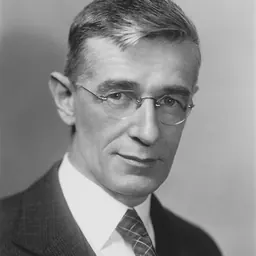





Related people
Same field, nearest in time

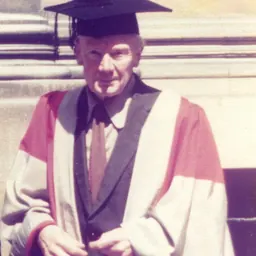
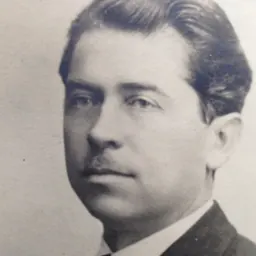

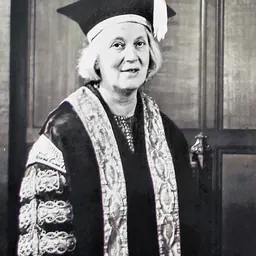
Contemporaries
People whose lives overlapped James Bryant Conant's
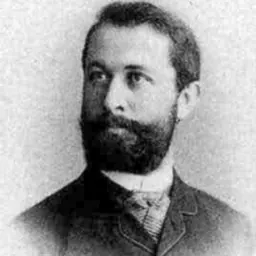

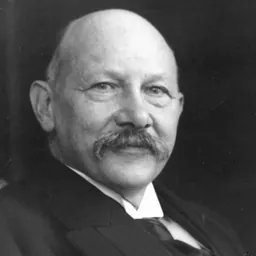
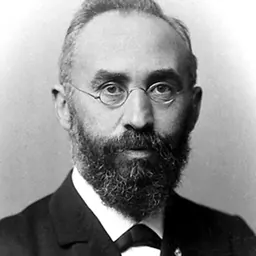

Frequently asked questions
Who was James Bryant Conant?
American chemist (1893–1978)
When was James Bryant Conant born?
James Bryant Conant was born on 26 March 1893 in Dorchester.
When did James Bryant Conant die?
James Bryant Conant died on 11 February 1978 in Hanover (NH).
What was James Bryant Conant's occupation?
James Bryant Conant was a chemist, diplomat, university teacher, politician and ambassador.
What nationality was James Bryant Conant?
James Bryant Conant was American.
Sources & further reading
· Wikipedia: James Bryant Conant
Cite this page
APA: Biography.guide. (2026). James Bryant Conant. https://biography.guide/james-bryant-conant/
MLA: "James Bryant Conant." Biography.guide, https://biography.guide/james-bryant-conant/.
Chicago: "James Bryant Conant." Biography.guide. https://biography.guide/james-bryant-conant/.
Data last updated: 2026-09-20 · Spot an error? Report a correction.
Portrait: Wikimedia Commons · author & licence
Page generated 2026-09-27 04:59 UTC