
James Alms
Royal Navy officer during the War of the Austrian Succession, the Seven Years' War and the American War of Independence
About James Alms
Lived 1728 – 1791 (aged 62). James Alms was a British naval officer.
Captain James Alms (15 July 1728 – 8 June 1791) was an officer of the Royal Navy who served during the War of the Austrian Succession, the Carnatic and Seven Years' War and the American War of Independence. Alms rose to the rank of post-captain in the Royal Navy.
Alms served in the Navy from an early age, seeing his first action in the Mediterranean Sea and off the French coast before getting assigned to the East Indies. He narrowly survived a shipwreck that killed most of his shipmates. He was awarded the rank of lieutenant. After a return to England, he sailed back in the East Indies for service during the early years of the Seven Years' War. Following this, Alms was stationed in the West Indies in acting-command of a frigate. After being involved in a number of important actions in the Caribbean, he returned to Britain after the end of the war, and retired ashore. Alms returned to active service after the outbreak of the American War of Independence. He again went back to the East Indies in command of his own ship. He was in action at most of the engagements between Sir Edward Hughes and the Bailli de Suffren, when he particularly distinguishing himself at the Battle of Providien. Alms retired ashore after the end of the war, and died in 1791.
Family and early life Alms was born in Gosport, Hampshire on 15 July 1728, to John and Mary Alms. His father was said to be a servant of the Duke of Richmond. After a period working in merchant ships, he entered the navy in 1740, joining the 74-gun , and by the age of 14 was rated midshipman and serving as aide de camp to Captain Charles Watson, of the 60-gun in the Mediterranean. He saw action at the Battle of Toulon on 22 February 1744 and was praised by his commander for his actions in the engagement.
Command Alms spent a number of years ashore after this, living with his family at Chichester. Through the interest of George Montagu-Dunk, 2nd Earl of Halifax, he was given command of in the Mediterranean in 1770, commanding her for three years. He became captain regulating the impress service for the Sussex district in 1776, but severe asthma prevented him accepting any more active service until September 1780, when he was appointed to command the 64-gun . He went out to the East Indies again with a squadron under Commodore George Johnstone, becoming involved on the way in the Battle of Porto Praya on 16 April 1781 against the Bailli de Suffren. After arriving at the Cape of Good Hope, Johnstone put Alms in command of the reinforcements and East India ships bound for India. Alms struggled with adverse winds and a high incidence of sickness, eventually forcing him to leave the troopships on the coast of Arabia in order to bring his warships to India in time for the campaigning season.
The British fleet rendezvoused with Sir Edward Hughes at Madras on 11 February 1782, and Alms went on to be involved in a number of indecisive clashes between Hughes and the Bailli de Suffren at Sadras on 17 February, Providien on 12 April, Negapatam on 6 July, and Trincomalee on 3 September 1782. It was at Providien on 12 April 1782 that he particularly distinguished himself.
Battle of Providien On the day of the battle, 12 April 1782, Monmouth was second in line to Sir Edward's flagship. At one point in the action, Alms saw that Suffren had put up his helm with a view of boarding Hughes's ship, and luffed his ship into the "very eye of the wind," threw into the Frenchman's bows a raking broadside, and frustrated the enemy's plan. Subsequently to this manoeuvre, the Monmouth sustained heavy fire from Suffren and his two seconds, which continued until the main and mizzen-masts of the former fell over the side. The British colours had already been twice shot away, but they were now nailed to the stump of the mizzen-mast, with Alms's direction, "never to be struck."
In this engagement, the Monmouth had seven guns dismounted—the wheel twice cleared—and two seamen only, besides the captain, left alive on the quarterdeck. 45 men were killed and 102 wounded. Alms himself received two splinter-wounds in the face, and two musketballs went through his hat. His eldest son, George Pigot, who was serving as lieutenant of the Superb, the flagship of Sir Edward Hughes, died early in the action.
Death Alms's health declined during the winter, and he was forced to go ashore at Madras for several months. This marked the end of his active service, and he returned to England, arriving at Spithead in June 1784. Alms retired to his house at Chichester and died there on 8 June 1791 at the age of 64, survived by his wife and five children. His eldest son on his death was a lieutenant aboard , serving Rear-Admiral Sir Richard King, one of Alms's friends from his days in India. Alms was buried at Chichester Cathedral on 14 June 1791.
Don’t just read it —
keep it.
Full-length biographies made to live with: read them, listen on the way to work, watch them tonight.
- E-book
- Audio
- Video
Instant download · yours to keep · every purchase keeps this site free
Important facts
People in James Alms's life
Named in this biography and alive at the same time

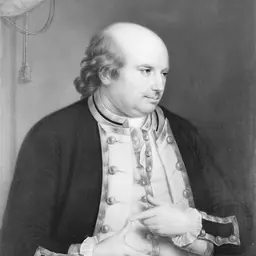
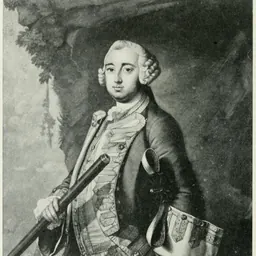
Related people
Same field, nearest in time

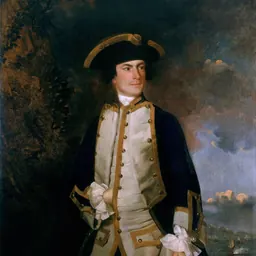
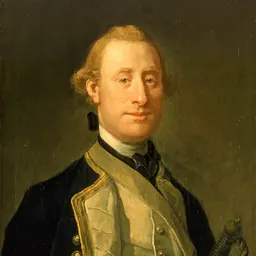


Contemporaries
People whose lives overlapped James Alms's





Frequently asked questions
Who was James Alms?
Royal Navy officer during the War of the Austrian Succession, the Seven Years' War and the American War of Independence
When was James Alms born?
James Alms was born on 15 July 1728 in Gosport.
When did James Alms die?
James Alms died on 8 June 1791 in Chichester.
What was James Alms's occupation?
James Alms was a naval officer.
What nationality was James Alms?
James Alms was British.
Sources & further reading
Cite this page
APA: Biography.guide. (2026). James Alms. https://biography.guide/james-alms/
MLA: "James Alms." Biography.guide, https://biography.guide/james-alms/.
Chicago: "James Alms." Biography.guide. https://biography.guide/james-alms/.
Data last updated: 2026-09-20 · Spot an error? Report a correction.
Page generated 2026-09-27 05:34 UTC