
About Jacques Chailley
Lived 1910 – 1999 (aged 88). Jacques Chailley was a French composer and musicologist.
Jacques Chailley (24 March 1910 – 21 January 1999) was a French musicologist and composer.
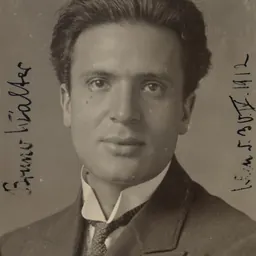
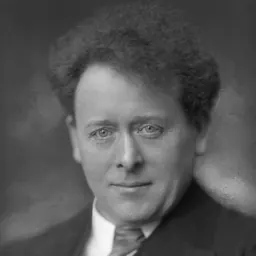
Biography Chailley's mother was the pianist Céliny Chailley-Richez (1884–1973), his father the cellist Marcel Chailley (1881–1936). He also took classes of conducting with Pierre Monteux, Willem Mengelberg and Bruno Walter in Amsterdam, while resident in the Descartes House (1935–1936). In this university, he completed his two theses on music, within the framework of the curriculum of Medieval French literature: L'École musicale de Saint-Martial de Limoges jusqu'à la fin du XIe as well as Chansons de Gautier du Coinci.
It was from this period that his intense musicological production began with works devoted to Medieval music and musical theory and to the evolution of musical languages, to musical notation, as well as to several composers, including Johann Sebastian Bach, Mozart, Schubert, Berlioz, Schumann, Wagner. At the same time, he did not neglect the teaching and popularization works (music history, method of piano reading, guide for young pianists, etc.).
From 1946 to 1961, he directed the choir "L'Alauda". In 1969, he was also appointed the second president of the Consociatio internationalis musicæ sacræ, created in 1963 by Pope Paul VI. Chailley remained in this position until 1974.
In 1952, following the defense of his PhD on L'école musicale de Saint Martial de Limoges and his election as professor at the Sorbonne in the chair of History of music left vacant by Paul-Marie Masson, Chailley took over the Institute of Musicology of the University of Paris, which he transformed in 1969–1970 in the UER (Unité d'enseignement et de recherche, later UFR, Unité de formation et de recherche) of music and musicology of the new Paris-Sorbonne University>. He directed this UER until 1973. He leaves a work of 129 opus numbers.
Controversy Chailley was secretary-general (1937), then assistant director (1941) of the Conservatoire de Paris. who taught at the Sorbonne under the orders of Chailley, mentions in a chapter of the collective book La vie musicale sous Vichy, that in collaboration with Henri Rabaud in 1940, he drew up a list of the Jewish students of the Conservatory of Paris: Gribenski further specifies that the list drawn up by Rabaud and Chailley was not communicated to the Germans, and that the exclusion of Jewish students took place only two years later, under duress, while the Conservatoire was led by Claude Delvincourt.
That a list was used for the exclusion of Jewish students from the Conservatory was challenged by contemporary Jewish witnesses during the symposium where Gribenski first presented the results of his research in 1999. The controversy reappeared in 2011, after the Sorbonne decided to give Chailley's name to an amphitheater (polemic triggered by an article in the weekly Le Canard enchaîné and furthered in a note in Le Nouvel Observateur. )
Michèle Alten has since published an article based on an in-depth study of the archives, which sheds light on the events of 1940. She writes: It is to this inquiry that Gribenski's article seems to refer. Alten further writes that Jewish students of the Conservatoire were excluded from participating in the final examinations in 1942, under pressure from the Vichy government.
Publications Chailley has published many outstanding works, both on Greek and medieval music, on the Passions, the chorales for organ and The Art of Fugue by J. S. Bach, the Carnaval by Schumann, Tristan by Wagner. Worth noting is his interest in the exegesis of the Masonic aspects of The Magic Flute by Mozart, the Winterreise by Schubert and Parsifal by Wagner.
He was also the author of several books on harmony and its history, the question of modality, as well as an important history of multi-volume music and popular works. He also studied musicians of the Middle Ages such as Adam de la Halle, Guillaume de Machaut of whom he prepared the first published transcript of the Messe de Nostre Dame or Gautier de Coincy.
Works (selection) Piano Suite en si majeur (1923) Le Chant de l'Alauda (1932) Suite Le Jardin nuptial (1947) Sonata breve (1965) Ballade romantique (1989) numerous pieces for children (for two and four-hands)
Organ Triptyque (1984–87) L'Annonciation (1984–87) Prélude-Dédicace (1985) Paraphrases liturgiques (1984–87)
Chamber music Minuetto scherzando, for violin and piano (1932) Double cantabile for violin, viola and organ (or piano) (1935) Albenga for violin and piano (1935) Aria, for viola and piano (1936) Deux sonneries en fanfare dans le style du XIIIe siecle, for brass instruments (1936) String quartet (1939) Sonata for viola and piano (1939–41) Suite Enfantine for wind quintet (1976) Sonata for solo violin (1987) Suite a l'ancienne, for flute and harpsichord (1996)
Orchestra Suite sur des airs Scouts, for small orchestra (1929) Symphony in G minor (1942–47) Danses et Conduits – Suite du XIIIe siecle (1947) 2nd Symphonie (1984) Cantabile for strings (1971) Mors est Rolanz for wind instruments (1975) Solmisation for strings (1977)
Singing and piano Song cycle: Le pèlerin d'Assise (1932–42) A ma femme (1949–54) Poèmes sur la mort (1982) 7 Chansons légères (1983) Le Chien à la mandoline (1987) numerous solo songs, including: Le Menuisier du Roi (1945, M. Fombeure) Plainte de Rachel Cantique du soleil (with 4 Ondes Martenot, also for Orchester; 1934)
Choir a cappella L'Arbre de paradis (1933, L. Chancerel) La Tentation de saint Antoine (1936; Instr. ad libitum) Chant de la fidélité (1946) Kyrie des gueux (1946) Missa Solemnis (1947) Aux Morts pour la patrie (1953, V. Hugo) Messe brève de angelis (1955) Messe Orbis factor (1959) Demeure le secret (1962, M. Pol-Fouchet; Doublechoir) Fables de mon jardin (1961, G. Duhamel) numerous Motets, partially with organ zahlreiche Volksliedbearbeitungen
Singing and instruments Exercices de style (1965, Raymond Queneau) 7 Fantaisies for equal voices and piano Les Grandes Heures de Reims (1938; narrator, singing and orchester) Jeanne devant Reims (1941; Choir and orchester) Le Cimetière marin (1980; Choir and orchester)
Oratorio Casa Dei (1991, Y. Hucher) Eloge de la Sagesse (1992)
Operas Pan et la Syrinx (1946) Le Jeu de Robin et Marion (1950) Thyl de Flandre (1949–54)
Ballet La Dame la licorne (1953)
Incidental music Les Perses (1936) Antigone (1939), Agamemnon (1947) La Belle au bois (1951)
Writings Jacques Chailley's musicological work comprises 53 books and 429 diverse articles. Among his main works are: Petite histoire de la chanson populaire française. Paris: Presses Universitaires de France, 1942. 16°, 64 p. Théorie complète de la musique 1er Cycle with Henri Challan, foreword by Claude Delvincourt. Paris: Alphonse Leduc. AL20444, 1947, 95 p. Théorie complète de la musique 2ème Cycle with Henri Challan, foreword by Claude Delvincourt. Paris: Alphonse Leduc. AL20631, 1951, 78 p. Abrégé de la Théorie de la Musique with Henri Challan, foreword by Claude Delvincourt. Paris: Alphonse Leduc. AL20551, 1948. Histoire musicale du Moyen Âge. Paris: Presses Universitaires de France, 1950. 2nd edition: 1969, 336 p. Les notations musicales nouvelles. Paris: Alphonse Leduc, 1950. La musique médiévale. Paris: Éditions du Coudrier, 1951 Précis de musicologie, PUF, 1958, 1984. Traité historique d'analyse musicale. Paris: Alphonse Leduc, 1951, reissued in 1977 under the title Traité historique d'analyse harmonique. L'Imbroglio des modes. Paris: Alphonse Leduc. 4°, 92 p. Reissued in 1977. 40000 ans de musique. Paris: Plon, , 326 p. Reissued in Paris: L'Harmattan, 2000, 328 p. Les Passions de J.S. Bach. Paris: Presses universitaires de France, 1963. 4°, 455 p. 2nd éd. 1984. Cours d'histoire de la musique, préparation aux professorats d'enseignement musical et aux instituts de musicologie... Paris: Alphonse Leduc, 1967. 8°. Numerous reissues.
Éléments de philologie musicale. Paris : Alphonse Leduc, 1985.
Don’t just read it —
keep it.
Full-length biographies made to live with: read them, listen on the way to work, watch them tonight.
- E-book
- Audio
- Video
Instant download · yours to keep · every purchase keeps this site free
Important facts
People in Jacques Chailley's life
Named in this biography and alive at the same time




Related people
Same field, nearest in time



Contemporaries
People whose lives overlapped Jacques Chailley's






Frequently asked questions
Who was Jacques Chailley?
French musicologist and composer (1910–1999)
When was Jacques Chailley born?
Jacques Chailley was born on 24 March 1910 in Paris.
When did Jacques Chailley die?
Jacques Chailley died on 21 January 1999 in Montpellier.
What was Jacques Chailley's occupation?
Jacques Chailley was a composer and musicologist.
What nationality was Jacques Chailley?
Jacques Chailley was French.
Sources & further reading
Cite this page
APA: Biography.guide. (2026). Jacques Chailley. https://biography.guide/jacques-chailley/
MLA: "Jacques Chailley." Biography.guide, https://biography.guide/jacques-chailley/.
Chicago: "Jacques Chailley." Biography.guide. https://biography.guide/jacques-chailley/.
Data last updated: 2026-09-20 · Spot an error? Report a correction.
Page generated 2026-09-27 05:02 UTC