
About Raymond Queneau
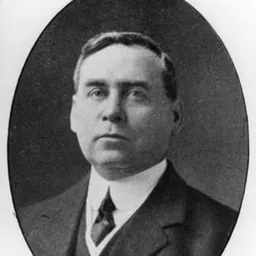
Lived 1903 – 1976 (aged 73). Raymond Queneau was a French poet, playwright, novelist, translator, screenwriter and mathematician.
Raymond Auguste Queneau (; ; 21 February 1903 – 25 October 1976) was a French novelist, poet, critic, editor and co-founder and president of Oulipo , notable for his wit and cynical humour.
Biography Queneau, the only child of Auguste Queneau and Joséphine Mignot, was born at 47, rue Thiers (now Avenue René-Coty), Le Havre, Seine-Inférieure.
From the 1920s through 1930s, Queneau took odd jobs for income, working as a bank teller, tutor, translator and hackwriting in a column entitled, ('Do you know Paris?') for the daily newspaper L'Intransigeant. Kahn was the sister-in-law of André Breton, leader of the surrealist movement.
Queneau was drafted in August 1939 and served in small provincial towns before his promotion to corporal just before demobilisation in 1940.
A later work, (1976), alludes to the mathematician David Hilbert, and attempts to explore the foundations of literature by quasi-mathematical derivations from textual axioms. Queneau claimed this final work would prove "a hidden master of the automaton." Pressed by GF, his interlocutor, Queneau confided that the text "could never appear, but had to hide to glorify that without agency."
One of Queneau's most influential works is Exercises in Style, which tells the simple story of a man's seeing the same stranger twice in one day. It tells that short story in 99 different ways, demonstrating the tremendous variety of styles in which storytelling can take place. An excerpt from this piece was published in 0 to 9 magazine, a 1960s publication which experimented with language and meaning-making.
Queneau's works are published by Gallimard in the collection Bibliothèque de la Pléiade.
Queneau and Surrealists In 1924 Queneau met and briefly joined the Surrealists, but never fully shared their penchants for automatic writing or ultra-left politics. Like many surrealists, he entered psychoanalysis—however, not in order to stimulate his creative abilities, but for personal reasons, as with Leiris, Bataille, and Crevel.
Michel Leiris describes, in Brisées, how he first met Queneau in 1924, while vacationing in Nemours with André Masson, Armand Salacrou and Juan Gris. A common friend, Roland Tual, met Queneau on a train from Le Havre and brought him over. Queneau was a few years younger and felt less accomplished than the other men. He did not make a big impression on the young bohemians. After Queneau came back from the army, around 1926–7, he and Leiris met at the Café Certa, near L'Opera, a Surrealist hang-out. On this occasion, when conversation delved into Eastern philosophy, Queneau's comments showed a quiet superiority and erudite thoughtfulness. Leiris and Queneau became friends later while writing for Bataille's Documents.
Queneau questioned Surrealist support of the USSR in 1926. He remained on cordial terms with André Breton, He defended the Popular Front in France and the Republicans during the Spanish Civil War. has made a CD with the bilingual pun title Eggs Air Sister Steel, based on Exercices de Style (which "Eggs Air Sister Steel" sounds like when spoken). A typographic interpretation of the German version of Exercices de Style, "Stilübungen – visuelle Interpretationen" by the graphic designer Marcus Kraft, was published in 2006. Spanish-Canadian composer José Evangelista wrote the song cycle "Exercises de style" setting texts from Queneau's titular book in 1997.
Don’t just read it —
keep it.
Full-length biographies made to live with: read them, listen on the way to work, watch them tonight.
- E-book
- Audio
- Video
Instant download · yours to keep · every purchase keeps this site free
Important facts
People in Raymond Queneau's life
Named in this biography and alive at the same time




Related people
Same field, nearest in time
Contemporaries
People whose lives overlapped Raymond Queneau's
Frequently asked questions
Who was Raymond Queneau?
French novelist and poet (1903–1976)
When was Raymond Queneau born?
Raymond Queneau was born on 21 February 1903 in Le Havre.
When did Raymond Queneau die?
Raymond Queneau died on 25 October 1976 in 13th arrondissement of Paris.
What was Raymond Queneau's occupation?
Raymond Queneau was a poet, playwright, novelist, translator, screenwriter and mathematician.
What nationality was Raymond Queneau?
Raymond Queneau was French.
Sources & further reading
Cite this page
APA: Biography.guide. (2026). Raymond Queneau. https://biography.guide/raymond-queneau/
MLA: "Raymond Queneau." Biography.guide, https://biography.guide/raymond-queneau/.
Chicago: "Raymond Queneau." Biography.guide. https://biography.guide/raymond-queneau/.
Data last updated: 2026-09-20 · Spot an error? Report a correction.
Page generated 2026-09-27 05:29 UTC