
About Pierre Monteux
Lived 1875 – 1964 (aged 89). Pierre Monteux was a French and American conductor, recording artist and musician.
Monteux during his conductorship of Les Ballets Russes, c. 1912
Pierre Benjamin Monteux (; 4 April 18751 July 1964) was a French (later American) conductor. After violin and viola studies, and a decade as an orchestral player and occasional conductor, he began to receive regular conducting engagements in 1907. He came to prominence when, for Sergei Diaghilev's Ballets Russes company between 1911 and 1914, he conducted the world premieres of Stravinsky's The Rite of Spring and other prominent works including Petrushka, The Nightingale, Ravel's Daphnis et Chloé, and Debussy's Jeux. Thereafter he directed orchestras around the world for more than half a century.
From 1917 to 1919 Monteux was the principal conductor of the French repertoire at the Metropolitan Opera in New York. He conducted the Boston Symphony Orchestra (1919–24), Amsterdam Concertgebouw Orchestra (1924–34), Orchestre Symphonique de Paris (1929–38) and San Francisco Symphony (1936–52). In 1961, aged eighty-six, he accepted the chief conductorship of the London Symphony Orchestra, a post which he held until his death three years later. Although he was known for his performances of the French repertoire, his chief love was the music of German composers, above all Brahms. He disliked recording, finding it incompatible with spontaneity, but he nevertheless made a substantial number of records.
Monteux was well known as a teacher. In 1932 he began a conducting class in Paris, which he developed into a summer school that was later moved to his summer home in Les Baux in the south of France. After moving permanently to the US in 1942 and taking American citizenship, he founded a school for conductors and orchestral musicians in Hancock, Maine. Among his students in France and America who went on to international fame were Lorin Maazel, Igor Markevitch, Neville Marriner, Seiji Ozawa, André Previn and David Zinman. The school in Hancock has continued since Monteux's death.
Life and career
Early years Pierre Monteux was born in Paris, the third son and the fifth of six children of Gustave Élie Monteux, a shoe salesman, and his wife, Clémence Rebecca née Brisac. The Monteux family was descended from Sephardic Jews who settled in the south of France. The Monteux ancestors included at least one rabbi, but Gustave Monteux and his family were not religious. Among Monteux's brothers were Henri, who became an actor, and Paul (1862-1928), who became a conductor of light music under the name Paul Monteux-Brisac. Gustave Monteux was not musical, but his wife was a graduate of the Conservatoire de Musique de Marseille and gave piano lessons. His fellow violin students included George Enescu, Carl Flesch, Fritz Kreisler and Jacques Thibaud. From 1889 to 1892, while still a student, he played in the orchestra of the Folies Bergère;
Monteux as viola player in quartets (2nd from right), with Johannes Wolff, Joseph Hollmann and André Dulaurons, and with Gustave Lyon (Administrateur Délégué of Pleyel) at the rear and Edvard Grieg in front, Salle Pleyel, April 1903. At the age of fifteen, while continuing his violin studies, Monteux took up the viola. He studied privately with Benjamin Godard, with whom he performed in the premiere of Saint-Saëns's Septet, with the composer at the keyboard. On another occasion he was the violist in a private performance of a Brahms quartet given before the composer in Vienna. Monteux recalled Brahms's remark, "It takes the French to play my music properly. The Germans all play it much too heavily." Monteux remained a member of the Geloso Quartet until 1911. asked by Erik Smith if he could write out the parts of the seventeen Beethoven quartets, he replied, "You know, I cannot forget them."
In 1893, when he was eighteen, Monteux married a fellow student, the pianist Victoria Barrière. With her he played the complete Beethoven violin sonatas in public. Neither family approved of the marriage; although the Monteux family were not religious, both they and the Roman Catholic Barrières were doubtful about an inter-religious marriage; furthermore, both families thought the couple too young to marry. While still a student, in 1893 Monteux was successful in the competition for the chair of first viola of the Concerts Colonne, of which he became assistant conductor and choirmaster the following year. He was also employed on a freelance basis at the Opéra-Comique, where he continued to play from time to time for several years; he led the viola section at the 1902 premiere of Pelléas et Mélisande under the baton of André Messager. In 1896 he graduated from the Conservatoire, sharing first prize for violin with Thibaud.
First conducting posts
Monteux's first high-profile conducting experience came in 1895, when he was barely 20 years old. He was a member of the orchestra engaged for a performance of Saint-Saëns's oratorio La lyre et la harpe, to be conducted by the composer. At the last minute Saint-Saëns judged the player engaged for the important and difficult organ part to be inadequate and, as a celebrated virtuoso organist, decided to play it himself. He asked the orchestra if any of them could take over as conductor; there was a chorus of "Oui – Monteux!". With great trepidation, Monteux conducted the orchestra and soloists including the composer, sight-reading the score, and was judged a success.
Monteux's musical career was interrupted in 1896, when he was called up for military service. As a graduate of the Conservatoire, one of France's grandes écoles, he was required to serve only ten months rather than the three years generally required. He later described himself as "the most pitifully inadequate soldier that the 132nd Infantry had ever seen". He had inherited from his mother not only her musical talent but her short and portly build and was physically unsuited to soldiering.
Returning to Paris after discharge, Monteux resumed his career as a violist. Hans Richter invited him to lead the violas in the Bayreuth Festival orchestra, but Monteux could not afford to leave his regular work in Paris. In December 1900 Monteux played the solo viola part in Berlioz's Harold in Italy, rarely heard in Paris at the time, with the Colonne Orchestra conducted by Felix Mottl. In 1902 he secured a junior conducting post at the Dieppe casino, a seasonal appointment for the summer months which brought him into contact with leading musicians from the Paris orchestras and well-known soloists on vacation. As an orchestral conductor he modelled his technique on that of Arthur Nikisch, under whose baton he had played, and who was his ideal conductor.
Ballets Russes For some time, Monteux's marriage had been under strain, exacerbated by his wife's frequent absences on concert tours. The couple were divorced in 1909; Monteux married one of her former pupils, Germaine Benedictus, the following year.
Monteux continued to play in the Concerts Colonne through the first decade of the century. In 1910 Colonne died and was succeeded as principal conductor by Gabriel Pierné. As well as leading the violas, Monteux was assistant conductor, taking charge of early rehearsals and acting as chorus master for choral works.
Petrushka was part of a triple bill, all conducted by Monteux. The other two pieces were Le Spectre de la Rose and Scheherazade, a balletic adaptation of Rimsky-Korsakov's symphonic suite of the same name. The three works were choreographed by Fokine. In later years Monteux disapproved of the appropriation of symphonic music for ballets, but he made an exception for Scheherazade, and, as his biographer John Canarina observes, at that stage in his career his views on the matter carried little weight.
Following the Paris season Diaghilev appointed Monteux principal conductor for a tour of Europe in late 1911 and early 1912. It began with a five-week season at the Royal Opera House in London. The press notices concentrated on the dancers, who included Anna Pavlova as well as the regular stars of the Ballets Russes, but Monteux received some words of praise. The Times commented on the excellent unanimity he secured from the players, apart from "occasional uncertainty in the changes of tempo."
After its season in London the company performed in Vienna, Budapest, Prague and Berlin. and in Vienna the Philharmonic was unequal to the difficulties of the score of Petrushka. The illustrious orchestra revolted at the rehearsal for the first performance, refusing to play for Monteux; only an intervention by Diaghilev restored the rehearsal, by the end of which Monteux was applauded and Stravinsky given an ovation. In the middle of the tour Monteux was briefly summoned back to Paris by the Concerts Colonne, which had the contractual right to recall him, to deputise for Pierné; his own deputy, Désiré-Émile Inghelbrecht, took temporary musical charge of the Ballets Russes.
In May 1912 Diaghilev's company returned to Paris. Monteux was the conductor for the two outstanding works of the season, Vaslav Nijinsky's ballet version of Debussy's Prélude à l'après-midi d'un faune, made with the composer's approval, and Fokine's Daphnis et Chloé to a score commissioned from Ravel. Monteux later recalled "Debussy was behind me when we played L'après midi d'un faune because he did not want anything in his score to be changed on account of the dancing. And when we came to a forte, he said 'Monteux, that is a forte, play forte'. He did not want anything shimmering. And he wanted everything exactly in time".
In February and March 1913 the Ballets Russes presented another London season. As in 1911, the local orchestra engaged was the Beecham Symphony Orchestra. The orchestra's founder, Thomas Beecham, shared the conducting with Monteux. At the end of February Beecham had to take over Petrushka when Monteux suddenly hastened to Paris for four days to be with his wife on the birth of their daughter, Denise.
The Rite of Spring During the 1913 Ballets Russes season in Paris, Monteux conducted two more premieres. The first was Jeux, with music by Debussy and choreography by Nijinsky. The choreography was not liked; Monteux thought it "asinine", The second new work was Stravinsky's The Rite of Spring given under the French title, Le sacre du printemps. Monteux had been appalled when Stravinsky first played the score at the piano: quote | I decided then and there that the symphonies of Beethoven and Brahms were the only music for me, not the music of this crazy Russian. ... My one desire was to flee that room and find a quiet corner in which to rest my aching head. Then [Diaghilev] turned to me and with a smile said, "This is a masterpiece, Monteux, which will completely revolutionize music and make you famous, because you are going to conduct it." And, of course, I did. Together they worked on the score from March to May 1913, and to get the orchestra of the Théâtre des Champs-Élysées to cope with the unfamiliar and difficult music Monteux held seventeen rehearsals, an unusually large number. Monteux's real attitude to the score is unclear. In his old age he told a biographer, "I did not like Le Sacre then. I have conducted it fifty times since. I do not like it now." However, he told his wife in 1963 that the Rite was "now fifty years old, and I do not think it has aged at all. I had pleasure in conducting the fiftieth anniversary of Le Sacre this spring". Dancers in Nikolai Roerich's costumes for The Rite of Spring: "knock-kneed and long-haired Lolitas jumping up and down" The dress rehearsal, with Debussy, Ravel, other musicians and critics among those present, passed without incident. However, the following evening the premiere provoked something approaching a riot, with loud verbal abuse of the work, counter-shouts from supporters, and fisticuffs breaking out. Monteux pressed on, continuing to conduct the orchestra regardless of the turmoil behind him. The extensive press coverage of the incident made Monteux "at age thirty-eight, truly a famous conductor". The company presented the Rite during its London season a few weeks later. The Times reported that although there was "something like a hostile reception" at the first London performance, the final performance in the season "was received with scarcely a sign of opposition". Before the 1913 London performances, Monteux challenged Diaghilev's authority by declaring that he, not the impresario, was the composer's representative in matters related to The Rite of Spring.
Monteux believed that most of the anger aroused by the work was due not to the music but to Nijinsky's choreography, described by Stravinsky as "knock-kneed and long-haired Lolitas jumping up and down". With the composer's agreement Monteux presented a concert performance in Paris in April 1914. Saint-Saëns, who was present, declared Stravinsky mad and left in a rage, but he was almost alone in his dislike. At the end Stravinsky was carried shoulder-high from the theatre after what he described as "the most beautiful performance that I have had of the Sacre du printemps". That performance was part of a series of "Concerts Monteux", presented between February and April 1914, in which Monteux conducted the orchestra of the Théâtre des Champs-Élysées in a wide range of symphonic and concertante works, including the concert premiere of the orchestral version of Ravel's Valses nobles et sentimentales. His last notable engagement before the outbreak of war was as conductor of the premiere of Stravinsky's opera The Nightingale at the Palais Garnier. with which he saw action in the trenches at Verdun, Soissons and the Argonne. He later described much of this period as one of "filth and boredom", although he formed a scratch band to divert his fellow soldiers. After just over two years on active service he was released from military duties after Diaghilev prevailed on the French government to second Monteux to conduct the Ballets Russes on a North American tour. He trained the orchestra to a high standard; according to the critic Neville Cardus, Monteux's musicianship "made the Boston Symphony Orchestra the most refined and musical in the world."
Monteux regularly introduced new compositions in Boston, often works by American, English and French composers. He was proud of the number of novelties presented in his years at Boston, and expressed pleasure that his successors continued the practice. He was dismayed when it was announced that his contract would not be renewed after 1924. The official explanation was that the orchestra's policy had always been to appoint conductors for no more than five years. They were unable to marry until 1928, when Germaine Monteux finally agreed to a divorce.
Amsterdam and Paris
In 1924, Monteux began a ten-year association with the Concertgebouw Orchestra of Amsterdam, serving as "first conductor" ("eerste dirigent") alongside Willem Mengelberg, its long-serving chief conductor. The two musicians liked and respected one another, despite the difference in their approach to music-making: Monteux was scrupulous in his adherence to a composer's score and straightforward in his performances, while Mengelberg was well known for his virtuoso, sometimes wilful, interpretations and his cavalier attitude to the score ("Ve vill make some changements", as an English player quoted him). Their preferred repertoire overlapped in some of the classics, but Mengelberg had his own favourites from Bach's St. Matthew Passion to Mahler symphonies, and was happy to leave Debussy and Stravinsky to Monteux. Where their choices coincided, as in Beethoven, Brahms and Richard Strauss, Mengelberg was generous in giving Monteux at least his fair share of them.
While in Amsterdam Monteux conducted a number of operas, including Pelléas et Mélisande (its Dutch premiere), Carmen, Les Contes d'Hoffmann, a Lully and Ravel double bill of Acis et Galatée and L'Heure espagnole, Gluck's Iphigénie en Tauride (also brought to the Paris Opéra) and Verdi's Falstaff. Toscanini had been invited to conduct the last of these, but he told the promoters that Monteux was his dearest colleague and the best conductor for Falstaff.
During the first eight years of his association with the Concertgebouw, Monteux conducted between fifty and sixty concerts each season. In his final two years with the orchestra other conductors, notably the rising young Dutchman Eduard van Beinum, were allocated concerts that would previously have been given to Monteux, who amicably withdrew from his position in Amsterdam in 1934. He returned many times as a guest conductor. whereby any contracted orchestral player was at liberty, if a better engagement became available, to send a deputy to a rehearsal or even to a concert. In most other major cities in Europe and America this practice either had never existed or had been eradicated. Alongside the opera orchestras, four other Paris orchestras were competing for players. In 1928 the arts patron the Princesse de Polignac combined with the fashion designer Coco Chanel to propose a new orchestra, well enough paid to keep its players from taking conflicting engagements. The following year Cortot invited Monteux to become the orchestra's artistic director and principal conductor. Ansermet, its initial musical director, was not pleased at being supplanted by a conductor of whom he was reportedly "ragingly jealous", but the composer Darius Milhaud commented on how much better the orchestra played for Monteux "since Ansermet has been sent back to his Swiss pastures". He conducted it until 1938, premiering many pieces, including Prokofiev's Third Symphony in 1929. The orchestra made European tours in 1930 and 1931, receiving enthusiastic receptions in the Netherlands and Germany. In Berlin the audience could not contain its applause until the end of the Symphonie fantastique, and in Monteux's words "went wild" after the slow movement, the "Scène aux champs". He approved of spontaneous applause, unlike Artur Schnabel, Sir Henry Wood and Leopold Stokowski, who did all they could to stamp out the practice of clapping between movements.
After 1931 the OSP suffered the effects of the Great Depression; much of its funding ceased, and the orchestra reformed itself into a co-operative, pooling such meagre profits as it made. To give the players some extra work Monteux started a series of conducting classes in 1932. From 1936 he held the classes at his summer home in Les Baux in Provence, the forerunner of the school he later set up in the US.
San Francisco and the Monteux School Monteux first conducted the San Francisco Symphony Orchestra (SFSO) in 1931, and in 1935 at the age of 60 he was offered the chief conductorship. He was doubtful about accepting, both on personal and on professional grounds. He did not want to leave the OSP, his wife did not want to live on the west coast of America, and the orchestra was so low in funds that it had been forced to cancel an entire season in 1934. Like most orchestras the SFSO had been badly hit financially by the Depression, and it suffered the further difficulty that many of its former players had left for better-paid jobs in Hollywood studios. That problem was exacerbated by the insistence of the Musicians' Union that only local players could be recruited. Monteux nevertheless accepted the appointment. The SFSO concert season was never longer than five months a year, which enabled him to continue working with the OSP, and allowed him to conduct the inaugural concert of the NBC Symphony Orchestra on 13 November 1937. In The New York Times Olin Downes wrote that the new orchestra was "of very high rank" and that the broadcast concert had displayed Monteux "at the height of his powers."
The Times said of Monteux's time in San Francisco that it had "incalculable effect on American musical culture", and gave him "the opportunity to expand his already substantial repertory, and by gradual, natural processes to deepen his understanding of his art." but his choice of modern works nevertheless drew occasional complaints from conservative-minded members of the San Francisco audience. Among guest conductors with the SFSO during Monteux's years were John Barbirolli, Beecham, Otto Klemperer, Stokowski and Stravinsky. Soloists included the pianists George Gershwin, Rachmaninoff, Arthur Rubinstein and Schnabel, the violinists Jascha Heifetz, Yehudi Menuhin and the young Isaac Stern, and singers such as Kirsten Flagstad and Alexander Kipnis. Almost all his seventeen San Francisco seasons concluded with Beethoven's Ninth Symphony. Monteux's SFSO studio recordings were mainly made in the cavernous acoustics of War Memorial Opera House (without an audience) with the music transmitted over telephone wires to a Los Angeles studio and recorded on film there. Confined to the US for the years of the Second World War, in 1942 Monteux took American citizenship. In addition to his classes in Paris and Les Baux in the 1930s he had given private lessons to Igor Markevitch; later private students included André Previn, Seiji Ozawa, José Serebrier and Robert Shaw. Previn called him "the kindest, wisest man I can remember, and there was nothing about conducting he didn't know." Monteux's best-known undertaking as a teacher was the Pierre Monteux School for conductors and orchestral musicians, held each summer at his home in Hancock, Maine from 1943 onwards. Internationally known alumni of the school include Leon Fleisher, Erich Kunzel, Lorin Maazel, Neville Marriner, Hugh Wolff and David Zinman. Other Monteux students included John Canarina, whose 2003 biography was the first full-length study of the conductor in English, Charles Bruck, one of Monteux's first pupils in Paris, who became music director of the school in Hancock after Monteux's death,
Monteux appeared as guest conductor with many orchestras; he commented in 1955, "I regret they don't have symphony orchestras all over the world so I could see Burma and Samarkand". His successor with the Boston Symphony Orchestra, Serge Koussevitzky, invited many guest conductors during his twenty-five years in charge; Monteux was never among them, probably, in Canarina's view, because of Koussevitzky's jealousy. In 1949 Koussevitzky was succeeded by Charles Munch, whose early career had been boosted by an invitation from Monteux to conduct the Orchestre Symphonique de Paris in 1933. Munch invited Monteux to Boston as a guest conductor in the 1951 season. The engagement was greeted with enthusiasm by the critics and the public, and Munch invited Monteux to join him the following year in heading the orchestra's first European tour. The high point of the tour was a performance under Monteux of The Rite of Spring at the Théâtre des Champs-Elysées, in the presence of the composer. Monteux returned annually to Boston every year until his death. He briefly reappeared on the podium at the War Memorial Opera House within a year, as co-conductor of the Boston Symphony Orchestra's coast-to-coast American tour, at Munch's invitation. Almost all the members of the SFSO were in the audience, and joined in the ovation given to their former chief.
After an absence of thirty-four years, Monteux was invited to conduct at the Metropolitan Opera in New York in 1953. The opera chosen was Faust, which he had conducted at his debut at the house in 1917. The production had what Canarina calls "a stellar cast" headed by Jussi Björling, Victoria de los Ángeles, Nicola Rossi-Lemeni and Robert Merrill, but the critics, including Virgil Thomson and Irving Kolodin, reserved their highest praise for Monteux's conducting. Between 1953 and 1956 Monteux returned to the Met for Pelléas et Mélisande, Carmen, Manon, Orfeo ed Euridice, The Tales of Hoffmann and Samson et Dalila. The Met at that time typecast conductors according to their nationality, In a letter of April 1914 Stravinsky wrote "everyone can appreciate your zeal and your probity in regard to the contemporary works of various tendencies that you have had occasion to defend."
Monteux's biographer Jean-Philippe Mousnier analysed a representative sample of Monteux's programmes for more than 300 concerts. The symphonies played most frequently were César Franck's D minor Symphony, the Symphonie fantastique, Beethoven's Seventh, Tchaikovsky's Fifth and Sixth, and the first two symphonies of Brahms. Works by Richard Strauss featured almost as often as those of Debussy, and Wagner's Prelude and "Liebestod" from Tristan und Isolde as often as The Rite of Spring.
Recordings
Monteux made a large number of recordings throughout his career. His first recording was as a violist in "Plus blanche que la blanche hermine" from Les Huguenots by Meyerbeer in 1903 for Pathé with the tenor Albert Vaguet. It is possible that Monteux played in the Colonne Orchestra's 20 early cylinders recorded around 1906–07. His recording debut as a conductor was the first of his five recordings of The Rite of Spring, issued in 1929, with the OSP, judged by Canarina to be indifferently played; recordings by Monteux of music by Ravel and Berlioz made in 1930 and 1931, Canarina believes, were more impressive. Stravinsky, who also recorded The Rite in 1929, was furious that Monteux had made a rival recording; he made vitriolic comments privately, and for some time his relations with Monteux remained cool.
Monteux's final studio recordings were with the London Symphony Orchestra in works by Ravel at the end of February 1964. In the course of his career he recorded works by more than fifty composers. In Monteux's lifetime it was rare for record companies to issue recordings of live concerts, although he would much have preferred it, he said, "if one could record in one take in normal concert-hall conditions". It has been argued that these reveal even more than his studio recordings "a conductor at once passionate, disciplined, and tasteful; one who was sometimes more vibrant than the Monteux captured in the studio, and yet, like that studio conductor, a cultivated musician possessing an extraordinary ear for balance, a keen sense of style and a sure grasp of shape and line."
Many of Monteux's recordings have remained in the catalogues for decades, notably his RCA Victor recordings with the Boston Symphony and Chicago Symphony orchestras; Decca recordings with the Vienna Philharmonic; and Decca and Philips recordings with the LSO. He can be heard rehearsing in the original LP issues of Beethoven's Eroica Symphony with the Concertgebouw Orchestra (Philips 835132 AY) and Beethoven's 9th with the London Symphony (Westminster, WST 234). and Dukas' L'Apprenti sorcier with the London Symphony Orchestra in an "unshowy, deeply satisfying humane way".
Notes and references
Don’t just read it —
keep it.
Full-length biographies made to live with: read them, listen on the way to work, watch them tonight.
- E-book
- Audio
- Video
Instant download · yours to keep · every purchase keeps this site free
Important facts
People in Pierre Monteux's life
Named in this biography and alive at the same time


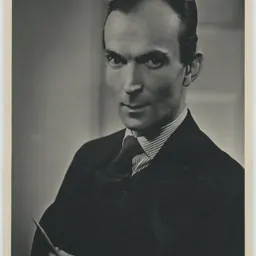
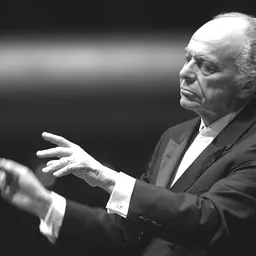



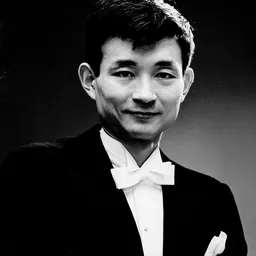
Related people
Same field, nearest in time

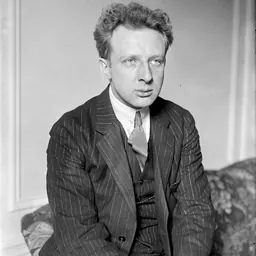

Contemporaries
People whose lives overlapped Pierre Monteux's


Frequently asked questions
Who was Pierre Monteux?
French conductor (1875-1964)
When was Pierre Monteux born?
Pierre Monteux was born on 4 April 1875 in Paris.
When did Pierre Monteux die?
Pierre Monteux died on 1 July 1964 in Hancock.
What was Pierre Monteux's occupation?
Pierre Monteux was a conductor, recording artist and musician.
What nationality was Pierre Monteux?
Pierre Monteux was French and American.
Sources & further reading
Cite this page
APA: Biography.guide. (2026). Pierre Monteux. https://biography.guide/pierre-monteux/
MLA: "Pierre Monteux." Biography.guide, https://biography.guide/pierre-monteux/.
Chicago: "Pierre Monteux." Biography.guide. https://biography.guide/pierre-monteux/.
Data last updated: 2026-09-20 · Spot an error? Report a correction.
Page generated 2026-09-27 05:26 UTC