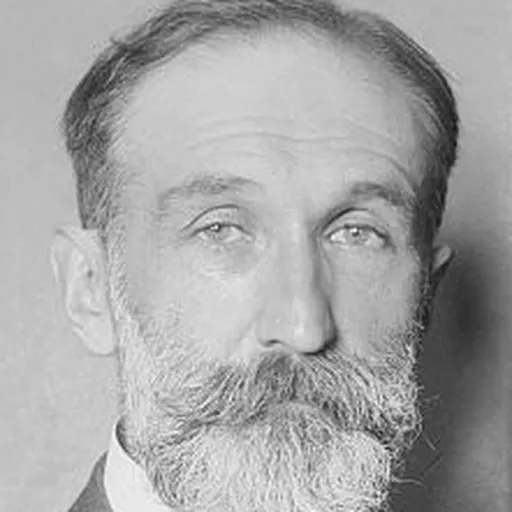
About Henri Rabaud
Lived 1873 – 1949 (aged 75). Henri Rabaud was a French composer and conductor.
Henri Benjamin Rabaud (10 November 187311 September 1949) was a French conductor, composer and teacher, who held important posts in the French musical establishment and upheld mainly conservative trends in French music in the first half of the twentieth century.
Born in Paris into a musical family, Rabaud was a successful composer, conductor and academic, composer of several well-received works for the opera house and concert hall, conductor of the Paris Opéra and the Boston Symphony Orchestra, and, for more than twenty years, director of the Paris Conservatoire.
Life and career Early years Rabaud was born in the 8th arrondissement of Paris on 10 November 1873, the son of Hippolyte François Rabaud and his wife Juliette, van Steenkiste. Hippolyte was a leading cellist, a professor at the Paris Conservatoire; his wife was a professional singer. She used her family's stage name, Dorus, familiar from the previous generation which included her father Louis Dorus, a celebrated flautist, and her aunt, Julie Dorus-Gras, a singer who starred at the Paris Opéra and Covent Garden, creating roles in operas by Berlioz, Meyerbeer, Auber and Halévy.
After schooling at the Lycée Condorcet, Rabaud entered the Conservatoire in 1893, studying with Antonin Taudon (harmony) and André Gedalge and Jules Massenet (composition). In 1894 his cantata Daphne won him the Prix de Rome, which gave him a well-subsidised three-year period of study, two-thirds of which were spent at the French Academy in Rome, based at the Villa Medici. There he came to admire the operas of Verdi, Mascagni and Puccini. In July 1901 Rabaud married Marguerite Mathilde Mascart.
Rabaud's mystical oratorio Job (1900) enjoyed considerable success, and among his operas ("Marouf, the Cobbler of Cairo") (1914), based on the Thousand and One Nights, was particularly popular. In 1918, in which year he was elected to the Académie française, Rabaud was appointed musical director of the Boston Symphony Orchestra. He left after a single season, declining a further year's appointment, as he wished to devote more time to composition. He was succeeded in Boston by Monteux, and returned to Paris.
Paris Conservatoire Following the retirement of Gabriel Fauré as director of the Conservatoire in 1920, Rabaud was appointed as his successor. Although he revered Fauré and admired his music – he made the standard orchestral arrangement of Fauré's Dolly Suite in 1906 – he differed greatly from his predecessor in his musical outlook. Fauré, on being appointed in 1905, had radically changed the administration and curriculum, introducing compositions by the most modern composers, taboo under his predecessors. Rabaud did not share Fauré's progressive views, declaring "modernism is the enemy". Other students during Rabaud's tenure included Jehan Alain, Jean Casadesus, Annie d'Arco, Maurice Duruflé, Henri Dutilleux, Maurice Gendron, Monique Haas, André Navarra and Paul Tortelier.
Rabaud's staff included Paul Dukas, Henri Büsser and Jean Roger-Ducasse (composition), Henri Dallier (harmony), Marcel Dupré (organ), Marguerite Long (piano), Marcel Moyse (flute), Claire Croiza (singing) and Louis Laloy (music history). but fearful that the Nazis would close the Conservatoire if he did not comply, he collaborated with the occupying authorities to the extent of supplying details of staff, and later of students, who were Jews or of Jewish family. Among the faculty members dismissed by the Vichy government on racial grounds was Bloch, whom Messaien succeeded as professor of harmony.
Rabaud retired from the Conservatoire in 1941 and retired to Neuilly-sur-Seine, where he died on 11 September 1949, at the age of 75.
Compositions Rabaud's cantata Daphné won the Premier Grand Prix de Rome in 1894. His opéra comique Mârouf, savetier du Caire combines the Wagnerian and the exotic. He wrote other operas, including L'appel de la mer based on J. M. Synge's Riders to the Sea, as well as incidental music and film scores, such as the 1925 score for Joueur d'échecs (Chess Player).
Orchestral music by Rabaud includes a Divertissement on Russian songs, an Eglogue, a Virgilian poem for orchestra, as well as the symphonic poem La procession nocturne, his best known orchestral work, still occasionally revived and recorded. He also wrote music for chorus and orchestra and two symphonies.
His chamber music includes several works for cello and piano as well as a Solo de concours for clarinet and piano — a competition piece written in 1901 for Conservatoire contests.
Partial list of works Source: Grove's Dictionary of Music and Musicians. Stage La Fille de Roland. Opera (1904) Mârouf, savetier du Caire Op. 14. Opera (1914) L'Appel de la mer. Opera, 1924 (based on Riders to the Sea by John Millington Synge) Rolande et le mauvais garçon. Opéra en 5 actes (1934)
Voice with orchestra Job Op. 9. Oratorio (1900)
Orchestra Divertissement sur des chansons russes Op. 2 (1899) Procession nocturne. "Symphonic poem after Nicolas Lenau" Op. 6 (1899) Eglogue. Poème virgilien Op. 7 (1899) Orchestration of Fauré's Dolly Suite (1906) Prélude et Toccata for piano and orchestra Symphony No. 1 in D minor Op. 1 (1893) Symphony No. 2 in E minor Op. 5 (1899)
Chamber music String Quartet Op. 3 (1898) Andante et Scherzo for flute, violin and piano Op. 8 (1899) Solo de Concours pour Clarinet et Piano Op. 10 (1901)
Other Incidental music for 'The Merchant of Venice', 1917 based on works by William Byrd, Giles Farnaby and others
Notes, references and sources
Don’t just read it —
keep it.
Full-length biographies made to live with: read them, listen on the way to work, watch them tonight.
- E-book
- Audio
- Video
Instant download · yours to keep · every purchase keeps this site free
Important facts
People in Henri Rabaud's life
Named in this biography and alive at the same time
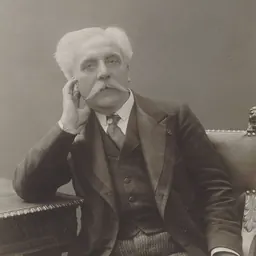
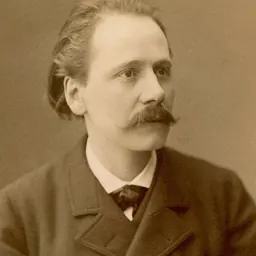
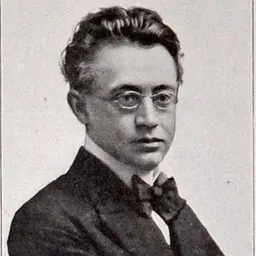

Related people
Same field, nearest in time




Contemporaries
People whose lives overlapped Henri Rabaud's


Frequently asked questions
Who was Henri Rabaud?
French composer (1873-1949)
When was Henri Rabaud born?
Henri Rabaud was born on 10 November 1873 in 8th arrondissement of Paris, Paris.
When did Henri Rabaud die?
Henri Rabaud died on 11 September 1949 in Paris.
What was Henri Rabaud's occupation?
Henri Rabaud was a composer and conductor.
What nationality was Henri Rabaud?
Henri Rabaud was French.
Sources & further reading
Cite this page
APA: Biography.guide. (2026). Henri Rabaud. https://biography.guide/henri-rabaud/
MLA: "Henri Rabaud." Biography.guide, https://biography.guide/henri-rabaud/.
Chicago: "Henri Rabaud." Biography.guide. https://biography.guide/henri-rabaud/.
Data last updated: 2026-09-21 · Spot an error? Report a correction.
Portrait: Wikimedia Commons · author & licence
Page generated 2026-09-27 05:00 UTC