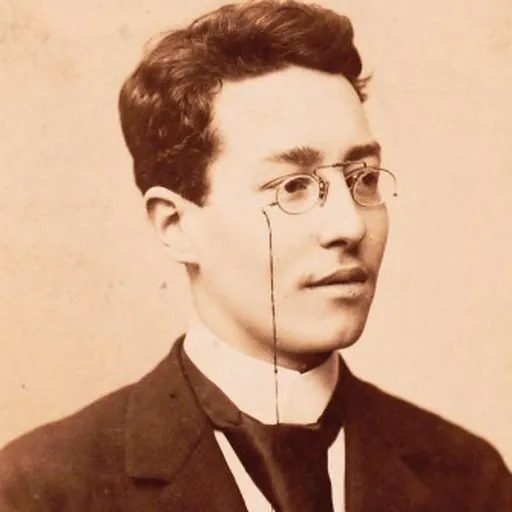
About Henri Büsser
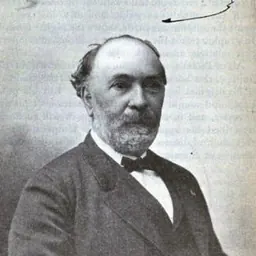
Lived 1872 – 1973 (aged 101). Henri Büsser was a French composer, organist, musicologist, music educator, university teacher and conductor.
Paul Henri Büsser (16 January 1872 – 30 December 1973) was a French classical composer, organist, conductor and teacher. Among his teachers were César Franck, Charles Gounod and Jules Massenet. In addition to his own compositions Büsser edited and orchestrated a wide range of music – mostly but not exclusively French – dating from the 17th to the 20th centuries. He was at various times in his career the conductor of the Paris Opéra and the Opéra-Comique, and professor of composition at the Conservatoire de Paris.
Life and career Büsser was born in Toulouse of partly German ancestry. He was the son of an organist, Fritz Büsser (1846–1879), and sang as a boy in the choir of Toulouse Cathedral under before entering the École Niedermeyer de Paris in 1885 to study with Alexandre Georges. He entered the Conservatoire de Paris in 1889, studying organ with César Franck and composition with Ernest Guiraud, Charles Gounod and Jules Massenet. He took the second prize in the 1892 Prix de Rome competition. In that year, through the influence of Gounod, he was appointed organist of Saint-Cloud, near Paris, a post he held for 30 years. but Büsser soon mastered the work and the composer inscribed a score of the opera to him "with the grateful friendship of Claude Debussy". He later asked Büsser to orchestrate his Petite Suite.
In 1904 he began teaching at the Conservatoire, and in 1905 he succeeded Paul Taffanel as conductor at the Opéra. He reconstructed Adolphe Adam's original 1841 ballet score for a 1924 revival of Giselle at the Opéra. In 1931 he was promoted to professor of composition at the Conservatoire. The breadth of his musical sympathies and his concern for historical as well as modern music were reflected in the title of his memoirs, De Pelléas aux Indes galantes (1955). His arrangements include many of works by French composers, such as Lully as well as Rameau, and later ones including Berlioz, Franck, Bizet and Fauré, as well as works by Mozart, Schubert and Verdi.
According to Grove's Dictionary of Music and Musicians, Büsser's music for the concert hall is "firmly rooted in the French 19th-century tradition" of Gounod and Saint-Saëns, but in his best known music, written for the theatre, Wagner's influence is strong, as, to a lesser degree, is that of Debussy.
Late in his life Büsser was made a Grand Officier of the Légion d'honneur. At the age of 86 he married a retired opera singer, Yvonne Gall. He died in Paris just short of his 102nd birthday.
Works Opera Hélène, before 1890, incomplete Les Accordailles, 1890, unperformed Jane Grey, 1891 Les Marivaudages, 1891, unperformed Daphnis et Chloé, 1897 Le Miracle de perles, 1898, unperformed Blanc et noir, 1900 Colomba, 1921 Les Noces corinthiennes, 1922 La Pie borgne, 1927 Rhapsodie arménienne, 1930 Le Carrosse du Saint-Sacrement, 1948 Roxelane, 1948 Diafoirus 60, 1963 La Vénus d'ille, 1964
Ballet La Ronde des saisons , 1905 (Paris Opera, choreography by Joseph Hansen)
Incidental music Appassionato, 1910 Les Trois sultanes, 1923 Manon, 1925 Histoire de France, 1929
Chamber music Petite suite for flute and piano, Op. 12 Pièce for trombone and piano, Op. 33 Appassionato for viola and piano, Op. 34, 1910 Prelude et scherzo for flute and piano, Op. 35 Morceau de concert (Concert Piece in D) for horn and piano, Op. 39 Variations for trumpet in C or Bb (or cornet) and piano, Op. 53, c. 1914 (Concours du Conservatoire National de Musique Paris) Églogue for oboe and piano, Op. 63 (Concours du Conservatoire National de Musique de Paris) Cantecor for horn and piano, Op. 77 Catalane sur des airs populaires for viola and orchestra or piano, Op. 78, 1926 Rhapsodie arménienne for viola and piano, Op. 81, 1930 Andalucia sur des thèmes andalous for flute and piano, Op. 86 (Concours du Conservatoire National de Musique Paris) Aragon sur des airs populaires d' Espagne for clarinet and piano, Op. 91, c. 1934 La Chasse de Saint Hubert for horn and piano, Op. 99, c. 1937
Writings De Pelléas aux Indes galantes—De la flûte au tambour (memoires), 1955
Don’t just read it —
keep it.
Full-length biographies made to live with: read them, listen on the way to work, watch them tonight.
- E-book
- Audio
- Video
Instant download · yours to keep · every purchase keeps this site free
Important facts
People in Henri Büsser's life
Named in this biography and alive at the same time



Related people
Same field, nearest in time


Contemporaries
People whose lives overlapped Henri Büsser's



Frequently asked questions
Who was Henri Büsser?
French composer and conductor (1872—1973)
When was Henri Büsser born?
Henri Büsser was born on 16 January 1872 in Toulouse.
When did Henri Büsser die?
Henri Büsser died on 30 December 1973 in 16th arrondissement of Paris.
What was Henri Büsser's occupation?
Henri Büsser was a composer, organist, musicologist, music educator, university teacher and conductor.
What nationality was Henri Büsser?
Henri Büsser was French.
Sources & further reading
Cite this page
APA: Biography.guide. (2026). Henri Büsser. https://biography.guide/henri-busser/
MLA: "Henri Büsser." Biography.guide, https://biography.guide/henri-busser/.
Chicago: "Henri Büsser." Biography.guide. https://biography.guide/henri-busser/.
Data last updated: 2026-09-24 · Spot an error? Report a correction.
Portrait: Wikimedia Commons · author & licence
Page generated 2026-09-27 05:09 UTC