
About Jacques Cambry
Lived 1749 – 1807 (aged 58). Jacques Cambry was a French writer, historian, anthropologist and official.
Jacques Cambry (2 October 1749 – 31 December 1807) was a Breton writer and expert in Celtic France. An early proponent of what came to be called Celtomania, he was the founder of the Celtic Academy, the forerunner of the Societé des Antiquaires de France. In addition, he is still honored as the "inventor" of the Oise département and praised for his contributions to the regional Breton identity as well as the national identity of post-Revolutionary France.
Biography Cambry, the son of a naval engineer, was born in Lorient, Brittany. He embraced the French Revolution, and was appointed to various governmental positions, including district attorney for the Lorient commune in 1792. In 1794 he became Commissioner for Science and Arts and embarked upon a journey in Brittany to visit the depots of confiscated nobility properties and the monasteries, which he published a report about in 1799. In 1799 he was appointed administrator of the Department of the Seine. On 2 March 1800, he was installed as prefect of the newly established département the Oise by Napoleon, and engaged himself deeply not just in administrative but also in cultural, archeological, and historical matters; when he left office, on 16 May 1802, he had given the new département a sense of unity and had convinced its inhabitants that they had a history they should be proud of. He was the first president of the académie celtique which he cofounded in 1804 with the philologist Éloi Johanneau and the diplomat Michel-Ange Mangourit. The académie held its inaugural session on 30 March 1805 and subsequently reinvented itself as the Société des Antiquaires. He remained president until his death in 1807. Considered a true Enlightenment man, he is praised as well for his service to the national construction of France. as well as foreshadowing the movement in the nineteenth century that came to be known as Celtomania. It contains an early description of the Finistère département in Brittany, and was "hugely influential," and the book's heavily romantic and idealized description of, for instance, the Pointe du Raz became the inspiration for other writers describing the place in the following years. The book likewise greatly promoted travel to the area. While the book was originally intended as little more than an inventory of art objects that had escaped vandalism, it became much more than that; French historian Alain Corbin qualified Cambry's prose as an "emotional mapping of the sea-shore" and refers to Cambry's jubilant evocations of moments of sublimity as "in the manner of Ossian's disciples."
His Monumens celtiques, ou recherches sur le culte des pierres (1805) is especially notable as an important work on Celtic monuments and megaliths in France and on druidism in general; Cambry dedicated the book to Napoleon, and "promoted a nationalist view of Breton megalithic monuments."
Cambry also wrote on art, and published an essay on the painter Nicolas Poussin.
As the former administrator of the Seine, he submitted a proposal to turn the quarries of Montmartre into a cemetery, a plan which was never executed. His 1799 Rapport sur les sépultures accompanied the design by architect Jacques Molinos, and was inspired by an essay competition proposed a few years before by the National Institute of Sciences and Arts on how to deal with burial in post-Revolutionary France. The cemetery was designed as a circle, with a central temple containing a crematorium and a repository for urns.
List of Publications Traces du Magnétisme. The Hague: 1784. Contes et proverbes, suivis d'une notice sur les troubadours. Amsterdam: 1784 (repr. 1787). Small collection of anecdotes drawn from Claude Fauchet, Étienne Pasquier, Nostradamus, Jean-Baptiste de La Curne de Sainte-Palaye, and others. Promenades d'Automne en Angleterre. 1787. Catalogue des objets échappés au vandalisme. 1795. Description du département de l'Oise en deux volumes. Imprimerie de P. Didot L'ainé, an XI. 1803. Monumens celtiques, ou recherches sur le culte des pierres, Précédées d'une Notice sur les Celtes et sur les Druites, et suivies d'Étymologies celtiques, Paris: chez Mad. Johanneau, Libraire, Palais du Tribunat, an XIII 1805.
Don’t just read it —
keep it.
Full-length biographies made to live with: read them, listen on the way to work, watch them tonight.
- E-book
- Audio
- Video
Instant download · yours to keep · every purchase keeps this site free
Important facts
People in Jacques Cambry's life
Named in this biography and alive at the same time
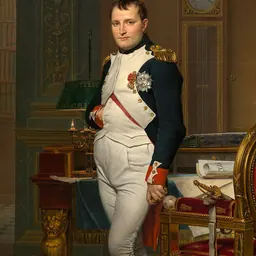



Related people
Same field, nearest in time
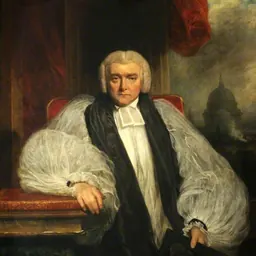


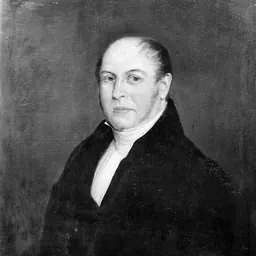
Contemporaries
People whose lives overlapped Jacques Cambry's



Frequently asked questions
Who was Jacques Cambry?
Breton writer and expert in Celtic France
When was Jacques Cambry born?
Jacques Cambry was born on 2 October 1749 in Lorient.
When did Jacques Cambry die?
Jacques Cambry died on 31 December 1807 in former 1st arrondissement of Paris.
What was Jacques Cambry's occupation?
Jacques Cambry was a writer, historian, anthropologist and official.
What nationality was Jacques Cambry?
Jacques Cambry was French.
Sources & further reading
Cite this page
APA: Biography.guide. (2026). Jacques Cambry. https://biography.guide/jacques-cambry/
MLA: "Jacques Cambry." Biography.guide, https://biography.guide/jacques-cambry/.
Chicago: "Jacques Cambry." Biography.guide. https://biography.guide/jacques-cambry/.
Data last updated: 2026-09-26 · Spot an error? Report a correction.
Page generated 2026-09-27 05:14 UTC