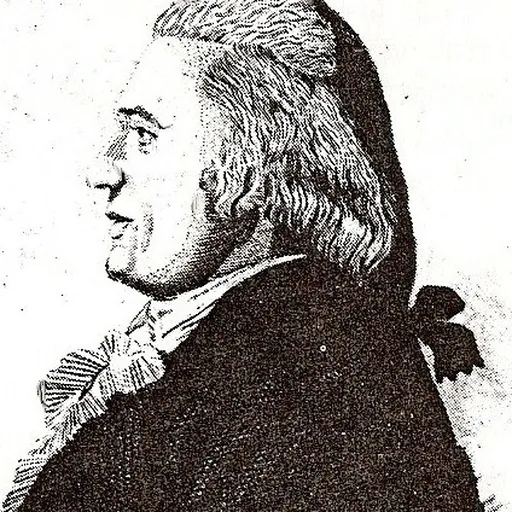
About Jacques Brival
Lived 1751 – 1817 (aged 66). Jacques Brival was a French politician and jurist.
Jacques Brival (14 February 1751 – 8 October 1820) was a French magistrate, politician, regicide, and Revolutionary deputy. A Jacobin and Montagnard, he held multiple legislative and judicial posts during the French Revolution, the Directory, and the Empire, before dying in exile under the Bourbon Restoration.
Early life
Born in Saint-Hilaire-Peyroux into an affluent family of judicial officers, Brival was the son of Joseph Brival, royal advocate and prosecutor in Tulle. His family possessed the fifth-largest fortune of the local présidial magistracy by 1769. Appointed king’s prosecutor in the bailliage of Tulle in 1776, he married Eulalie-Dieudonné de Burel in 1784, whose dowry stemmed from her father’s service in the Saint-Domingue militia.
By the 1780s, Brival cautiously supported provincial resistance to the crown's reforms, advocating procedural respect for the Parliament of Bordeaux. Though he initially remained distant from radical agitation, he actively supported electoral campaigns for the Estates-General of 1789. In this phase, he revealed himself as a moderate revolutionary with strong local loyalties. He corresponded regularly with his constituents, donating part of his salary to Tulle’s poor. He opposed military deployments to the colonies before deliberation by the colonial committee and drew analogies between the slave uprising in Saint-Domingue and the Storming of the Bastille, anticipating a revolutionary alliance between white and Black Jacobins. He denounced refractory priests and proposed melting royal statues for armaments. He coined the phrase “dagger knights” (chevaliers du poignard) for courtiers suspected of royalist conspiracy. He opposed the indictment of Jean-Paul Marat and celebrated the proscription of the Girondins after the Insurrection of 31 May – 2 June 1793.
Representative on Mission
Brival served on missions across Corrèze, Saône-et-Loire, Haute-Vienne, and Vienne from June 1793. Initially aligned with hardline policies, he later moderated, releasing prisoners during Pluviôse Year II. This shift drew hostility from local Jacobins and Montagnards, culminating in his recall in Ventôse. His conflict reflected broader factional rifts between Indulgents and Hébertists.
In Paris, he contributed to early civil code discussions and served briefly as Convention secretary. On 9 Thermidor (27 July 1794), he signed the decree of accusation against Maximilien Robespierre and his allies, boasting of the act that same night—only to be expelled from the Jacobin Club for opportunism.
Thermidorian Reaction and Directory
Brival participated in purging local administrations in Loiret, Loir-et-Cher, and Indre-et-Loire in mid-1794, but governed with restraint. In January 1795, he declared to the Convention that “after felling the tree, one must uproot its poisonous roots”—referring to remaining members of the House of Bourbon.
He supported the recall of Talleyrand and entered the Council of Ancients in Vendémiaire Year IV (October 1795). In 1797, he endorsed the Coup of 18 Fructidor, advocating deportation of royalist deputies. He joined the Council of Five Hundred in April 1798 but played a minor role. In 1799, he opposed prosecution of the ousted Directors after the Coup of 30 Prairial Year VII. Suffering mental decline, he died in Konstanz in 1820.
Personal Life and Wealth
A Freemason since the Ancien Régime, Brival was affiliated with the lodge L’Amitié in Limoges. By the Convention’s own reckoning, he declared a personal fortune of 200,000 livres. He held multiple estates in Corrèze and acquired several biens nationaux, including the Carmes convent, which he later sold to the département.
Family
Brival’s uncle, , was constitutional Bishop of Tulle (1791–1793), a former Jesuit. Through his half-brother, he was also related to Louise du Plantadis, daughter of Lieutenant-General Étienne du Plantadis.
Don’t just read it —
keep it.
Full-length biographies made to live with: read them, listen on the way to work, watch them tonight.
- E-book
- Audio
- Video
Instant download · yours to keep · every purchase keeps this site free
Important facts
People in Jacques Brival's life
Named in this biography and alive at the same time
Related people
Same field, nearest in time



Contemporaries
People whose lives overlapped Jacques Brival's





Frequently asked questions
Who was Jacques Brival?
French politician (1751-1817)
When was Jacques Brival born?
Jacques Brival was born on 14 February 1751 in Tulle.
When did Jacques Brival die?
Jacques Brival died on 1 July 1817 in Constance.
What was Jacques Brival's occupation?
Jacques Brival was a politician and jurist.
What nationality was Jacques Brival?
Jacques Brival was French.
Sources & further reading
Cite this page
APA: Biography.guide. (2026). Jacques Brival. https://biography.guide/jacques-brival/
MLA: "Jacques Brival." Biography.guide, https://biography.guide/jacques-brival/.
Chicago: "Jacques Brival." Biography.guide. https://biography.guide/jacques-brival/.
Data last updated: 2026-09-23 · Spot an error? Report a correction.
Portrait: Wikimedia Commons · author & licence
Page generated 2026-09-27 05:06 UTC