
About Jack Ashley, Baron Ashley of Stoke
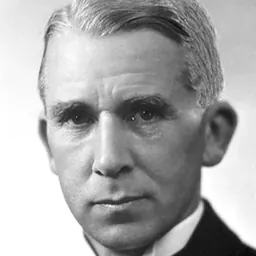
Lived 1922 – 2012 (aged 89). Jack Ashley, Baron Ashley of Stoke was a British politician and television producer.
Jack Ashley, Baron Ashley of Stoke (6 December 1922 – 20 April 2012) was a British politician. He was a Labour Member of Parliament in the House of Commons for Stoke-on-Trent South for 26 years, from 1966 to 1992, and subsequently sat in the House of Lords. He was a long-term campaigner for disabled people.
Early life and education John Ashley was born in Widnes, Lancashire, on 6 December 1922. He left school at 14 to work in the chemical process industry. He described the event as "rather like being struck by lightning". He initially thought that he should resign his seat, but instead undertook a course in lip-reading. He returned to the House of Commons, the United Kingdom's first totally deaf MP, reportedly a world first for an elected assembly. Later, he used a palantype transcription system developed by Alan Newell, Andrew Downton and others at the University of Southampton – this allowed a palantype secretary seated in the public gallery to type what was being said in real time and Ashley could read the transcribed English text from a discreetly-placed monitor at his seat.
The first known use of the term "domestic violence" in a modern context, meaning violence in the home, was by Ashley in an address to Parliament in 1973 in which he noted the pioneering work of campaigner Erin Pizzey, founder of the first domestic violence shelter. The term previously referred primarily to civil unrest, violence from within a country as opposed to violence perpetrated by a foreign power.
Disability campaigner He became a tireless campaigner for disabled people, especially those who were deaf or blind, and won broad cross-party sympathy, support and respect in parliament for his approach. In 1972, he sponsored the pivotal motion in the House of Commons making a distinction between legal and moral obligation. The success of this enabled The Sunday Times to continue its moral campaign for improved compensation for children disabled by thalidomide even while the parents' legal case was still technically in the courts. His Labour colleague Alf Morris (later Lord Morris of Manchester) was also a supporter. The editor of The Sunday Times, Harold Evans, later wrote in Good Times, Bad Times how Ashley selflessly gave up writing his autobiography so as to concentrate on the thalidomide campaign. He also campaigned for compensation for vaccine damage and for damage caused by the arthritis drug Opren. He became a Member of the Order of the Companions of Honour in the 1975 New Year Honours, and joined the Privy Council in 1979.
He also received a Doctor of Humane Letters from the Gallaudet University, the world's only university for the deaf, in 1975 for his efforts on behalf of deaf and hard-of-hearing persons.
Ashley's ability to follow the proceedings of the House of Commons helped inspire the development of live captioning on television to benefit the deaf and hard-of-hearing. He had the ability to read the output from the stenographers who were reporting the debates. When Ashley visited the BBC's Ceefax department around 1975, this ability gave one of the staff the idea of commissioning a Southampton University doctoral student to develop a computer programme that would convert stenographic output to normal printed text as subtitles to television programmes. Later, Ashley also used the technique to follow parliamentary debates on a small monitor .
Ashley received an Honorary Doctorate from Heriot-Watt University in 1979.
In 1986, Ashley and his wife founded the charity Defeating Deafness, now known as Deafness Research UK. He retired from the House of Commons at the 1992 general election and was created a life peer as Baron Ashley of Stoke, of Widnes in the County of Cheshire on 10 July 1992.
He received a cochlear implant in 1993 which restored much of his hearing.
He was the subject of This Is Your Life in October 1974 when he was surprised by Eamonn Andrews while playing badminton in the back garden of his home in Epsom.
Personal life Ashley married Pauline Kay Crispin (1932–2003) in 1951; she died aged 70 in Surrey. They had three daughters, including journalist Jackie Ashley. His son-in-law was television presenter Andrew Marr through Marr's marriage to Jackie.
Ashley contracted pneumonia, and died at Epsom Hospital in Surrey on 20 April 2012, at the age of 89.
Don’t just read it —
keep it.
Full-length biographies made to live with: read them, listen on the way to work, watch them tonight.
- E-book
- Audio
- Video
Instant download · yours to keep · every purchase keeps this site free
Important facts
Family & relationships
People in Jack Ashley, Baron Ashley of Stoke's life
Named in this biography and alive at the same time





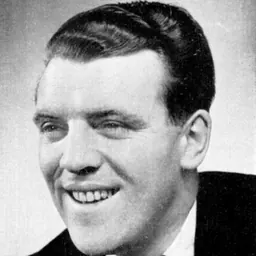


Related people
Same field, nearest in time





Contemporaries
People whose lives overlapped Jack Ashley, Baron Ashley of Stoke's

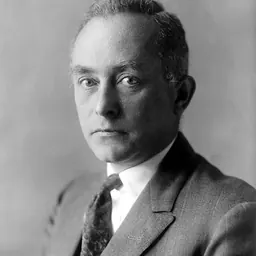
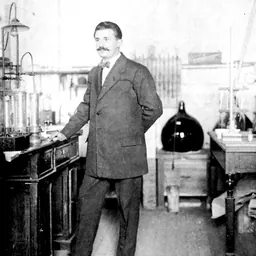
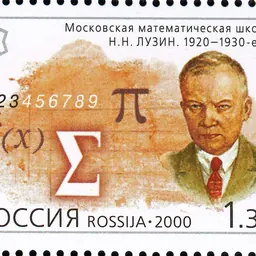
Frequently asked questions
Who was Jack Ashley, Baron Ashley of Stoke?
British politician (1922-2012)
When was Jack Ashley, Baron Ashley of Stoke born?
Jack Ashley, Baron Ashley of Stoke was born on 6 December 1922 in Widnes.
When did Jack Ashley, Baron Ashley of Stoke die?
Jack Ashley, Baron Ashley of Stoke died on 20 April 2012.
What was Jack Ashley, Baron Ashley of Stoke's occupation?
Jack Ashley, Baron Ashley of Stoke was a politician and television producer.
What nationality was Jack Ashley, Baron Ashley of Stoke?
Jack Ashley, Baron Ashley of Stoke was British.
Sources & further reading
· Wikipedia: Jack Ashley, Baron Ashley of Stoke
· DBpedia: Jack Ashley, Baron Ashley of Stoke
Cite this page
APA: Biography.guide. (2026). Jack Ashley, Baron Ashley of Stoke. https://biography.guide/jack-ashley-baron-ashley-of-stoke/
MLA: "Jack Ashley, Baron Ashley of Stoke." Biography.guide, https://biography.guide/jack-ashley-baron-ashley-of-stoke/.
Chicago: "Jack Ashley, Baron Ashley of Stoke." Biography.guide. https://biography.guide/jack-ashley-baron-ashley-of-stoke/.
Data last updated: 2026-09-20 · Spot an error? Report a correction.
Page generated 2026-09-27 05:20 UTC