
J. E. Harold Terry
English novelist, playwright, actor and critic
About J. E. Harold Terry
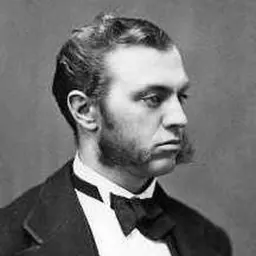
Lived 1885 – 1939 (aged 53). J. E. Harold Terry was a British novelist, playwright, actor, critic, writer and theatre critic.
Joseph Edward Harold Terry (1885–1939) was an English novelist, playwright, actor and critic who was born in York. He was a nephew of the actor Eille Norwood. and a grandson of Sir Joseph Terry. and became famous for writing two of the longest running plays of the First World War era, The Man Who Stayed at Home and General Post (1917), which both ran for more than 500 performances.
Early career
Terry was educated at Marlborough College and Pembroke College, Cambridge where he was stage-manager of the Footlights club. While at Cambridge he was editor of The Granta but left in 1906 to take up a position with the Daily Mirror before becoming a dramatic critic for The British Review and The Onlooker, for which he was also the editor. His first play Old Rowley, The King (1908) is believed to have been lost. In September 1908 he became a Freeman of the City of York.
Terry took a number of amateur acting roles in the years after leaving Cambridge, most notably playing King Harold at the Battle of Stamford Bridge in the York Historic Pageant of 1909, a production that he had helped Louis N. Parker to write. Although this historical romance about the highwayman John Nevison received positive reviews he would become best known for his patriotic wartime plays that emphasised the resourcefulness and courage of ordinary civilians and the impact of war on social conventions. In 1914 Terry, who was by this time living in the Covent Garden area of London, signed up with the Artists Rifles but he was invalided out soon afterwards. was first performed in 1914 where it ran for 584 performances in London It was also performed on Broadway at the Comedy Theatre initially under the title The White Feather in early 1915 and then again in 1918 under the original title. The plot follows a British agent in his efforts to uncover a group of German fifth columnists, a popular theme that played on the fears of the British public at the time and was the subject of several classic works of the period, for example the spy novels of John Buchan. In 1915 the first film adaptation of The Man Who Stayed at Home was released along with a book version of play. and when performed in New Zealand that August it was well received and attended by the Prime Minister William Massey. This was soon followed by the Australian film Within Our Gates (1915), considered to have been heavily influenced by the play, and another film version of the play released in 1919. for 586 performances at the Haymarket Theatre and earned Terry commendation for being one of the first war dramatists to explore the social impact of war and the breakdown of class divisions, pre-empting the exploration of these themes in John Galsworthy's The Foundations (1917) Following on from his earlier work with Worrall, they wrote a sequel to The Man Who... in 1917, called The Man Who Went Abroad, although this proved to be less successful than the original. Terry also wrote two other plays during the war, April Fools in 1915 and the musical Master Wayfarer which premiered at the London Apollo in December 1917 and featured songs by Arthur Scott Craven and music by Howard Carr.
Later career
Terry was a member of both the Garrick Club and the Savage Club and between 1919 and 1922 was the Honorary Secretary of the Dramatists Club. In 1923 he co-wrote the play The Return of Sherlock Holmes with Arthur Rose, a performance of which was attended by Arthur Conan Doyle, who praised both the writers and the lead performer Eille Norwood, who had by this time become famous for his portrayals of Holmes. The play ran for 130 performances at the Princes Theatre, London, before going on tour in the UK. It was also produced at the Grand Theatre, Amsterdam (1924), and the Sonderborg Theatre, Copenhagen (1926). In 1930, it was revived at the Regent Theatre, London, for 24 performances.
In 1924 Terry wrote Collusion a play that was made into the film Midnight Lovers in 1926, by which time Terry had moved to Luccombe Hill, Shanklin, on the Isle of Wight, where he lived with his wife and four children In 1915 he had married Constance Leetham Terry, one of the first women admitted to The Physiological Society. Terry's final play was another collaborative effort in 1930, this time with Harry Tighe, with whom he translated a Dutch play, Dolly Hans by Jan Fabricus. It was renamed Insult and successfully ran for over five months at the Apollo Theatre. In 1935 Terry is listed in Who's Who as a director of Joseph Terry and Sons.
Works
Books A Fool to Fame (1912)
Plays Old Rowley, the King (1908) A King's Ransom (1911) The Knight of the Garter (1913) The Man Who Stayed at Home ( The White Feather) (1914, with Lechmere Worrall) (Film – 1915,1919) April Fools (1915) The Man Who Went Abroad (1917) General Post (1917) (Film – 1920) Master Wayfarer (1917, with Arthur Scott Craven and Howard Carr) The Fulfilling of the Law (1921) The Rattlesnake (a.k.a. The Carolinian) (1922, with Rafael Sabatini) The Return of Sherlock Holmes (1923, with Arthur Rose) Collusion (1924) (Film – 1926 (Midnight Lovers)) Insult (1930, with Harry Tighe)
Don’t just read it —
keep it.
Full-length biographies made to live with: read them, listen on the way to work, watch them tonight.
- E-book
- Audio
- Video
Instant download · yours to keep · every purchase keeps this site free
Important facts
People in J. E. Harold Terry's life
Named in this biography and alive at the same time




Related people
Same field, nearest in time



Contemporaries
People whose lives overlapped J. E. Harold Terry's


Frequently asked questions
Who was J. E. Harold Terry?
English novelist, playwright, actor and critic
When was J. E. Harold Terry born?
J. E. Harold Terry was born on 21 September 1885 in York.
When did J. E. Harold Terry die?
J. E. Harold Terry died on 10 August 1939.
What was J. E. Harold Terry's occupation?
J. E. Harold Terry was a novelist, playwright, actor, critic, writer and theatre critic.
What nationality was J. E. Harold Terry?
J. E. Harold Terry was British.
Sources & further reading
· Wikipedia: J. E. Harold Terry
Cite this page
APA: Biography.guide. (2026). J. E. Harold Terry. https://biography.guide/j-e-harold-terry/
MLA: "J. E. Harold Terry." Biography.guide, https://biography.guide/j-e-harold-terry/.
Chicago: "J. E. Harold Terry." Biography.guide. https://biography.guide/j-e-harold-terry/.
Data last updated: 2026-09-20 · Spot an error? Report a correction.
Page generated 2026-09-27 05:33 UTC