
About Joseph Terry
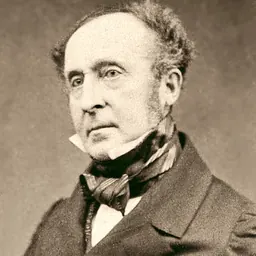
Lived 1828 – 1898 (aged 70). Joseph Terry was a British businessperson and justice of the peace.
Sir Joseph Terry (7 January 182812 January 1898) was an English confectioner, industrialist and Conservative politician who served as Lord Mayor of York on three occasions. He had previously served as a deputy mayor through his role as town sheriff in 1870, and served as Councillor for York's Monk Ward from 1860 until this appointment. He further acted as a Justice of the Peace for both the City of York and the North Riding of Yorkshire from 1887 until his death.
He is widely seen as the driving force behind the success of the confectionery company Terry's, originally co-founded by his father, through the expansion of business operations through the use of the Humber Estuary to import essential commodities such as sugar and cocoa. Later in his career, he would oversee the company's transition and specialization into a chocolatiers. Terry had also registered the trademark 'Joseph Terry's and Sons' in 1876, which would later become incorporated under his chairmanship in 1895 as 'Joseph Terry & Sons Ltd.', three years before his death at the age of 70 in 1898, during an attempt to become Member of Parliament for the City of York constituency in a by-election.
Early life Terry was born in York, to Joseph Terry, the confectioner and co-founder of Terry's of York, and his wife Harriet Atkinson, the daughter of a successful farmer from Leppington, North Yorkshire and sister-in-law to the elder Terry's initial business partner, Robert Berry. His family's wealth enabled him to attend the independent St Peter's School, York. Such wealth had arisen after Terry's of York had advantageously relocated to St Helen's Square, in the centre of York, with business benefiting from the City's intake of 30,000 shoppers and tourists daily as a result of significant developments in rail travel.
The young Joseph Terry had a comfortable upbringing, with his father's business being well established by the time of his birth due to considerable business acumen and the usage of the expanding railway network to supply his products to a growing British-wide market during the 1830s. He established retail agencies in 75 settlements, mainly in the north, but also in the Midlands, Luton and London.
Terry's of York
By the time of the elder Joseph Terry's death in 1850, Terry's was becoming a household name due to its previous trade successes across the country. The younger Joseph, along with his two brothers, Robert and John, are credited with moving confectionery production to an industrial scale with the leasing of a factory at Clementhorpe, beside the River Ouse, in 1862. Its location was particularly advantageous, as the 22-year-old Terry had drawn inspiration from the manipulation of the railways initiated by his father, and saw the benefit of importing and exporting from the river using steamboats. Vessels from the River Humber supplied coal for the factory, while larger ships would import ingredients such as sugar and cocoa from around the world twice a week. It would be at this factory that the now commonplace chocolate box assortment was invented, with the first named "Britannia". Terry also converted the historically successful St Helen's Square premises into a ballroom and restaurant, whilst retaining its status as a confectionery shop, an arrangement that lasted until 1981.
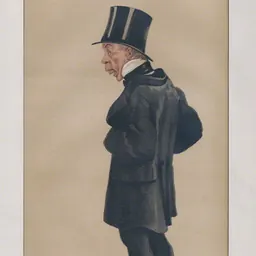
Political career "A Yorkshire Solicitor". George Leeman as depicted by "Coïdé" in Vanity Fair, 1872 In 1860, Terry was elected Councillor for York's Monk Ward, a rural area close to the modern day Strays of York, as a Conservative. He would later be appointed Chairman of the York Conservative Association (something that his grandson, Noel Goddard Terry, would also later achieve). In 1874, Terry became an Alderman of the City, granting him a seat at York's Guildhall for debate in a then partisan chamber under the Conservatives. The party, in response to his growing popularity, allowed him to run for the Lord Mayoralty within the same year, to which he was elected by consensus, defeating the incumbent local brewer, John March. This position granted him the style the 'Right Honourable' (a title exclusive to the Lord Mayoralty, not the individual).
Despite remaining an alderman for eleven years after his conventional one-year tenure, Terry ran for the same post again in 1885, defeating prolific businessman and philanthropist John Close, this time retaining his post for two successful tenures until 1887's election. Further philanthropic activity continued into 1893, when Terry presided over a Japanese bazaar behind the York Art Gallery (of which he was chair) where according to The York Herald, he spoke: "It is right to think of our poorer neighbors. If the bazaar is successful, then 1,000 waifs and strays would be entertained on Christmas day in the Corn Exchange."
On 7 October 1850, Joseph Terry had been granted freedom of the city due to the economic growth York was seeing fueled by his company's success. Chairmanships of local guilds were to follow; with York's Merchant Taylor's and Merchant Adventurer's both seeing the benefit of representation from a well respected and moneyed benefactor. Other local organizations followed suit; with the York Art Gallery, Horticultural Society and local waterworks company all receiving funding and financial direction by the end of his career.
Personal life
Joseph married twice in his life, producing seven children in total. His first marriage to Frances Goddard, daughter of London-based physician Dr. Joseph Goddard, in 1864 produced three sons before her death in 1866. Joseph's eldest son from his first marriage, Thomas Terry, became the main partner of the business in 1880, as all of his cousins (Sir Joseph's brothers' children) had chosen other professions rather than to join the family business. Wright is considered to be the first cricket captain to declare an innings closed, something he did in 1890 against Kent. Joseph was also a close friend of Sir Frederick Milner, MP for the City of York constituency from 1883 to 1885. Milner, who led an 1888 presentation celebrating the achievements of both Sir Joseph (though he was absent due to illness) and Lady Terry, was described by The York Herald as having "had the privilege of Sir Joseph's friendship for many years".
Though it is ceremonial for the Lord Mayor of York to reside in the Mansion House, Terry maintained a house on Tadcaster Road, York, known as the "Hawthorn Villa". He also had a summer residence in the small town of Filey. This building was later renamed "Langford Villa" and was recognized as Grade II listed on 23 August 1985.
By-election and death Terry died of heart failure, induced by over-exertion, at the Royal Station Hotel on 12 January 1898, after attempting to win a by-election to become Member of Parliament for the City of York. If successful, he would have served as second member to John Butcher (later the 1st Baron Danesfort), whom he respected for his work within the constituency. Terry died one day before the announcement of the new member was made, and the election was eventually won by famed admiral and veteran MP Lord Charles Beresford by a mere eleven votes, in a controversial recount forced by a Parliamentary petition after he and Liberal candidate Sir Christopher Furness had both obtained 5,643 votes according to initial data. Terry was buried at the York Cemetery on 15 January 1898, where his monument comprised a large granite cross and a small apron of ground.
Legacy The Merchant Taylor Company of York, which Terry had chaired for many years, expressed condolences but made no donation to his memorial fund. It is thought that this decision was not made on principle as, two years earlier, donations of £5 had been made to the "Mansion House Fund" in memoriam to prolific clergyman James Raine, who was the company's established annual preacher and had died some years before the trust was founded in 1896. However, the national journal Chemist and Druggist: The Newsweekly for Pharmacy described Terry's passing as "a tragic feature of the recent by-election" and the Yorkshire Herald fondly remarked "There was no person in the city more loved or respected, and no-one who was more possessed of the qualities that constitute a genial and amiable Englishman". His personal estate amounted to upon his death. On 14 March 1996, English Heritage designated the two houses as Grade II listed under the name "Terry Memorial Homes Numbers 1 and 2." £200 of the original subscription was invested in stocks, which yielded £6 when exchanged in 1955. and in stained glass at the All Saints' Church, North Street as of 1978, as Joseph's grandson, Noel Goddard Terry, had helped fund the restoration of the building. helm = other_elements = badge = symbolism =
Don’t just read it —
keep it.
Full-length biographies made to live with: read them, listen on the way to work, watch them tonight.
- E-book
- Audio
- Video
Instant download · yours to keep · every purchase keeps this site free
Important facts
People in Joseph Terry's life
Named in this biography and alive at the same time


Related people
Same field, nearest in time


Contemporaries
People whose lives overlapped Joseph Terry's


Frequently asked questions
Who was Joseph Terry?
British politician
When was Joseph Terry born?
Joseph Terry was born on 7 January 1828 in Pocklington.
When did Joseph Terry die?
Joseph Terry died on 12 January 1898 in The Milner, York.
What was Joseph Terry's occupation?
Joseph Terry was a businessperson and justice of the peace.
What nationality was Joseph Terry?
Joseph Terry was British.
Sources & further reading
Cite this page
APA: Biography.guide. (2026). Joseph Terry. https://biography.guide/joseph-terry/
MLA: "Joseph Terry." Biography.guide, https://biography.guide/joseph-terry/.
Chicago: "Joseph Terry." Biography.guide. https://biography.guide/joseph-terry/.
Data last updated: 2026-09-20 · Spot an error? Report a correction.
Page generated 2026-09-27 05:32 UTC