
About Israr Ahmed
Lived 1932 – 2010 (aged 77). Israr Ahmed was a Pakistani and Indian philosopher, theologian and university teacher.
Dr. Israr Ahmad (26 April 1932 – 14 April 2010) was a Pakistani Islamic scholar, theologian and orator. He developed a following in Pakistan and the rest of South Asia and also among some South Asian Muslims in the Middle East, Western Europe, and North America. He founded Tanzeem-e-Islami and also served as a member of the National Assembly from 1981 to 1982.
He has written around 60 books in Urdu on Islam and Pakistan, of which twenty-nine have been translated into several other languages, including in English, as of 2017.
In 1956, he left the Jamaat-e-Islami, which had become involved in electoral politics, to found Tanzeem-e-Islami. Like many other Sunni Islamic activists/revivalists he preached that the teachings of the Qur'an and the Sunnah and divine law of Sharia must be implemented in all spheres of life, that the Caliphate must be restored as a true Islamic state, and that Western values and influences were a threat to Islam and Pakistan. He was also known for his staunch belief that only Pakistan, not any Arab land, should be the foundation for a new caliphate, His ancestral roots lie in the Muzaffarnagar district of modern-day Western Uttar Pradesh, but following the 1857 War of Independence, his grandfather's properties were confiscated, so the family moved to Hisar. His father was a civil servant in the British government
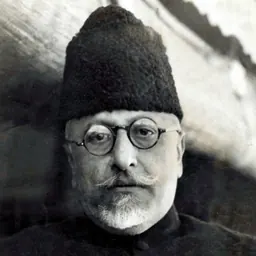
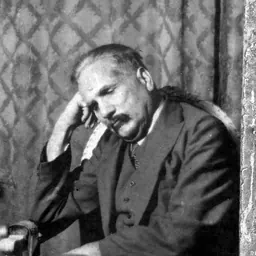
"In the context of Qur'anic exegesis and understanding, Dr. Israr Ahmad was a firm traditionalist of the genre of Mahmud Hasan Deobandi and Shabbir Ahmad Usmani; yet he presented Qur'anic teachings in a scientific and enlightened way". Dr. Israr Ahmad believed in what he called "Islamic revolutionary thought," which consists of the idea that Islam – the teachings of the Qur'an and the Sunnah – must be implemented in the social, cultural, juristic, political, and economic spheres of life. In this he is said to follow Muhammad Rafiuddin and Muhammad Iqbal. The first attempt towards the actualisation of this concept was reportedly made by Abul Kalam Azad through his short-lived party, the Hizbullah. Another attempt was made by Abul A'la Maududi through his Jamaat-e-Islami party. Although the Jamaat-e-Islami has reached some influence, Dr. Israr Ahmad resigned from the party in 1956 when it entered the electoral process and believed that such an involvement led to "degeneration from a pure Islamic revolutionary party to a mere political one".
Career
Jamaat-e-Islami Originally a member of Jamaat-e-Islami, Dr. Israr Ahmad stated that he became disappointed with its turn towards electoral activity, disagreed with it on "significant policy matters", including what he saw as the "lack of effort to create an Islamic renaissance through the revolutionary process." He considered Jamaat-e-Islami's "plunge" into "the arena of power politics," to have been "disastrous." "As a result of his efforts" the Markazi Anjuman Khuddam-ul-Quran Lahore was established in 1972, Tanzeem-e-Islami was founded in 1975, and Tahreek-e-Khilafat Pakistan was launched in 1991. Israr is thought to have been instrumental in bringing changes to Pakistan TV during that time eliminating Western dress for women and requiring hijab.
Hizb ut-Tahrir Both Hizb ut-Tahrir and Tanzeem-e-Islami share a belief in the revival of the Caliphate as a means of implementing Islam in all spheres of life, according to Tanzeem-e-Islami's FAQ. However, Tanzeem-e-Islami seeks a popular Islamic revival which will then lead to political revolution rather than involvement in electoral politics, armed struggle, coup d'état to establish a caliphate. Tanzeem-e-Islami believes that once the Islamic revolution has taken place, the election of the Khalifah would be done on the basis of electoral votes. Tanzeem-e-Islami emphasises that iman (faith) among Muslims must be revived in "a significant portion of the Muslim society" before there can be an Islamic revival.
Non-violence According to the website of Dr. Israr Ahmad's organization, Tanzeem-e-Islam (as of 2017): "We believe that an Islamic state can be established in Pakistan by means of a popular non-violent movement ... a coup d'etat can never produce a stable and positive change as it does not involve changing the beliefs and thoughts of the people." This campaign eventually led to violence. As many as 4,000 people are estimated to have been killed by Shia-Sunni sectarian attacks in Pakistan between 1987 and 2007.
Role of women In 1982 Dr. Israr Ahmad presented his view that women should 'be barred from all professions except medicine and teaching". He would include comments on the "Jew World Order", descriptions of "Jews as 'cursed people' or 'cursed race' who actually conspired against Muslims for centuries", and were 'followers of Satan, bent on destroying Islam'.
Views on foreign powers Dr. Israr Ahmad opposed the 2007 Pakistani state of emergency and in a televised press conference called for the resignation of President Pervez Musharraf.
Asia Times reports that in September 1995 Dr. Israr Ahmad told the annual convention of the Islamic Society of North America: "The process of the revival of Islam in different parts of the world is real. A final showdown between the Muslim world and the non-Muslim world, which has been captured by the Jews, would soon take place. The Gulf War was just a rehearsal for the coming conflict." He appealed to the Muslims of the world, including those in the US, to prepare themselves for the coming conflict.
Babri Masjid demolition After the Demolition of the Babri Masjid in India, Israr criticised the vengeful demolition of Hindu temples in Pakistan, calling them un-Islamic and making the perpetrators the same as Hindu extremists in India.
Death and legacy Dr. Israr Ahmad relinquished the leadership of Tanzeem-e-Islami in October 2002 because of bad health. He had appointed Hafiz Akif Saeed the emir of the Tanzeem (from 2002 to 2020) to whom all rufaqaa of Tanzeem renewed their pledge of Baiyah.
12 days before his 78th birthday, Dr. Israr Ahmad died of cardiac arrest at his home in Lahore on the morning of 14 April 2010 at the age of 77. He had given up the leadership of Tanzeem-i-Islami in 2002 due to poor health. According to his son, his health deteriorated at around 1:30 am with pain in the back. He was a long time heart patient. His survivors included a wife, four sons and five daughters. His four sons, Arif Rasheed, Akif Saeed, Asif Hameed and Atif Waheed, have all been involved in Islamic activism.
One major Pakistani English-language newspaper (Dawn) commented after his death, "Founder of several organisations like Anjuman-i-Khuddamul Quran, Tanzeem-i-Islami and Tehrik-i-Khilafat, he had followers in Pakistan, India and Gulf countries, especially in Saudi Arabia. He spent almost four decades in trying to reawaken interest in Quran-based Islamic philosophy."
Awards and recognition Sitara-i-Imtiaz (Star of Excellence) award by the president of Pakistan in 1981 for his contribution in the field of religion.
Don’t just read it —
keep it.
Full-length biographies made to live with: read them, listen on the way to work, watch them tonight.
- E-book
- Audio
- Video
Instant download · yours to keep · every purchase keeps this site free
Important facts
People in Israr Ahmed's life
Named in this biography and alive at the same time




Related people
Same field, nearest in time





Contemporaries
People whose lives overlapped Israr Ahmed's



Frequently asked questions
Who was Israr Ahmed?
Pakistan Muslim scholar (1932–2010)
When was Israr Ahmed born?
Israr Ahmed was born on 26 April 1932 in Hisar.
When did Israr Ahmed die?
Israr Ahmed died on 14 April 2010 in Lahore.
What was Israr Ahmed's occupation?
Israr Ahmed was a philosopher, theologian and university teacher.
What nationality was Israr Ahmed?
Israr Ahmed was Pakistani and Indian.
Sources & further reading
Cite this page
APA: Biography.guide. (2026). Israr Ahmed. https://biography.guide/israr-ahmed-philosopher/
MLA: "Israr Ahmed." Biography.guide, https://biography.guide/israr-ahmed-philosopher/.
Chicago: "Israr Ahmed." Biography.guide. https://biography.guide/israr-ahmed-philosopher/.
Data last updated: 2026-09-20 · Spot an error? Report a correction.
Page generated 2026-09-27 05:08 UTC