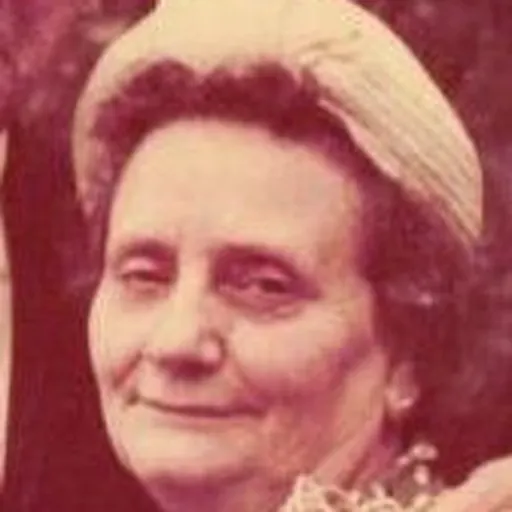
About Isabel González
Lived 1882 – 1971 (aged 89). Isabel González was an American writer, politician and educator.
Isabel González (May 2, 1882 – June 11, 1971) was a Puerto Rican activist who helped pave the way for Puerto Ricans to be given United States citizenship. As a young unwed pregnant woman, González had her plans to find and marry the father of her unborn child derailed by the United States Treasury Department when she was excluded as an alien "likely to become a public charge" upon her arrival in New York City. González challenged the Government of the United States in the groundbreaking case Gonzales v. Williams (192 U.S. 1). Officially the case was known as Isabella Gonzales, Appellant, v. William Williams, United States Commissioner of Immigration at the Port of New York No. 225, argued December 4, 7, 1903, and decided January 4, 1904. Her case was an appeal from the Circuit Court of the United States for the Southern District of New York, filed February 27, 1903, after also having her writ of habeas corpus (HC. 1-187) dismissed. Her Supreme Court case is the first time that the Court confronted the citizenship status of inhabitants of territories acquired by the United States. González actively pursued the cause of U.S. citizenship for all Puerto Ricans by writing letters published in The New York Times.
Early years González was born and raised in San Juan, Puerto Rico when the island was still a possession of the Spanish Crown. Therefore, she was a native inhabitant of Puerto Rico and a Spanish subject, though not of the Peninsula (Spain). Her parents were Severo González and Antonia Dávila. She was residing in the island on April 11, 1899, the date of the proclamation of the Treaty of Paris of 1898 which ceded the island to the United States. One of the conditions of the treaty was to transfer by cession the allegiance of the islanders to the United States. González was a citizen of Puerto Rico, but not of the United States even though the island was governed by that nation.
González's fiancé traveled to New York City in 1902, leaving her behind, pregnant and with another child from a previous marriage (she was a widow). He went with the intention of finding a job in a factory in Linoleumville, Staten Island, in the neighborhood where Isabel's brother Luis González worked. González was to join her fiancé there and they were to marry after he found a place to live. Almost immediately, the United States began the "Americanization" process of Puerto Rico. The U.S. occupation brought about a total change in Puerto Rico's economy and polity and did not apply democratic principles in their colony. Puerto Rico was classified as an "unincorporated territory" which meant that the protections of the United States Constitution — including the right of citizenship — did not automatically apply, because the island belonged to the U.S., but was not part of the U.S.
On January 15, 1899, the military government changed the name of Puerto Rico to Porto Rico (On May 17, 1932, the U.S. Congress changed the name back to "Puerto Rico") and the island's currency was changed from the Puerto Rican peso to the American dollar, integrating the island's currency into the U.S. monetary system. The United States exerted its control over the economy of the island by prohibiting Puerto Rico from negotiating commercial treaties with other nations, from determining tariffs, and from shipping goods to the mainland on other than U.S. carriers. In 1899, a letter to the editor published in The New York Times described Puerto Ricans as "a light-hearted, simple-minded, harmless, indolent, docile people," claiming that "while they gamble and are fond of wine, women, music, and dancing, they are honest and sober," but compared them to "children" who lacked "sufficient knowledge to govern themselves" and were in need of education as to "what government of the people means."
Prior to 1898, the United States had organized new acquisitions from non-tribal governments into largely self-governing territories as a prelude to statehood and had generally extended broad constitutional protections and U.S. citizenship to free, non-tribal residents. After 1898, this process changed, and Congress established a centrally controlled administration in Puerto Rico, declining to recognize Puerto Ricans as U.S. citizens. As a result, many Dominicans started marrying Puerto Ricans in greater numbers in order to stop immigration problems at US ports of entry. After 1917, the citizenship of Puerto Ricans became transferable to some nationalities, mostly from Latin America, such as the Colombians and Venezuelans.
González was detained by the Immigration Commissioner at that port as an "alien immigrant" so that she might be returned to Puerto Rico if it appeared that she was likely to become a public charge. Gonzalez had eleven dollars in cash on her person and her family was to pick her up, however the immigration officials discovered her pregnancy during her early line inspection and a Board of Special Inquiry opened a file on her (her surname was later misspelled as "Gonzales" by immigration officials).
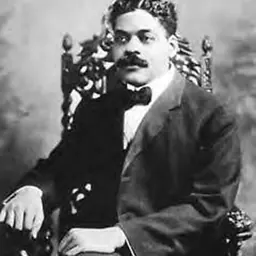
Collazo drew on his political and professional connections. In the 1890s, he had been active in the Revolutionary Committee of Puerto Rico, a radical wing of the Cuban Revolutionary Party that sought an Antillean social revolution to improve the status of workers and people of African descent. He had attended meetings with the Antillean activists Arturo Alfonso Schomburg and Rosendo Rodríguez. Collazo swore a habeas corpus petition for González. A friend of González related the story to Orrel A. Parker, a lawyer. His partner Charles E. Le Barbier became interested in the case and filed Collazo's petition with the U.S. Circuit Court for the Southern District of New York. Seven weeks later, however, the court issued its opinion, ruling that the petitioner was an alien and upholding her exclusion. unaware of the Gonzalez situation, wrote to the Secretary of State in protest of the new rules that made Puerto Ricans subject to immigration laws. His protest was forwarded to the Treasury Department. Degetau then contacted Le Barbier and Parker, who informed him that they planned to appeal Gonzalez's case to the Supreme Court. González wrote the following:
"Gen. Miles went to Porto Rico to save us, and proclaimed to the wide winds his 'liberating' speech." But instead of U.S. citizenship, Puerto Ricans got "the actual (current) incongruous status—'neither Americans nor foreigners,' as it was vouchsafed by the United States Supreme Court apropos of my detention at Ellis Island for the crime of being an 'alien.'"
Legacy González's struggle was not in vain. In 1917, the United States Congress passed the Jones-Shafroth Act which conferred a statutory United States citizenship on all the citizens of Puerto Rico, This meant that the citizenship was not guaranteed by the Constitution. Two months later President Wilson signed a compulsory military service act which gave the United States the right to draft Puerto Ricans for military service in World War I. The act, which was signed into law by President Woodrow Wilson on March 2, 1917, also revised the system of the government in Puerto Rico. González moved to Cranford Township, New Jersey around 1930 with her husband Juan Francisco Torres. Her descendants went on to live in New Jersey, Florida, California and Colorado. She died on June 11, 1971, and is buried with her husband at Holy Cross Cemetery in North Arlington, New Jersey. Her great granddaughter, Belinda Torres-Mary, now actively pursues and maintains information regarding González's history and immigration struggle and is the keeper of the family documents.
Don’t just read it —
keep it.
Full-length biographies made to live with: read them, listen on the way to work, watch them tonight.
- E-book
- Audio
- Video
Instant download · yours to keep · every purchase keeps this site free
Important facts
People in Isabel González's life
Named in this biography and alive at the same time


Related people
Same field, nearest in time


Contemporaries
People whose lives overlapped Isabel González's





Frequently asked questions
Who was Isabel González?
Puerto Rican activist
When was Isabel González born?
Isabel González was born on 2 May 1882 in San Juan.
When did Isabel González die?
Isabel González died on 11 June 1971 in New Jersey.
What was Isabel González's occupation?
Isabel González was a writer, politician and educator.
What nationality was Isabel González?
Isabel González was American.
Sources & further reading
Cite this page
APA: Biography.guide. (2026). Isabel González. https://biography.guide/isabel-gonzalez/
MLA: "Isabel González." Biography.guide, https://biography.guide/isabel-gonzalez/.
Chicago: "Isabel González." Biography.guide. https://biography.guide/isabel-gonzalez/.
Data last updated: 2026-09-23 · Spot an error? Report a correction.
Portrait: Wikimedia Commons · author & licence
Page generated 2026-09-27 05:05 UTC